The Best Fluffy Pancakes recipe you will fall in love with. Full of tips and tricks to help you make the best pancakes.

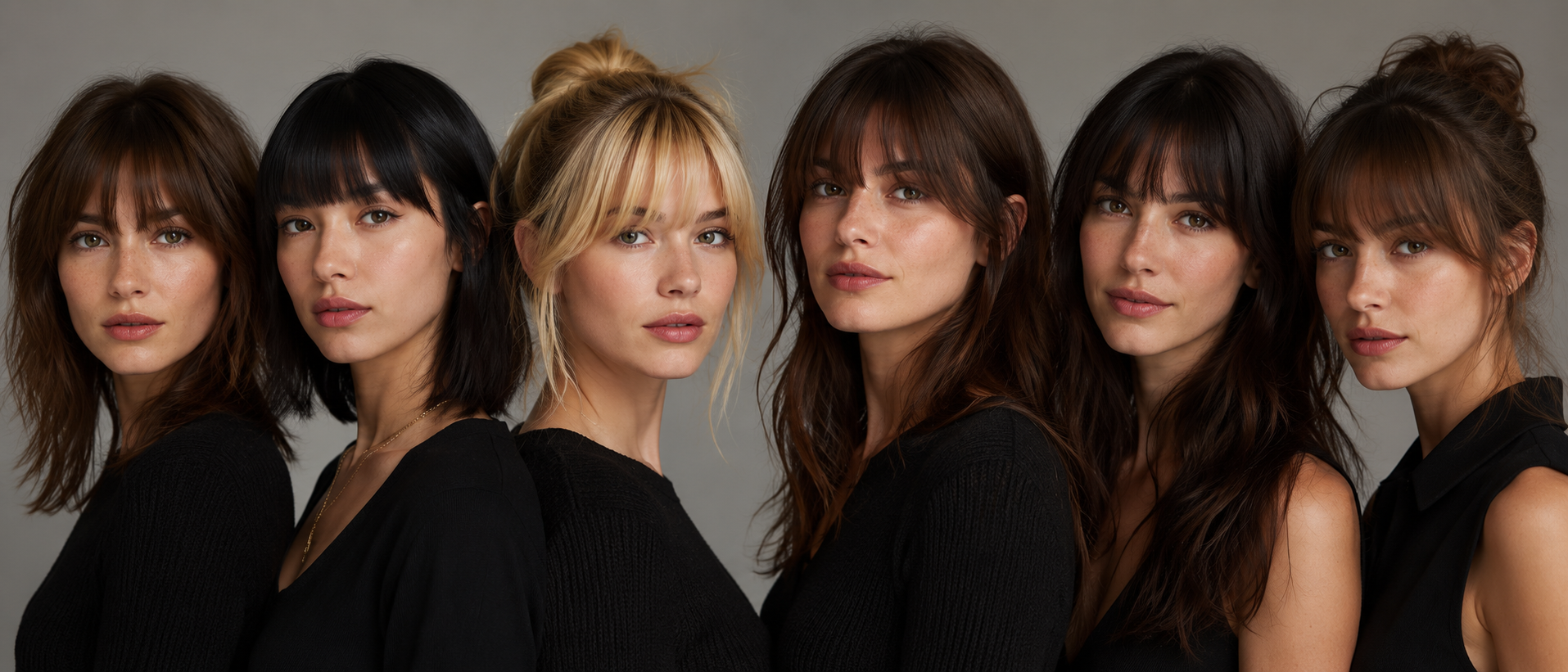
Bangs are the kind of haircut decision that sounds simple until you’re sitting in the salon chair trying to explain exactly what you want.
You’ve seen something on Pinterest. You know the vibe. You just don’t know what it’s called. And “the ones that kind of swoop to the side but not too much” is not a great brief for your stylist.
So here’s the actual breakdown. Every major type of bangs, what makes each one different, which face shapes they suit, and how much daily effort they actually require.
Curtain Bangs
Start here because this is the one everyone is getting right now – and for good reason.
Curtain bangs are parted down the middle and swept to either side, framing the face the way curtains frame a window. The center is shorter, the sides gradually get longer, and the whole thing blends into the rest of your hair rather than sitting as a separate, defined fringe.
They work on almost every face shape, which is part of why they’ve been the most requested bang style for the past few years running. Round faces love them because the center part creates length and the side sweep breaks up symmetry. Square faces love them because the softness counteracts a strong jawline. Oval faces can basically do whatever they want, and curtain bangs are no exception.
Maintenance is moderate. They need a trim every six to eight weeks to keep the shape, and the daily styling is minimal – a round brush and a blow dryer for two minutes, or simply air dry and let them fall where they fall. Wavy hair in particular takes to curtain bangs naturally. The wave does most of the styling work.
The Farrah Fawcett seventies energy is intentional. That’s the reference point and it’s aged remarkably well.
Blunt Bangs
The bold one. The commitment.
Blunt bangs are cut straight across in a clean, even line – typically landing just at or above the eyebrows. No tapering at the sides, no soft feathering at the ends. Just a precise horizontal edge across the forehead.
They make a statement. That’s the whole point. They draw attention to the eyes and add width – which is exactly why they work so well on longer, more narrow face shapes where adding horizontal emphasis is flattering rather than widening. On round faces, they can shorten the face visually, so they require more careful consideration.
The tradeoff for the drama is maintenance. Blunt bangs need a trim every three to four weeks to stay sharp. The clean line is the whole look – when it starts growing out unevenly, the entire thing falls apart. A flat iron is essentially required for daily upkeep. One humid morning and a blunt fringe that isn’t properly styled becomes a completely different haircut.
If you’re not someone who enjoys spending time on hair daily, this might not be your style. If you are, the payoff is real.
Wispy Bangs
The most forgiving option on this list.
Wispy bangs – sometimes called Birkin bangs after Jane Birkin’s iconic effortless fringe – are light, feathery, and deliberately uneven. Individual strands separate and fall across the forehead softly rather than sitting as a solid block of hair. You can see glimpses of forehead through them. That’s intentional.
They’re cut using razor techniques or point-cutting to create texture at the ends rather than a blunt line. The result is airy, delicate, and works across almost every hair type. Celebrity hairstylists describe this as the style to try if you want to test bangs before fully committing – the sparse coverage means they grow out gracefully and never look drastically wrong at any stage.
According to Who What Wear’s guide to every type of bangs, wispy bangs have become one of the most requested styles right now – sitting alongside curtain bangs as the two dominant choices in salons in 2025 and into 2026.
Maintenance is genuinely low. Trim every four to six weeks. Style with a small amount of texturizing cream or simply air dry. They look intentional even on bad hair days, which is a rare quality in a fringe.
Side-Swept Bangs
They’re back. Properly back.
Side-swept bangs are longer on one side of the face, sweeping diagonally across the forehead and tapering shorter on the other side. The asymmetry is the whole point. It creates a diagonal line across the forehead that immediately makes any face shape look more interesting and less symmetrical.
They hit differently now than they did in their first peak. Celebrity hairstylists note that the current version is softer and more effortlessly styled than its earlier iterations – it’s less about a rigid swoop and more about a natural fall that works whether your hair is freshly done or second-day.
Round and square face shapes particularly benefit from side-swept bangs. The diagonal line creates an optical elongation effect. It draws the eye across and down rather than emphasizing width.
Styling tip: blow dry directionally in the direction you want them to fall, use a light cream at the ends for control, and a quick second with a flat iron if they droop. They hold better than they look like they should.
Micro Bangs
Not for everyone. Absolutely the move for some people.
Micro bangs – also called baby bangs or Hepburn bangs – sit well above the eyebrows, sometimes as high as mid-forehead. They’re bold, fashion-forward, and completely change the geometry of a face. The forehead is exposed, the eyes become the dominant feature, and there’s an immediate editorial quality to the whole look.
Hairstylists describe micro bangs as a definite fashion statement – slightly unconventional and considered more high fashion than longer styles, sitting in bolder territory than most people are willing to go.
They suit longer face shapes well because the horizontal line shortens the face visually. On round faces, they’re a riskier proposition. Fine hair and thicker hair both work, but the cut has to be precise – cowlicks at the hairline can make styling difficult or unpredictable.
The commitment factor is real. Growing them out is a months-long process with some awkward in-between stages. But the upside is daily styling is actually simple – they’re too short to do much with, so a quick comb-through is usually enough.
Bottleneck Bangs
The one most people haven’t heard of but recognize immediately when they see it.
Bottleneck bangs are shorter in the center and longer at the sides – the opposite shape from curtain bangs. The name comes from the silhouette they create, which narrows in the middle like the neck of a bottle. The result is a face-framing style that has a slightly retro, textured, undone quality.
They’re fuller and bouncier than curtain bangs while still effortlessly framing the face, and they carry a slightly more undone quality that works well with shag haircuts and tousled styles.
They pair particularly well with layered cuts and shags because the choppy texture throughout the rest of the hair matches the energy of the bottleneck fringe. It all belongs together.
Wella Professionals’ breakdown of every type of bangs for every face shape highlights bottleneck bangs as one of the best options for shag haircuts specifically – the two styles were made for each other.
Choppy Bangs
Choppy bangs are blunt bangs with attitude. Same general idea – a horizontal fringe across the forehead – but cut with deliberate unevenness and texture rather than a precise clean edge.
The texture comes from point-cutting into the ends to create variation in length. The result looks more lived-in and less severe than a traditional blunt fringe. There’s a punk-adjacent, rock-and-roll quality to them that works in a way that feels current rather than dated.
They’re slightly more forgiving than blunt bangs in terms of maintenance because the imprecision is built into the style. A perfect edge isn’t the goal. As they grow out, the choppiness reads as intentional rather than overgrown.
Fine to medium hair tends to work best. Very thick hair can lose the choppy effect under the weight of the hair.
Which Type of Bangs Suits Your Face Shape
The short version, for quick reference.
Oval faces can pull off any style on this list. Genuinely the most versatile face shape for bangs.
Round faces do best with styles that create vertical lines and avoid heavy horizontal emphasis. Curtain bangs, wispy bangs, and side-swept bangs are the most consistent choices. Blunt bangs across the full forehead are the most risky.
Square faces benefit from softness that counteracts a strong jawline. Wispy, curtain, and feathered styles all work well. Hard-edged blunt bangs can emphasize angularity rather than softening it.
Heart-shaped faces – wider at the forehead, narrower at the chin – do well with curtain bangs and wispy styles that frame the cheekbones rather than emphasizing forehead width.
Long or narrow face shapes have the most options for blunt and micro bangs because the horizontal line adds width in a flattering direction.
If you’ve been thinking about a layered medium cut to go with your new bangs, the face shape guidance applies there too. Our breakdown of layered low maintenance medium length hairstyles for round faces covers the full picture of what works and why.
What to Tell Your Stylist
Bring a photo. Always bring a photo. Describing bangs verbally leaves too much to interpretation and too much room for a result that looks nothing like what you had in mind.
When you sit down, be specific about two things. Where you want the bangs to start – at the hairline, partway back, or from behind the crown – and where you want them to end – eyebrow level, above the eyebrow, or longer. Everything else, texture, tapering, blending – your stylist can guide you once they understand the basic structure.
And be honest about how much time you actually spend on your hair every morning. Not the aspirational version. The real version. A good stylist will use that information to recommend a style that works within your actual routine rather than one that requires a salon-level blowout every day to look right.
Small things. Big flavor.
FAQs
What are the most popular types of bangs right now?
Curtain bangs and wispy bangs are the two most requested styles in 2025 and into 2026. Side-swept bangs are also seeing a strong comeback. Blunt bangs and micro bangs are popular in more editorial and fashion-forward circles.
What type of bangs is easiest to maintain?
Wispy bangs are the most low maintenance. They air dry well, grow out gracefully, and look intentional at every stage. Curtain bangs are a close second. Blunt bangs require the most upkeep – they need precise trims every three to four weeks to stay sharp.
What type of bangs suits a round face?
Curtain bangs, wispy bangs, and side-swept bangs are the most flattering for round faces. They create vertical lines and asymmetry that elongate and slim the face. Blunt straight-across bangs are generally the most challenging choice for a round face shape.
What is the difference between curtain bangs and bottleneck bangs?
Curtain bangs are longer in the center and taper toward the sides, creating a soft open frame. Bottleneck bangs are shorter in the center and longer at the sides – the reverse shape. Bottleneck bangs have a fuller, bouncier quality and suit shag hairstyles particularly well.
How often do bangs need to be trimmed?
It depends on the style. Blunt bangs need a trim every three to four weeks to maintain the clean edge. Curtain bangs and wispy bangs can go six to eight weeks. Micro bangs need frequent trims – every three to four weeks – to stay at the right length.
Can bangs work with curly hair?
Yes. Wispy and curtain bangs work especially well with curly hair because they move naturally with curl patterns and require minimal heat styling. Blunt bangs on curly hair need more maintenance because curl shrinkage affects the length and shape differently than on straight hair.
What are Birkin bangs?
Birkin bangs are a type of wispy bang named after Jane Birkin’s iconic effortless fringe. They’re light, feathery, and slightly longer than traditional bangs – grazing the brows rather than sitting firmly above them. The look is deliberately undone and works across hair textures.