The Best Fluffy Pancakes recipe you will fall in love with. Full of tips and tricks to help you make the best pancakes.

Walk into almost any barbershop right now and ask what the most requested cut of the past two years has been.
Nine times out of ten, the burst fade comes up.
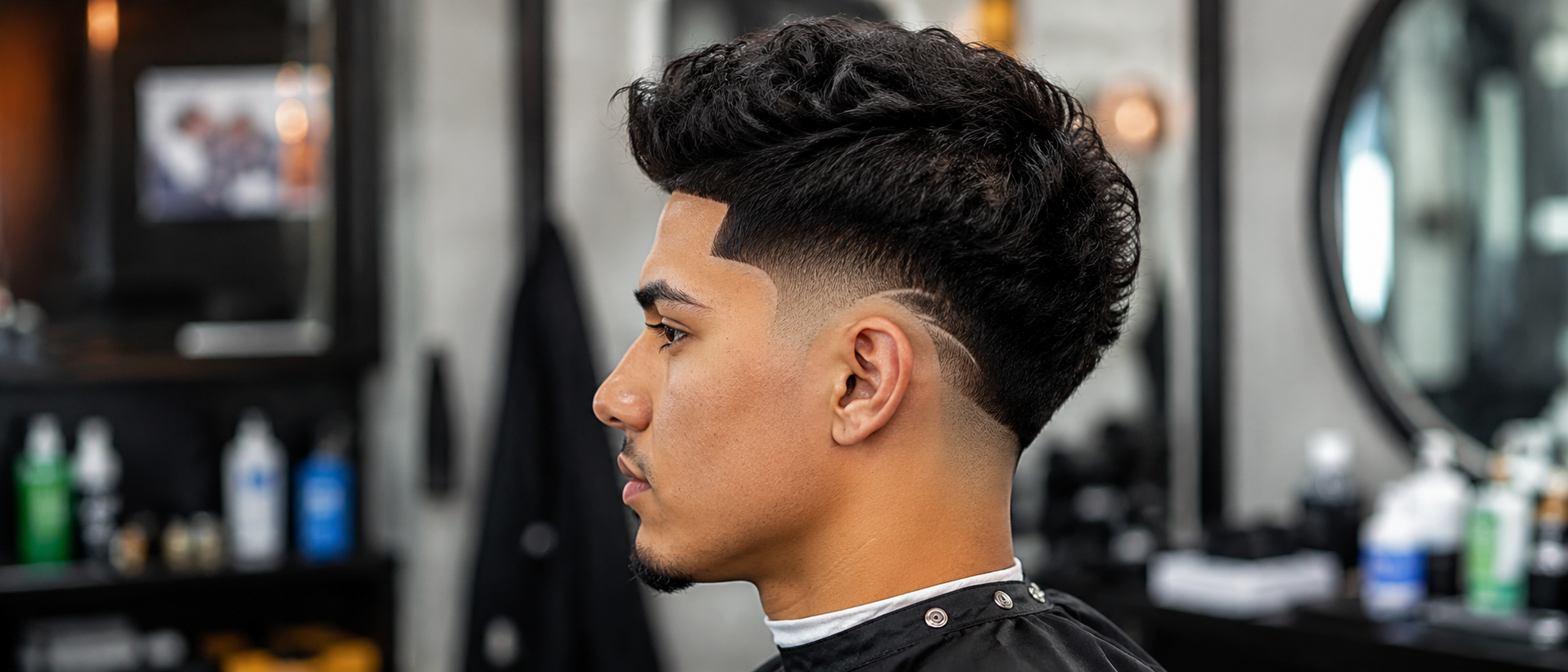
It’s not hard to understand why. The burst fade does something other fades don’t – instead of dropping straight down the back of the head or tapering evenly across the sides, it curves around the ear in a semi-circular arc, like a halo of tight skin or short hair radiating outward. That curve does a lot of work. It adds shape, creates contrast, and frames the ear in a way that makes the whole haircut look more intentional and more finished.
Here’s everything you need to know before you sit down in the chair.
What a Burst Fade Actually Is
A burst fade is a type of fade – meaning the hair transitions gradually from longer on top to shorter at the sides – but the direction of that transition is what makes it different.
Most fades drop vertically. The hair gets shorter as you move down the sides and back, ending at the neckline. Clean, classic, reliable.
A burst fade curves horizontally around the ear. The fade radiates outward from a point behind and above the ear in a rounded, sunburst shape – hence the name. The hair blends tightly around the ear itself, then transitions into whatever length is happening at the back of the head and on top.
That shape is the signature. It’s why the burst fade pairs so naturally with mullets – the sides fade tight while the back keeps its length, and the curved fade transitions between the two without an awkward line. It’s also why it works so well with mohawks, textured crops, and curly styles where the top has volume and movement that benefits from a clean, shaped frame at the sides.
The technical term barbers use is a radial fade or halo taper. If you walk in and say either of those, you’ll be understood.
Low vs Mid vs High – What Changes
The most important decision when getting a burst fade is the height. Everything else follows from this.
Low burst fade. The fade starts just above the ear and drops quickly. It’s the most subtle version – close to the natural hairline, not a lot of dramatic contrast. If you want the shape of a burst fade without the boldness, this is where to start. Works well in professional environments where a very aggressive taper might draw comments. Pairs well with textured crops and more conservative styles on top.
Mid burst fade. The fade starts higher – around the temple area – and the transition is more visible. This is the most popular version and the one most people mean when they say burst fade without specifying. Balanced between subtle and dramatic. Strong enough to look intentional, restrained enough to work across a range of settings.
High burst fade. The fade starts near the top of the temple, creating a very sharp, very visible contrast between the tighter sides and the hair on top. Bold. Fashion-forward. The version that reads most clearly as a statement cut. Works best when the top has enough length and texture to balance the high contrast at the sides – a thin, flat top with a high burst fade can look unbalanced.
Skin burst fade. Any of the above, but taken down to the skin at the tightest point rather than stopping at a short clipper guard. Maximum contrast. The sharpest possible finish. Requires more maintenance because the skin shows – any growth becomes visible quickly.
The Best Styles to Pair It With
The burst fade isn’t a finished haircut on its own. It’s a technique applied to the sides that shapes whatever is happening on top. Here’s where it works best.
Burst fade mullet. This is the combination that drove the burst fade’s popularity back into the mainstream. The mullet brings back length at the nape of the neck – the burst fade handles the sides, curving around the ear and transitioning naturally into that length at the back without a hard line. It’s a significantly more wearable version of the mullet than what most people picture. The burst fade softens the whole thing.
According to Barbers Take’s comprehensive burst fade guide, the burst fade mullet became one of the defining men’s haircuts of the mid-2020s precisely because the two elements work in genuine structural harmony – the sides stay tight and shaped while the back retains movement and personality.
Burst fade mohawk. The mohawk strip runs down the center of the head with the sides shaved or closely faded. The burst fade handles the transition at the ears – the curve of the fade emphasizes the height and shape of the mohawk above it. The spiked version reads more aggressive. A softer textured strip on top with a burst fade is actually more wearable than it sounds.
Burst fade with curls. Curly hair and burst fades are a natural combination. The fade gives the curls on top a clean, defined frame – the contrast between tight sides and full, voluminous curls on top is exactly the kind of visual interest the cut is designed to create. The fade keeps the style looking intentional and maintained even on days when the curls are doing their own thing. Apply curl cream to damp hair, diffuse, and let the fade do the structural work.
Burst fade textured crop. The textured crop – short on the sides, slightly longer and textured on top with a forward fringe – is one of the most versatile men’s styles right now. Adding a burst fade instead of a standard drop fade gives the crop more shape and modernity. The curved transition around the ear elevates what would otherwise be a clean but unremarkable cut.
Burst fade with beard. The beard and burst fade combination works because both elements are about edges and definition. A well-shaped beard that connects cleanly to the fade line creates a cohesive look where the whole face is framed deliberately. The burst fade curves around the ear and meets the beard line at the jaw – when the barber connects these two elements cleanly, the effect is a sharp, structured silhouette that frames the face from hairline to chin.
Which Face Shapes It Suits
The burst fade is more face-shape-neutral than most haircuts because the defining element is the shape at the sides, not the length or style on top.
Round faces benefit from the height created by a mid or high burst fade – the tighter sides and volume on top create an elongating effect. Oval faces are the most versatile and handle any variation well. Square faces suit the burst fade particularly well because the curve of the fade softens the angular jawline while the structure on top maintains definition. Diamond and heart face shapes – wider at the forehead – do well with a low to mid fade that doesn’t add visual width at the temples.
As Man For Himself’s breakdown of fade styles in 2025 points out, the fade’s universal appeal comes from exactly this adaptability – there’s a variation and height that suits essentially every face shape and hair type, which is why it has remained one of the most consistently booked styles across age groups and cultures.
How to Maintain It
The burst fade is a high-maintenance haircut in terms of frequency. The tighter the fade and the more defined the curve around the ear, the faster growth makes it look overgrown. Plan on visiting your barber every three to four weeks to keep the fade sharp.
The good news is that between trims, maintenance is minimal. The structure of the cut does most of the work. A light styling product – matte paste or clay for most styles, curl cream for curly tops – applied to damp hair and air dried is usually enough.
For skin burst fades specifically, the timeline tightens to two to three weeks. Skin shows everything. A skin fade that’s four weeks old looks like a completely different haircut.
What to Tell Your Barber
Say “burst fade” – not just “fade.” Barbers know what a fade is. They need to know the specific variation.
Then specify three things. The height – low, mid, or high. Whether you want it taken to skin or left at a short guard. And what you want on top – bring a photo of that too, not just the sides.
If you’re getting a burst fade mullet, say so explicitly and specify how much length you want to keep at the back. “Mullet” means different things to different people – the length at the nape of the neck is the key variable and it’s worth being precise.
The barber can advise on what works best for your specific hair texture and face shape. But they need the starting point. Give them the starting point.
Small things. Big flavor.
FAQs
What is a burst fade?
A burst fade is a men’s haircut technique where the hair fades in a semi-circular, curved arc around the ear – like a sunburst or halo shape – rather than dropping straight down as in a traditional fade. It creates a rounded, sculpted transition between the longer hair on top and the shorter hair at the sides.
What is the difference between a burst fade and a drop fade?
A drop fade tapers down behind the ear in a curved arc that drops toward the neckline. A burst fade flares outward in a rounder, more circular shape around the ear, often sitting higher on the sides. The burst fade is more sculpted and dramatic; the drop fade is subtler and more classic.
How long does a burst fade last?
A standard burst fade needs a touch-up every three to four weeks to stay sharp. A skin burst fade – where the hair is taken down to the skin at the tightest point – typically needs a refresh every two to three weeks.
What hair types does a burst fade work on?
All of them. Straight, curly, wavy, and coily hair all take the burst fade well. Curly hair in particular benefits from the defined frame the fade provides – it gives curls on top a clean, structured base that makes the overall look more intentional.
What is the most popular burst fade style right now?
The burst fade mullet is the most talked-about combination, having driven much of the fade’s renewed popularity through 2024 and into 2025. The burst fade with curly hair and the burst fade textured crop are also among the most requested variations in barbershops currently.
Does a burst fade suit a round face?
Yes. A mid to high burst fade on a round face creates height and adds visual length, which counteracts the width of a round face shape. The tighter sides and volume on top create an elongating effect that is generally flattering.
How do I style a burst fade at home?
Apply a small amount of matte paste, clay, or texturizing cream to damp hair. Style the top in whatever direction the cut is designed for, then let it air dry or blow dry with a diffuser if you have curly hair. The fade itself needs no styling – the barber’s work handles that. Products are for the top only.