The Best Fluffy Pancakes recipe you will fall in love with. Full of tips and tricks to help you make the best pancakes.


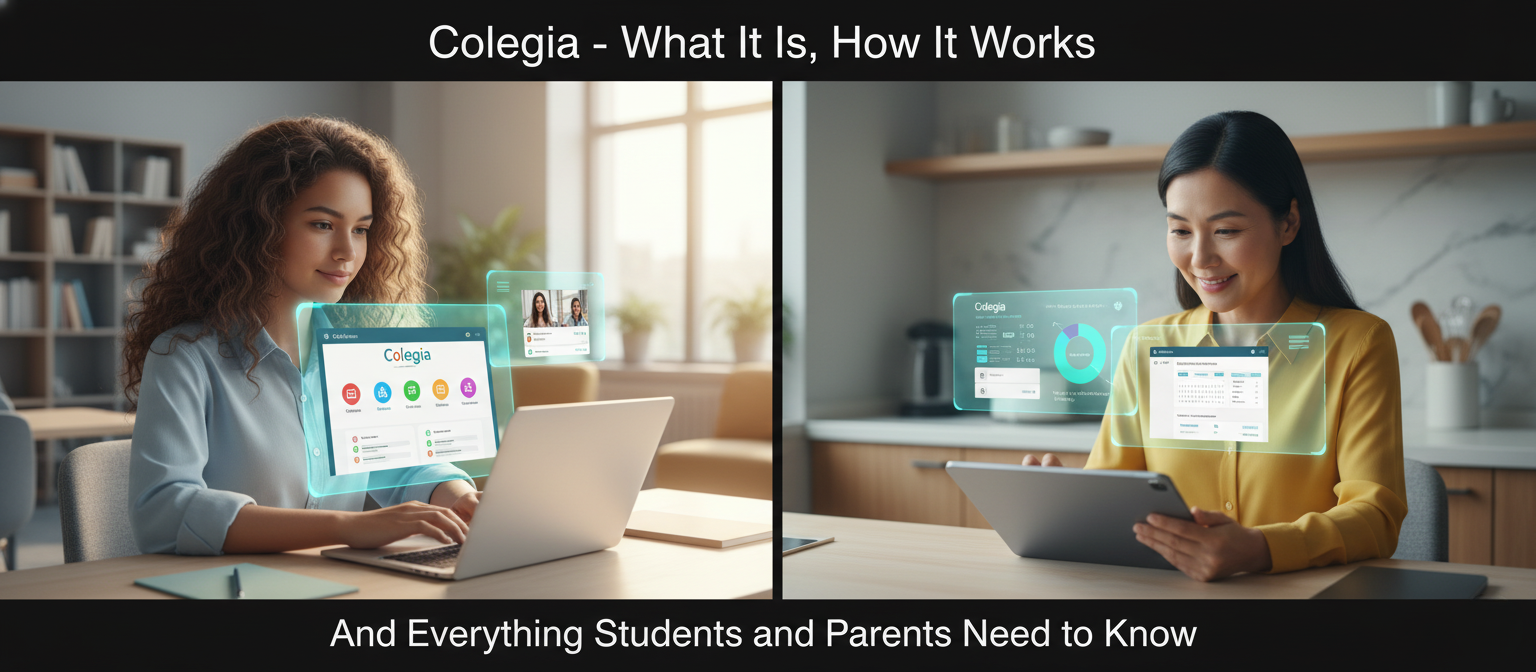
If you’re a student, parent, or teacher at a K-12 school and you keep hearing about Colegia – or you’ve been handed a login and told to figure it out – this is the straightforward explanation you’re looking for.
No jargon. No sales pitch. Just what the platform actually is, what you can do with it, and how to get into it without the usual first-day confusion.
What Colegia Actually Is
Colegia is a digital education operating system. Not a single app, not just a login page – an operating system, meaning it sits underneath everything your school does digitally and connects it all together.
The problem it was built to solve is a familiar one for anyone who’s navigated modern school life. Teachers using one platform for assignments, a different one for grades, a third for attendance, and a fourth for messages – with students expected to remember four different logins, four different interfaces, and which teacher is using which tool this week. It’s an organizational mess that has nothing to do with actual learning.
Colegia replaces that fragmentation with a single dashboard. One login. Every tool your school has authorized – Google Classroom, Zoom, Microsoft Teams, digital textbooks, assessment apps – accessible from one place. Students see what they need. Teachers see what they need. Parents see what they need. Each role gets a view tailored to what it actually requires.
According to the official Colēgia platform, it’s a scalable, secure hub for educational applications, content, and communications – built specifically to help education organizations connect their learning communities. It has been developed over a decade through collaboration between students, educators, and administrators, which is part of why the interface is as clean and straightforward as it is.
Who Built It and Where It Started
Colegia was developed in partnership with Academica, one of the largest charter school management organizations in the United States, headquartered in Florida. Academica operates or supports hundreds of charter schools across multiple states, and Colegia was originally built to serve that network’s specific needs – centralized digital access across a large, distributed system of schools with varying setups and requirements.
That origin matters because it explains why the platform is built the way it is. It wasn’t designed for a single school with a uniform setup. It was built to work across hundreds of different schools with different tools, different curricula, and different student populations. That scalability is baked in from the beginning.
Today the platform supports over 220 schools and 165,000 users. It has expanded well beyond the original Academica network into public school districts and private school networks across Florida and other states.
What Each User Type Can Do
Colegia is role-based, which is one of its most practical features. What you see when you log in depends entirely on who you are.
Students get a dashboard showing recent announcements, scheduled classes, and pending tasks. The My Apps section is a personalized grid of every authorized educational tool their school has connected to the platform – no hunting around for links, no separate logins for each tool. Assignments can be submitted, grades viewed, teacher feedback received, and Google Classroom accessed all from the same screen. The mobile app means all of this is available on a phone or tablet, not just a laptop.
Teachers get a teaching hub for managing assignments, student groups, and content sharing. Class posts and announcements, assignment tracking for individual students or entire classes, seamless Google Classroom integration, and dynamic classroom templates for recurring content. The whole point is reducing the administrative overhead that eats into actual teaching time. Less time managing logistics, more time with students.
Parents and guardians get real-time visibility into their child’s academic life – grades, attendance, teacher messages, and school announcements all in one place. The parent portal is accessed through a separate login from the student and staff login, using a school-provided link code during setup. For parents who’ve previously had to chase down information across multiple platforms or wait for report cards to know how their child is doing, this is a significant change.
Administrators get tools for tracking compliance, academic performance across the school, and staff activity – the oversight functions that keep a school running smoothly at the organizational level.
How to Log In
The official platform is at colegia.org. That’s the one you want. Not colegia.me, not colegia.us – colegia.org.
The login page has two distinct entry points. Students and staff use the Student / Staff Log In. Parents use the Parent/Guardian Log In. They’re separate portals, which sometimes trips people up the first time.
Your login credential is your ColēgiaID – assigned by your school. If you don’t have it or can’t find it, the Student Lookup tool on the login page can retrieve it using your name and school information. If that doesn’t work, your school’s IT support is the fastest path to resolution.
The mobile app is available on both iOS and Android. Search “Colegia” in the App Store or Google Play. Everything available on the desktop version is available through the app, including notifications and messaging.
Forgot your password? The Forgot Password link on the login page prompts you through security questions. If you’re still stuck, contact your school directly – account credentials are managed at the school level, not by the platform centrally.
The Integrations That Make It Useful
A platform that just manages logins would be useful but limited. What makes Colegia more than that is the depth of its integrations.
Google Classroom is the most significant one for most schools. Rather than being a separate platform that competes with Google Classroom, Colegia wraps around it – teachers and students access all Google Classroom functions directly through the Colegia dashboard without switching between platforms. Assignments, feedback, class materials – it’s all there.
Zoom and Microsoft Teams are both integrated for live instruction. This was particularly critical during remote learning periods and remains important for schools offering hybrid or Remote Live Instruction (RLI) models. Students can join a live class directly through Colegia without needing a separate Zoom link in a separate email.
Microsoft Office tools – Word, Excel, OneDrive – are accessible inside the learning portal for schools using the Microsoft ecosystem. The broader principle is that Colegia doesn’t require schools to abandon the tools that are already working. It connects them into one place rather than replacing them.
Privacy and Security
This matters a lot when the users are students, including younger children.
Colegia is built to comply with FERPA and COPPA. FERPA – the Family Educational Rights and Privacy Act – governs how student educational records can be used and shared. According to the U.S. Department of Education’s Student Privacy Policy Office, FERPA gives parents the right to access their children’s education records, seek amendments, and control how personally identifiable information from those records is disclosed. Those rights transfer to the student once they turn 18.
COPPA – the Children’s Online Privacy Protection Act – sets specific rules for online services collecting data from children under 13. The FTC’s student privacy guidance is clear that both FERPA and COPPA apply when K-12 schools use EdTech platforms that collect or handle student data. A platform like Colegia, operating under a school’s direction, must handle all student data under FERPA’s school official exception – meaning data can only be used for the specific educational purpose it was disclosed for, nothing else.
Login credentials are managed centrally with school-enforced password policies and identity verification. The role-based access structure means students only see what they’re authorized to see, and parents see only their own child’s information. By consolidating tools into a single secure system, Colegia reduces the number of third-party platforms handling student data – which is one of the cleaner approaches to data privacy in K-12 edtech.
Who Uses It
The largest concentration of Colegia users is in Florida, where the platform’s roots in the Academica charter school network created an early foothold. Schools like Mater Lakes Academy, Mater Gardens Academy, and dozens of other Academica-affiliated charters use it as their primary digital infrastructure.
But the user base has grown well beyond Florida charter schools. Public school districts, private schools, and school networks in other states have adopted the platform. The modular architecture means it can be configured differently for different schools without requiring a uniform setup – which is why it works for a small private school and a large urban district running very different operations.
What’s Coming for K-12 EdTech
Colegia’s trajectory points toward more AI integration – and it’s part of a broader shift happening across the entire K-12 edtech sector.
According to EdSurge’s 2026 K-12 EdTech Trends report, the era of adopting technology for its own sake is over. Districts are now asking harder questions – what’s actually worth keeping, what delivers measurable return on instruction, and what protects students rather than just adding screen time. The platforms that survive this shift are the ones built around genuine educational value rather than feature bloat.
For Colegia specifically, that means more predictive analytics to flag students who may need intervention before they fall behind. Adaptive learning paths that adjust content based on individual student performance. Better push notifications and offline access through the mobile app. Multi-language interfaces for more inclusive access.
The direction is consistent – more personalization, more data intelligence, and more seamless access across whatever devices students actually have. Whether individual features arrive on schedule depends on development timelines, but the underlying platform is already positioned for it.
The Short Version
Colegia is a single secure platform that connects everything a K-12 school uses digitally – assignments, grades, messages, live classes, and learning apps – into one dashboard with one login.
Students log in at colegia.org using their ColēgiaID. Parents use the separate Parent/Guardian portal. Teachers manage assignments, classes, and communication from the same interface.
It doesn’t replace the tools schools already use. It connects them. That’s the whole point.
Small things. Big flavor.
FAQs
What is Colegia?
Colegia is a K-12 digital education operating system that gives students, teachers, parents, and administrators centralized access to learning tools, communication, and school management from a single secure platform. It integrates with Google Classroom, Zoom, Microsoft Teams, and other major education tools.
How do I log in to Colegia?
Go to colegia.org and select either the Student / Staff Log In or the Parent/Guardian Log In depending on your role. Your login credential is your ColēgiaID, which is assigned by your school. If you don’t have it, use the Student Lookup tool on the login page or contact your school’s IT support.
Is Colegia only for Florida schools?
No. While Colegia started with Florida charter schools through the Academica network, it has expanded to public school districts, private schools, and school networks in other states. It currently supports over 220 schools and 165,000 users.
What can parents see on Colegia?
Parents with a Parent/Guardian account can view their child’s grades, attendance records, assignments, and messages from teachers and school administrators in real time. The parent portal is separate from the student and staff login and requires a school-provided link code during setup.
Is Colegia safe for students?
Yes. Colegia is built to comply with FERPA and COPPA – the federal laws governing student data privacy. Logins are centrally managed, data is encrypted, and access is role-based so students only see what they’re authorized to see.
What is a ColēgiaID?
A ColēgiaID is the unique login credential assigned to each student, teacher, and staff member by their school for accessing the Colegia platform. If you’ve lost or forgotten yours, the Student Lookup tool on colegia.org can help retrieve it.
Does Colegia have a mobile app?
Yes. The Colegia app is available on both iOS and Android. Search “Colegia” in the Apple App Store or Google Play Store. The app provides full access to assignments, grades, messages, and notifications.
What is the difference between Colegia and Google Classroom?
Google Classroom is a specific learning management tool for teachers and students to manage assignments and coursework. Colegia is a broader platform that wraps around tools like Google Classroom, allowing access to it and many other school tools from one single login and dashboard.