
The Best Fluffy Pancakes recipe you will fall in love with. Full of tips and tricks to help you make the best pancakes.

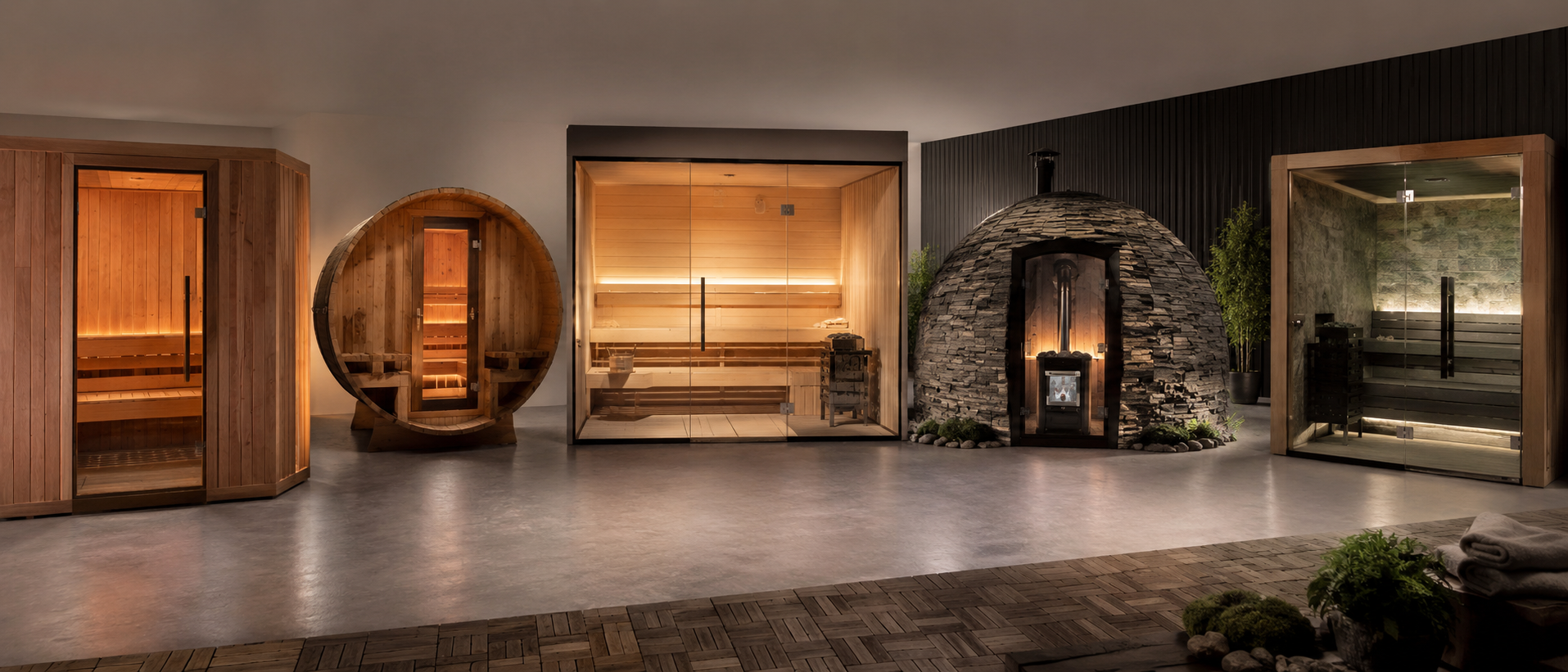
The sauna aisle has never been more crowded. A decade ago the choice was straightforward: did you want one or not? Now there are five distinct types with meaningfully different heat mechanisms, health benefit profiles, space requirements, and price points. Choosing the wrong one isn’t a disaster, but choosing the right one saves you significant money and significantly more satisfaction.
Here is every type of sauna explained properly, with the research behind each and the practical criteria that determine which one belongs in your life.
Finnish Traditional Sauna
The original. Finnish sauna culture goes back over two thousand years, and the format is essentially unchanged: a wood-lined room heated by a kiuas – a sauna stove, typically electric or wood-fired – to temperatures between 150 and 195 degrees Fahrenheit with relative humidity between 10 and 20 percent. Löyly – the ritual of throwing water onto heated stones to produce a burst of steam – momentarily spikes the humidity and intensifies the heat sensation without fundamentally changing the dry-heat character of the experience.
The research base for Finnish sauna is the most extensive of any sauna type. A 2018 systematic review published in the National Institutes of Health database covering 40 clinical studies found that frequent dry sauna bathing is associated with reduced overall mortality, reduced cardiovascular event incidence, and reduced dementia risk – primarily in men in the Finnish study populations, though the physiological mechanisms suggest broad applicability. The cardiovascular effect is particularly well-documented: regular sauna bathing three to seven times per week has demonstrated roughly 50 percent reduction in cardiovascular disease development, risk of stroke, and risk of hypertension in observational data.
The practical trade-off is space and infrastructure. A traditional Finnish sauna requires dedicated room construction with proper ventilation, a stove capable of heating the space, and electrical infrastructure for an electric kiuas or a proper installation for a wood-burning stove. It’s a permanent installation. For homeowners with available space, it’s the gold standard. For apartment dwellers and those without outdoor space, it’s not a realistic option.
Infrared Sauna
Infrared saunas heat the body directly using infrared light wavelengths rather than heating the ambient air. The operating temperature is lower – typically 120 to 140 degrees Fahrenheit – because the heat transfer is more efficient at the tissue level. Users often describe sweating more intensely at lower temperatures than in traditional Finnish saunas.
The infrared category subdivides by wavelength: far-infrared (FIR) penetrates most deeply into tissue, near-infrared (NIR) works at shallower depth with additional light therapy benefits at the cellular level, and mid-infrared sits between them. Most consumer infrared sauna cabinets use far-infrared. Higher-end units combine multiple wavelength types for a broader therapeutic profile.
Mayo Clinic’s overview of infrared sauna benefits notes that while infrared saunas are generally safe for most people, some potential benefits include relaxation, pain relief, and improved circulation – while emphasizing that the evidence base is still developing compared to traditional Finnish sauna research.
What’s changed significantly in recent years is the emergence of red and near-infrared light therapy panels designed specifically for sauna environments. The PlatinumLED SaunaMAX PRO represents this evolution directly: an infrared sauna that fits in your home setup through a purpose-built red and NIR light panel engineered to operate inside sauna conditions. With an IP65 waterproof and heat-resistant rating certified to 150°F/65°C, a fanless all-aluminum body, and R+|NIR+ Advanced Spectral Output across five wavelengths (630nm, 660nm, 810nm, 830nm, 850nm), it brings therapeutic light wavelengths into the heat environment that traditional panels couldn’t tolerate. Negligible EMF, integrated timer, remote control, and an optional wheeled floor stand complete a setup designed to work inside an existing sauna without infrastructure changes.
The practical case for infrared saunas: they require less space than traditional Finnish saunas, operate at lower temperatures that are more accessible for first-time users, and the infrared cabinet market has expanded to include small two-person units that fit in a spare room or garage corner without major renovation.
Steam Sauna (Hammam)
The steam sauna – also called a steam room or hammam – operates at lower temperatures than either Finnish or infrared saunas but at dramatically higher humidity: 100 percent relative humidity at roughly 110 to 115 degrees Fahrenheit. The moist heat creates a completely different physiological experience from dry-heat saunas, and the research profile differs accordingly.
Steam rooms are generally considered beneficial for respiratory function – the moist air loosens mucus and can provide relief for congestion and mild respiratory discomfort. They’re also gentler on skin than dry heat. The cardiovascular and metabolic research base is less developed than for Finnish sauna, primarily because steam rooms have been studied less systematically.
The practical limitation of steam saunas for home use is the infrastructure requirement: they need proper waterproofing, drainage, steam generators, and ventilation that make them more complex and expensive home installations than infrared alternatives. Most people who use steam rooms regularly do so at gyms and spas rather than at home.
Barrel Sauna
A barrel sauna is a Finnish-style traditional sauna built in a circular barrel shape from kiln-dried cedar or other aromatic wood, typically installed outdoors. The circular design is structurally efficient – it heats faster than a rectangular room of equivalent volume because there are no corner dead zones where heat accumulates inefficiently. Outdoor installation means the ventilation and installation questions that complicate indoor traditional sauna builds are largely resolved.
The health benefits are identical to traditional Finnish sauna – it’s the same heat mechanism, the same temperature range, the same löyly ritual. The barrel format is an aesthetic and practical choice rather than a therapeutic one. For homeowners with outdoor space, a barrel sauna is often the most accessible entry into traditional sauna culture: no renovation required, installation is straightforward, and the outdoor placement means the moisture and ventilation concerns of indoor installations don’t apply.
The limitation is weather dependency in colder climates and the outdoor footprint requirement. A two-person barrel sauna typically needs an outdoor space of roughly 6 by 7 feet minimum.
Sauna Blanket
The sauna blanket is the most accessible and most portable format in the current market. A far-infrared heating element is embedded in a flexible blanket that the user wraps around themselves, creating a personal heat environment without any room or installation requirement. Temperatures range from 85 to 160 degrees Fahrenheit depending on the model, and the blanket folds for storage when not in use.
The sauna blanket doesn’t replicate the full-body immersive heat experience of a traditional Finnish or infrared sauna room – the face remains outside the blanket and the heat distribution is different. What it does provide is genuine far-infrared heat exposure at a fraction of the cost and space requirement of any installed sauna type. For apartment dwellers, people with limited space, or anyone testing sauna benefits before committing to an installed unit, the blanket is the practical starting point.
Which Type Is Right for You
The decision narrows quickly against practical criteria. Traditional Finnish or barrel sauna delivers the best-researched health outcomes and the most complete sensory experience, but requires space, infrastructure, and budget that not everyone has. Infrared sauna cabinets fit smaller spaces at lower operating temperatures that are more approachable for beginners. Steam rooms are spa experiences most people access outside the home. Sauna blankets are the entry point for those without space or budget for installed units.
For those who already have an infrared sauna setup and want to layer in the additional benefits of near-infrared light therapy, the combination of heat and targeted wavelengths represents the current leading edge of home sauna technology – addressing both the thermal benefits documented across the sauna research literature and the cellular-level light therapy benefits that a standard sauna heater alone doesn’t provide.
For the broader health and wellness context behind sauna use – including how recovery, nutrition, and lifestyle factors interact with heat therapy – the masago.blog Health & Wellness category has more coverage. Our breakdown of sushi calories and masago nutrition cover the food side of the wellness picture, and the masago.blog homepage has the full range across food, culture, tech, and health.
Small things. Big flavor.
FAQs
What are the main types of saunas?
Finnish traditional sauna, infrared sauna, steam sauna, barrel sauna, and sauna blanket. Each uses a different heat mechanism and has different space requirements, temperature ranges, and health benefit profiles.
What is the difference between a Finnish sauna and an infrared sauna?
Finnish saunas heat the ambient air to 150-195°F with 10-20% humidity. Infrared saunas heat the body directly using infrared light wavelengths at lower temperatures (120-140°F), making them more accessible for first-time users. The research base for Finnish sauna is more extensive, though infrared sauna research is growing.
Which type of sauna has the most health benefits?
Traditional Finnish sauna has the most extensive research base, with peer-reviewed studies linking regular use to reduced cardiovascular mortality, lower hypertension risk, and reduced dementia incidence. Infrared sauna research is developing and shows meaningful benefits for pain relief, circulation, and relaxation. Both are considered beneficial for healthy adults.
Can you use red light therapy in a sauna?
Standard red light therapy panels cannot tolerate sauna heat and humidity. Purpose-built panels like the PlatinumLED SaunaMAX PRO are specifically engineered for sauna environments with IP65 waterproof ratings and heat resistance to 150°F/65°C, enabling the combination of infrared heat and near-infrared light therapy in one session.
What is the smallest sauna option for home use?
A sauna blanket is the most compact option, requiring no permanent installation and folding for storage. For installed units, two-person infrared sauna cabinets can fit in a space as small as 4 by 4 feet. Outdoor barrel saunas start at roughly 6 by 7 feet of outdoor space.
How often should you use a sauna?
Research on traditional Finnish sauna suggests three to seven sessions per week optimizes cardiovascular benefit. Most studies used sessions of 15 to 20 minutes at standard temperatures. For infrared saunas and sauna blankets, similar frequency and session lengths are generally recommended. Always hydrate before and after, and consult a doctor if you have cardiovascular conditions.