The Best Fluffy Pancakes recipe you will fall in love with. Full of tips and tricks to help you make the best pancakes.

Most people pick a green tea off the shelf, steep it in boiling water for five minutes, and wonder why it tastes like lawn clippings and disappointment. Then they read that green tea is supposed to be one of the healthiest things you can drink and feel vaguely cheated.
Here’s the thing – both parts of that experience are real. Green tea genuinely is one of the most researched and health-supportive beverages you can drink. But a lot of what’s sold as green tea delivers a fraction of the benefits the research actually points to, because the type of tea, the quality of the leaves, and the way you brew it all matter far more than most people realize.
This guide breaks down what actually makes green tea healthy, which varieties give you the most, and how to choose something worth drinking.
What Makes Green Tea Healthy in the First Place
Before getting into which tea to buy, it’s worth understanding what you’re actually looking for – because this changes everything about how you shop.
Green tea is packed with antioxidants and beneficial compounds like catechins and L-theanine. L-theanine is known for smoothing out stress, sharpening focus, and giving your mood a gentle lift. The compounds in green tea may also help combat inflammation, support heart health, balance blood sugar levels, and even protect against chronic conditions. Yahoo!
The headline compound is called EGCG – epigallocatechin-3-gallate. It sounds like a chemistry exam answer but it’s worth knowing because researchers typically credit the numerous health benefits associated with drinking green tea to its EGCG content. Healthline
Antioxidants in green tea, including EGCG and other catechins, lower bad cholesterol and total cholesterol. Flavonoids in green tea open blood vessels and keep them flexible, helping blood flow more freely. A study of middle-aged and older adults found that frequent green tea drinkers had a 64% lower risk of memory loss or concentration issues. Cleveland Clinic
And then there’s L-theanine – the compound that makes green tea feel different from coffee even when both contain caffeine. L-theanine’s calming effects complement EGCG’s neuroprotective actions. Together, they provide a broader range of action, addressing both immediate stress and focus, and long-term brain health. Get Therapy Birmingham The result is what regular green tea drinkers describe as calm alertness – energy without the jitters.
So the goal when choosing the healthiest green tea is simple: find a tea with the highest concentration of EGCG and L-theanine, brewed in a way that preserves them. Here’s how that actually plays out.
The Healthiest Types of Green Tea – Ranked
Not all green tea is the same plant preparation. The way leaves are grown, harvested, and processed dramatically changes what ends up in your cup.
Matcha – The Highest EGCG of All
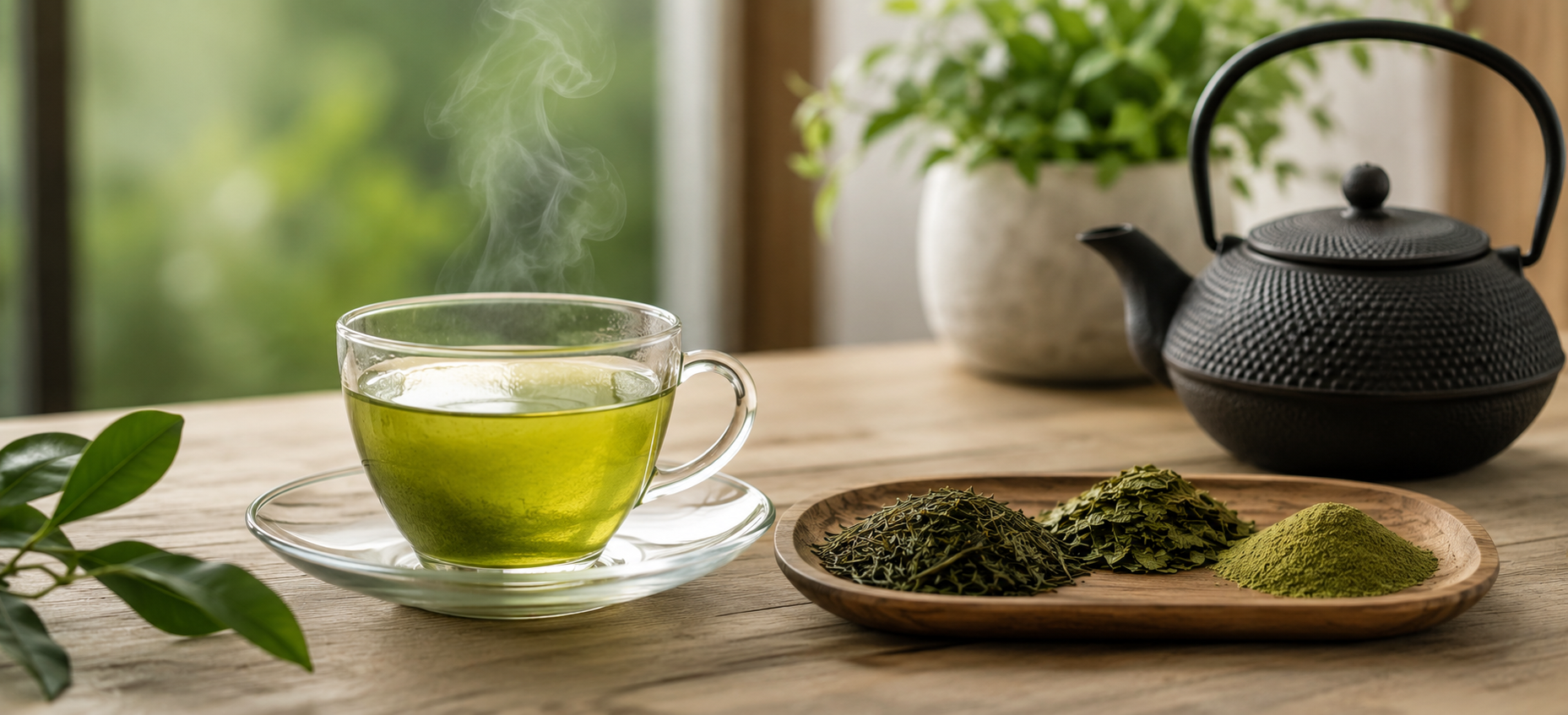
Matcha is often considered the healthiest form of green tea because it’s made from powdered green tea leaves, giving it the highest concentration of antioxidants and beneficial compounds. Japanese Taste
The reason is simple: when you drink matcha, you’re consuming the entire leaf in powdered form rather than steeping it and discarding the leaves. You get everything the leaf contains – all the EGCG, all the L-theanine, all the fiber. With brewed tea, a significant portion of the nutrients stay locked in the leaf and get thrown away.
Matcha leaves are grown under shade before harvesting, and this shade cultivation helps the growing tea leaves produce umami and vivid green color. The Tea Spot The shade stress also increases L-theanine production in the leaves – which is part of why matcha has a noticeably calming quality alongside its caffeine.
The tradeoff: matcha has a stronger, richer flavor that takes some getting used to. Quality also varies enormously – ceremonial grade matcha from Japan is a different product from the chalky green powder in most supermarkets. For health benefits, look for ceremonial or premium grade from Japan, bright green in color, with a fresh grassy smell.
Gyokuro – The Highest L-Theanine of Brewed Teas
Gyokuro is a premium Japanese green tea grown entirely in the shade for about three weeks before harvest. Like matcha, the shade growing process causes the plant to produce more L-theanine – but since gyokuro is a brewed tea rather than powdered, it has lower EGCG than matcha while having some of the highest L-theanine of any brewed option.
Gyokuro delivers a sweet, rich umami flavor with a smooth, mellow taste. It’s ideal for tea lovers looking for a premium, delicate tea with luxurious depth. Japanese Taste
It’s also the most expensive of the options here – and has notably higher caffeine than most green teas, with some varieties reaching 120mg per cup. Worth knowing if you’re caffeine-sensitive.
Sencha – The Best Everyday Option
If matcha feels like too much of a commitment and gyokuro is out of your budget, sencha is the answer. It’s the most widely consumed green tea in Japan, accounting for the majority of green tea production there, and for good reason.
Sencha tea offers a grassy, fresh flavor with reduced astringency, making it a favorite among green tea enthusiasts. It’s a great choice for anyone who enjoys a traditional, balanced tea and is looking for a perfect daily drink. Japanese Taste
A good quality loose leaf sencha gives you solid EGCG and L-theanine content, a pleasant flavor that’s not harsh or bitter when brewed correctly, and a price point that makes daily drinking realistic. Ito En sencha stands out because it delivers consistent flavor without requiring special tools, careful timing, or advanced tea knowledge – approachable enough for beginners but satisfying for experienced tea drinkers. Yishi Foods
Fukamushi Sencha – For More Depth and Nutrients
A variation of standard sencha, fukamushi is steamed for longer during processing. Fukamushi tea provides a rich, deep flavor with a darker, cloudy brew due to extended steaming. This tea is perfect for those who prefer a bolder, full-bodied green tea with enhanced flavor. Japanese Taste The extended steaming also breaks down the cell walls of the leaves, which means more of the beneficial compounds actually make it into your cup.
Hojicha – The Gentle Low-Caffeine Option
Hojicha is roasted green tea, which gives it a warm, toasty flavor profile completely different from the grassy taste most people associate with green tea. Hojicha has a mild, toasty, roasted flavor that’s perfect for those who prefer a gentler tea. It’s ideal for individuals seeking a low-caffeine option that’s easy on the stomach and packed with antioxidants. Japanese Taste
The roasting process does reduce some of the catechin content compared to unroasted teas, so hojicha is not the highest-antioxidant choice. But if you want something you can drink in the evening, or if standard green tea upsets your stomach, hojicha is the most approachable and genuinely enjoyable option on this list.
Loose Leaf vs Tea Bags – This Actually Matters
Most tea sold commercially is mass-produced and sold in individual tea bags, which often disguise what the contents of the bag actually look like. Usually tea bags contain what’s referred to as the “dust” or “fannings” of tea – finely broken or crushed pieces of low-quality tea leaves. Ochsner Health
Lower quality leaves mean lower EGCG and L-theanine content – which means the health benefits you’re drinking green tea for are significantly diluted in many bagged teas. Loose leaf tea uses whole or larger-cut leaves with more intact cell structures, which generally means better nutrient content and a noticeably better flavor.
There’s also the microplastics issue. A 2019 peer-reviewed study published in Environmental Science & Technology found that plastic tea bags – when steeped in nearly boiling water – shed more than 10 billion microplastic and nanoplastic particles into the water. Ochsner Health Paper tea bags from brands that specifically use plastic-free materials are a safer option if you prefer bags to loose leaf.
If you do go bagged, look for brands that use plant-based or paper bags with no plastic sealing, use whole leaf or large-cut leaves rather than dust, and source from Japan or China with clear origin labeling. Reputable bagged tea brands for cleaner options include The Republic of Tea, Rishi, Yogi, and Celestial Seasonings, many of which use sustainable packaging without strings, tags, or staples. Ochsner Health
How to Brew Green Tea for Maximum Health Benefits
This is the part most guides skip – but brewing method changes the nutrient content of what ends up in your cup more than almost any other factor.
The most common mistake is using boiling water. One surprise is how much brewing mattered – the same tea could taste clean and slightly sweet at one temperature, then harsh just minutes later. Yahoo! Boiling water (100°C/212°F) destroys catechins and releases tannins that make tea bitter. The ideal temperature for most green teas is between 70-80°C (160-175°F) – hot enough to steep properly, cool enough to preserve what you’re drinking it for.
Steep time matters too. Most green teas do well between 1-3 minutes. Longer steeping extracts more tannins and bitterness without meaningfully increasing the healthy compounds. If your green tea tastes bitter, the water was probably too hot or steeped too long – not a problem with the tea itself.
Research also suggests that adding milk may reduce the antioxidant benefits of tea, as the protein and fat may bind to catechins and reduce their availability. Cleveland Clinic Drink green tea plain, or add lemon – vitamin C actually enhances catechin absorption.
How Much Should You Drink?
Much of the research around the health benefits of green tea shows demonstrated benefit when intake is consistent and significant – between 2-5 cups of tea per day. The Tea Spot One occasional cup isn’t going to move the needle much. A daily habit of 2-4 cups is where the studies consistently find meaningful effects on heart health, cognition, and metabolic markers.
One important caveat worth knowing: the safety data applies to brewed tea, not concentrated supplements. Based on available data on potential adverse effects, the Panel concluded that intake of doses equal to or above 800mg EGCG per day taken as a food supplement has been shown to induce a statistically significant increase of serum transaminases, suggesting potential liver effects at very high supplement doses. PubMed Central Brewed tea is generally safe at normal drinking quantities. High-dose EGCG supplements are a different conversation – talk to a doctor before going that route.
The Cleveland Clinic’s research on green tea is one of the most balanced and readable summaries of what the current science actually supports, worth bookmarking if you want to go deeper.
What to Look for When Buying
If you take nothing else from this article, these are the things that actually matter when choosing green tea for health:
Origin matters – Japan and China produce the highest quality green tea with the most established quality control. Look for origin labeling on the package. Single-origin teas are generally better than blends of unclear origin.
Organic where possible – tea plants absorb everything from their growing environment. Organic certification reduces pesticide exposure, though it doesn’t guarantee quality on its own.
Whole or large-cut leaves – whether loose or in a bag, larger leaf pieces retain more nutrients than dust and fannings.
Plastic-free packaging – especially for bags that go into hot water.
No artificial flavors or additives – if the ingredient list includes “natural flavors” or anything you can’t identify, that’s worth questioning. The best green tea has one ingredient: green tea. Find more on building a genuinely healthy daily routine over in our Health & Wellness section, and if you’re curious about how to incorporate green tea into recipes and drinks beyond just a mug, the Eat & Drink section has you covered.
Frequently Asked Questions About the Healthiest Green Tea
What is the healthiest type of green tea?
Matcha has the highest concentration of EGCG and antioxidants overall because you consume the whole ground leaf rather than steeping and discarding it. For brewed teas, gyokuro and high-quality loose leaf sencha are the strongest options. The healthiest green tea for you is also the one you’ll actually drink consistently – benefits come from regular consumption, not occasional cups of the most expensive option.
Is loose leaf green tea healthier than tea bags?
Generally yes – loose leaf tea uses larger, higher-quality leaf pieces that retain more nutrients. Many tea bags contain the dust and fannings of lower-grade leaves. There’s also the microplastics concern with plastic tea bags, which can shed particles into hot water. If you prefer bags, choose brands that use plant-based or plastic-free paper bags.
What should I look for on a green tea label?
Clear origin labeling (Japan or China are the most reliable), organic certification where possible, whole or large-cut leaf rather than dust, and no artificial flavors or additives. Single-origin teas from named regions tend to be more reliably high quality than mystery blends.
Does brewing temperature really affect health benefits?
Yes, significantly. Water above 80°C (175°F) begins to break down catechins and releases bitter tannins. The ideal range for most green teas is 70-80°C (160-175°F). If your green tea tastes harsh or bitter, the water is almost certainly too hot – let it cool for a minute or two off the boil before pouring.
How many cups of green tea should I drink per day for health benefits?
Research consistently points to 2-5 cups per day as the range where meaningful health benefits appear. One cup occasionally won’t do much. A daily habit of 2-4 cups is where the studies on heart health, cognition, and metabolic markers show consistent effects.
Is matcha actually better than regular green tea?
For EGCG and antioxidant content, yes – matcha delivers significantly more because you consume the whole leaf. For L-theanine, gyokuro and shade-grown teas are competitive. For everyday drinking convenience and cost, a good loose leaf sencha hits a practical middle ground. Matcha is worth it if you enjoy the flavor and ritual, but it’s not the only path to the health benefits of green tea.
Can you drink too much green tea?
Brewed green tea at normal quantities – 3-5 cups daily – is considered safe for most people. Very high caffeine intake could be an issue for sensitive individuals. The liver toxicity concerns that appear in research relate to high-dose EGCG supplements, not brewed tea. If you’re pregnant, limit caffeine intake and check with your doctor. If you’re on medications like statins, some research suggests high matcha intake may affect how certain drugs are processed.
Does adding milk to green tea reduce the benefits?
Research suggests it might – the proteins in milk can bind to catechins and reduce their bioavailability. If you’re drinking green tea for the health benefits, drink it plain or with a squeeze of lemon. Vitamin C from lemon actually enhances catechin absorption, making it one of the best additions you can make.
For more on building genuinely healthy habits that actually fit into real life, explore our Health & Wellness section.