
The Best Fluffy Pancakes recipe you will fall in love with. Full of tips and tricks to help you make the best pancakes.

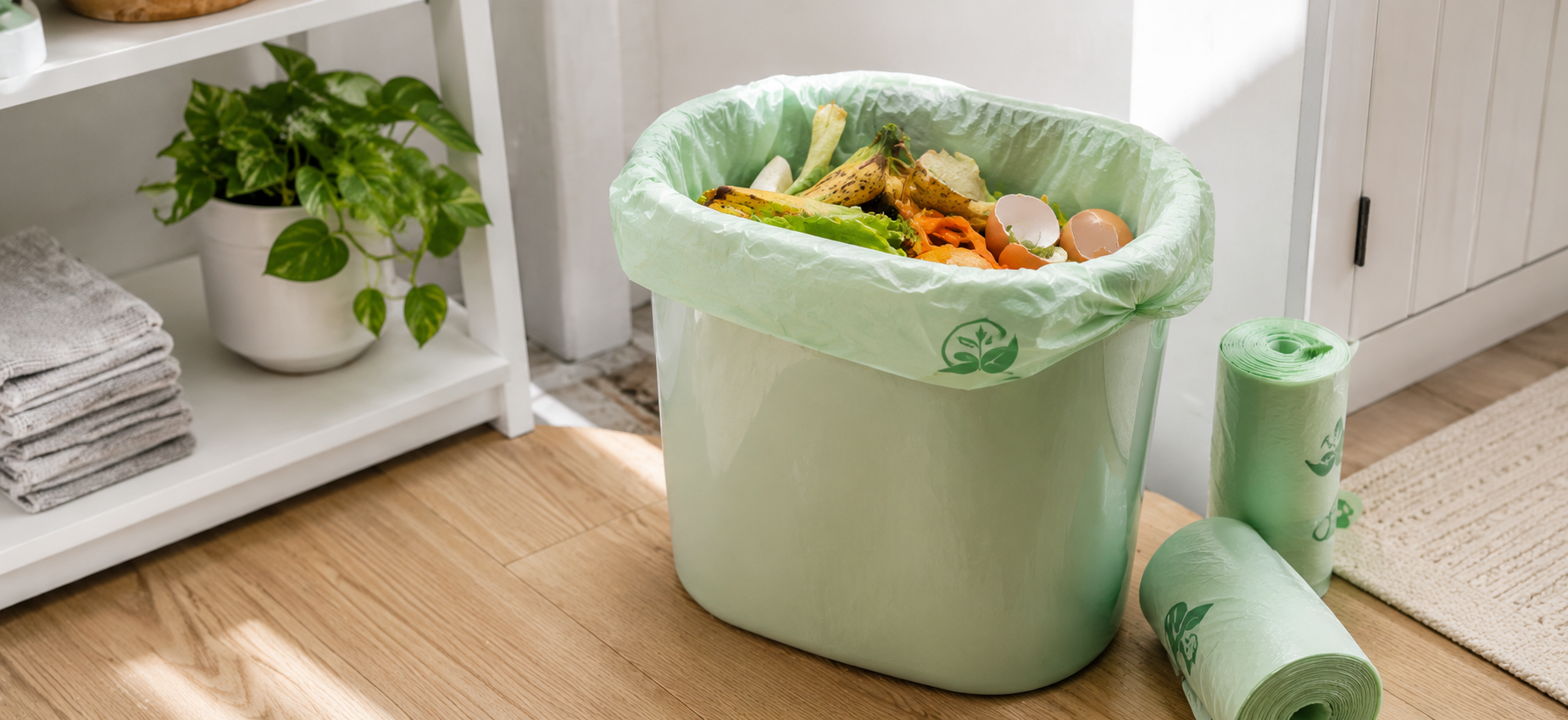
Most people switch to compostable trash bags for the right reasons. They’re sorting their food scraps, trying to reduce plastic, doing the things that actually matter. And then the bag splits open over the kitchen floor at 7am, spilling coffee grounds and vegetable peels across the tiles they just mopped.
It happens. And it happens often enough that a lot of people quietly go back to regular plastic bags and feel a little guilty about it.
The problem isn’t the idea of compostable bags. The problem is that the market is full of options that don’t hold up – bags that leak after two days, bags marketed as “eco-friendly” without any real certification behind that claim, and bags that cost twice as much as regular trash bags without performing any better.
This guide cuts through all of that. It covers the best compostable trash bags that actually work, what to look for before you buy, and the one thing almost everyone gets wrong when choosing them.
Why This Choice Actually Matters
Every standard plastic trash bag ever made still exists somewhere on this planet. Most are made from polyethylene – a fossil fuel derivative that takes anywhere from 500 to 1,000 years to break down, and even then, it breaks down into microplastics rather than anything useful.
Compostable trash bags are a genuinely different category. Made from plant-based materials like cornstarch, PLA (polylactic acid), and PBAT, they break down into water, carbon dioxide, and organic matter under composting conditions – typically within 90 to 180 days in an industrial facility.
That’s not a marketing claim. It’s a measurable, testable process governed by certification standards from independent bodies. When a bag actually meets those standards, it does something useful instead of just sitting in a landfill for centuries.
According to the EPA’s composting resources, composting food and organic waste is one of the most effective ways to reduce what ends up in landfills – and using the right bags makes the whole system work properly. The wrong bag – one that claims to be eco-friendly but isn’t certified – can actually contaminate an entire batch of compost and cause the facility to reject it.
Which is why the certification piece matters more than anything else on the label.
The One Thing to Check Before Everything Else: Certification
Before you read a brand name, before you look at the price, before you think about size or thickness – look for the certification logo.
This is the single most important thing about buying compostable trash bags, and it’s what separates a bag that does what it says from one that’s just wearing green packaging.
There are two certifications that actually matter in the US market:
BPI (Biodegradable Products Institute) – The leading certification body in North America. A BPI-certified bag has been independently tested to meet ASTM D6400 standards, meaning it will break down in an industrial composting facility within 180 days. If your food scraps go to a curbside composting program or a commercial composting service, BPI certification is what you need.
TUV Austria OK compost HOME – A stricter certification that requires the bag to break down in a home compost pile – no industrial facility required. Home composting happens at lower temperatures and slower rates than industrial composting, so this certification is harder to earn and more meaningful for people with backyard compost bins.
If a bag doesn’t have one of these two logos, it’s not verified as truly compostable – regardless of what the packaging says. “Biodegradable,” “plant-based,” and “eco-friendly” are not the same thing as certified compostable, and they don’t guarantee the same result.
What to Look for Beyond Certification
Once you’ve confirmed the certification, here’s what actually determines whether the bag is good to use day to day.
Thickness (measured in mil) The thickness of a compostable bag makes a dramatic difference in how it performs. A 0.6 mil bag will handle dry, light waste. Anything wet – coffee grounds, fruit scraps, leftover food – needs at least 0.8 mil, and ideally 1.0 mil or above. Thicker bags are heavier-duty and hold up to the kind of kitchen waste that would split a thinner bag at the bottom.
Size Match the bag to your bin. A 13-gallon bag fits most standard kitchen trash cans. For a countertop food scrap caddy, you want something in the 1 to 3-gallon range. For yard waste and outdoor bins, look for 30-gallon or larger. A bag that’s too small will fall into the bin constantly. Too large and you’re bunching up extra material that serves no purpose.
Seal type Star-sealed bottoms (where the base of the bag is formed by multiple folds rather than a single straight seam) distribute weight more evenly and resist leaking better than flat-bottom designs. For kitchen compost bags that will hold wet food waste, a star seal is worth looking for specifically.
Drawstring vs. flat top Drawstring closures make carrying and tying off the bag significantly easier, especially when the bag is full and heavy. Flat-top bags are slightly cheaper but less convenient for anything over a few pounds.
The Best Compostable Trash Bags by Category
Best Overall: UNNI 100% Compostable Bags
UNNI is consistently the most recommended brand across independent reviews, and for good reason. These bags carry both BPI certification and TUV Austria OK compost HOME certification – meaning they qualify for both industrial and home composting. They’re made from plant starch with no polyethylene.
The main thing to know: empty and replace them every three to four days. Like all certified compostable bags, they’ll begin breaking down if left with wet food scraps for too long. That’s not a flaw – it’s the certification working as designed. It just requires a slightly different habit than conventional bags.
Available in multiple sizes from 2.6-gallon countertop liners up to 13-gallon kitchen bags.
Best for: Most households using curbside composting programs or home compost bins.
Best for Home Composting: BioBag
BioBag has been making compostable bags longer than most of the newer brands on the market, and they show it. Their bags are certified for home composting with the OK compost HOME certification, and they’re made from a GMO-free resin that breaks down quickly even in a backyard compost pile.
In independent composting tests, BioBag has consistently been among the fastest to break down – with meaningful decomposition starting in under three months in home compost conditions.
The bags feel thinner than some competitors, which can be off-putting at first. Handle them a bit more carefully than you would a conventional bag, and they hold up fine for normal food scraps and kitchen waste. They’re also available in a wide range of sizes, including dog waste bags and yard waste bags under the same brand.
Best for: Backyard composters and households with a home compost bin.
Best Budget Option: STOUT by Envision EcoSafe-6400
If the per-bag cost of premium compostable options is the thing holding you back, STOUT is worth looking at. These are BPI-certified bags available at a lower price point than most other certified options – making them a practical starting point for households new to composting.
The trade-off is performance with very wet waste. STOUT bags are more prone to leaking than thicker options like Primode or UNNI if the contents are heavy and moist. For lighter kitchen waste and food scraps that get replaced frequently, they work well. For heavier loads, double-bag or move to a thicker option.
Best for: Budget-conscious households, lighter food waste, or anyone starting out who wants to test compostable bags before committing to a premium brand.
Best Heavy-Duty Option: Primode 100% Compostable Bags
Primode bags are noticeably thicker than most competitors, and that thickness is the whole point. These are the compostable bags for households that generate heavy kitchen waste – the melon rinds, the coffee grounds, the pasta leftovers – where thinner bags would struggle or leak.
They’re BPI-certified, made primarily from cornstarch, and genuinely feel substantial in hand rather than flimsy. The higher price reflects the heavier construction, and most reviewers who’ve tried multiple brands land on Primode as worth the extra cost for peace of mind.
Best for: Heavier kitchen waste, households that empty their bins less frequently, anyone who’s had thinner compostable bags split on them.
Best for Countertop Compost Bins: If You Care Certified Compostable Bags
Small countertop compost caddies are where a lot of people start with food scrap collection – and they need a different bag than a full-sized kitchen bin. If You Care makes small, certified compostable liners specifically sized for countertop collectors, with a flat-bottom design that fits neatly into most standard caddies.
These are certified to EN 13432 standards (the European equivalent of ASTM D6400, recognized by many US composting programs as well). Thin by design – these are meant for small volumes of food scraps turned over frequently, not for holding a week’s worth of kitchen waste.
Best for: Countertop food scrap caddies, small under-sink compost collectors, anyone collecting scraps daily for a larger bin or curbside pickup.
Compostable vs. Biodegradable – The Difference That Matters
This comes up constantly in searches and in stores, and it’s worth being clear about it.
All compostable bags are biodegradable – but not all biodegradable bags are compostable. That distinction isn’t just semantic. It has real consequences for whether your bag ends up doing anything useful.
“Biodegradable” has no regulated definition in the US. A bag labeled biodegradable might break down in 50 years, in 500 years, or into microplastics that persist in the soil indefinitely. The label alone tells you almost nothing about how the bag will actually perform in composting conditions.
“Compostable” – when it’s backed by BPI or TUV certification – means the bag has been tested to break down into non-toxic organic matter within a defined timeframe under specific conditions. That’s the difference between a claim and a guarantee.
Some bags also use the term “oxo-degradable” or “oxo-biodegradable,” which refers to conventional plastic bags with additives that make them fragment into smaller pieces faster. These are not compostable and are actually worse for composting facilities because the plastic fragments can contaminate finished compost. Several countries have moved to ban them entirely for this reason.
If you want to understand the science behind how certified compostable materials break down, Rodale Institute’s composting research is worth reading – they’ve been studying compost systems for decades and publish their findings openly.
How Long Do Compostable Bags Last Before Breaking Down?
This is the practical question that often trips people up when switching from conventional bags.
In your kitchen bin, a compostable bag is fine for three to four days with regular food waste. If you’re adding very wet scraps – juices, soups, anything liquid – replace it sooner. The material is designed to break down when exposed to moisture and microbes over time, which is exactly what happens in a compost environment. In a kitchen bin, that process starts slower, but it does start.
In industrial composting conditions, most certified bags break down within 90 to 180 days. In a well-managed home compost pile, BioBag and similar home-compostable options can break down in as little as 45 to 60 days under ideal conditions.
The bags should never go in a regular landfill. Without access to oxygen, moisture, and the microbial activity present in a compost environment, they won’t break down properly – and in an anaerobic landfill, they can actually produce methane as they decompose slowly, which is worse than simply using a regular plastic bag. Compostable bags work within a composting system. Outside of one, they’re just a more expensive alternative.
A Few Things Worth Knowing Before You Switch
Check what your composting program accepts. Some curbside composting programs don’t accept any bags – compostable or otherwise. Others specifically require BPI-certified bags. A quick check of your local program’s guidelines before buying a large supply is worth a few minutes.
Don’t store them in heat or humidity. Compostable bags begin degrading when exposed to moisture and warmth – that’s the point of them. Storing an unopened box in a hot garage or a damp cabinet can start that process before you’ve even used them. Keep them in a cool, dry place.
Line the bottom of your caddy with newspaper or a paper towel. This absorbs excess moisture and significantly reduces the chance of the bag developing leaks or starting to break down too quickly from contact with liquid at the bottom of the bin.
Start with a small pack. Before buying in bulk, test a pack of 10 to 20 bags to see how they hold up in your specific kitchen with your specific waste. Different households generate different waste, and what works perfectly for one setup might need adjustment for another.
Frequently Asked Questions
Are compostable trash bags actually better for the environment?
Yes – when they end up in a composting facility or home compost bin as intended. They break down into organic matter that improves soil rather than persisting as plastic. The environmental benefit is real, but it depends on the bag being composted, not landfilled. A compostable bag sent to a landfill doesn’t deliver the same benefit.
Can I use compostable bags for regular household trash – not just food scraps?
You can, but they’re best suited for organic waste. For general household trash that isn’t going to a composting facility, a regular bag works just as well and costs less. Compostable bags deliver their environmental benefit specifically when the contents end up in a compost system.
Why do compostable bags sometimes smell more than regular bags?
Because they’re more breathable than conventional plastic, which allows some odor to escape. The solution is the same as with regular compost bins – empty frequently, use baking soda in the bottom of the bin, or store your caddy in a cool spot. The smell is also a sign the bag is working as designed – allowing airflow rather than sealing everything in airtight.
Do compostable bags cost more than regular trash bags?
Yes, typically. Certified compostable bags run roughly two to four times the cost per bag compared to standard plastic bags. Budget options like STOUT narrow that gap, and buying in larger packs brings the per-bag cost down. For most households, the weekly cost difference is small – a few dollars – but it’s a real consideration.
Can I put compostable bags in my backyard compost bin?
Only if the bag has the TUV Austria OK compost HOME certification. Standard BPI-certified bags are designed for industrial composting conditions and may take much longer – or fail to break down at all – in a home compost pile. BioBag and UNNI both hold home compostable certification.
How do I know if my city’s composting program accepts compostable bags?
Most city composting program websites list accepted materials and whether bags need to meet specific certifications. If you can’t find it online, a quick call to your local waste management department will give you a definitive answer. This is worth checking before buying, since some programs only accept loose scraps.
What size compostable bag do I need?
13-gallon for a standard kitchen bin. 2 to 3-gallon for a countertop food scrap caddy. 30-gallon or larger for yard waste or outdoor bins. When in doubt, measure your bin’s capacity and match the bag size accordingly.
How should I dispose of compostable bags I can’t compost?
If you don’t have access to composting – no curbside program, no home bin – the honest answer is that compostable bags won’t deliver their full benefit. They can go in regular trash, where they’ll break down more slowly than in a compost environment. Working toward access to a composting program is the longer-term solution – many areas have drop-off composting sites even without curbside pickup.
Interested in other ways to reduce waste and cook more intentionally from scratch? The cooking section at Masago covers practical recipes and kitchen habits worth building – from homemade staples to food storage ideas that actually help.