The Best Fluffy Pancakes recipe you will fall in love with. Full of tips and tricks to help you make the best pancakes.

You’ve had it. Probably without knowing what it was called.
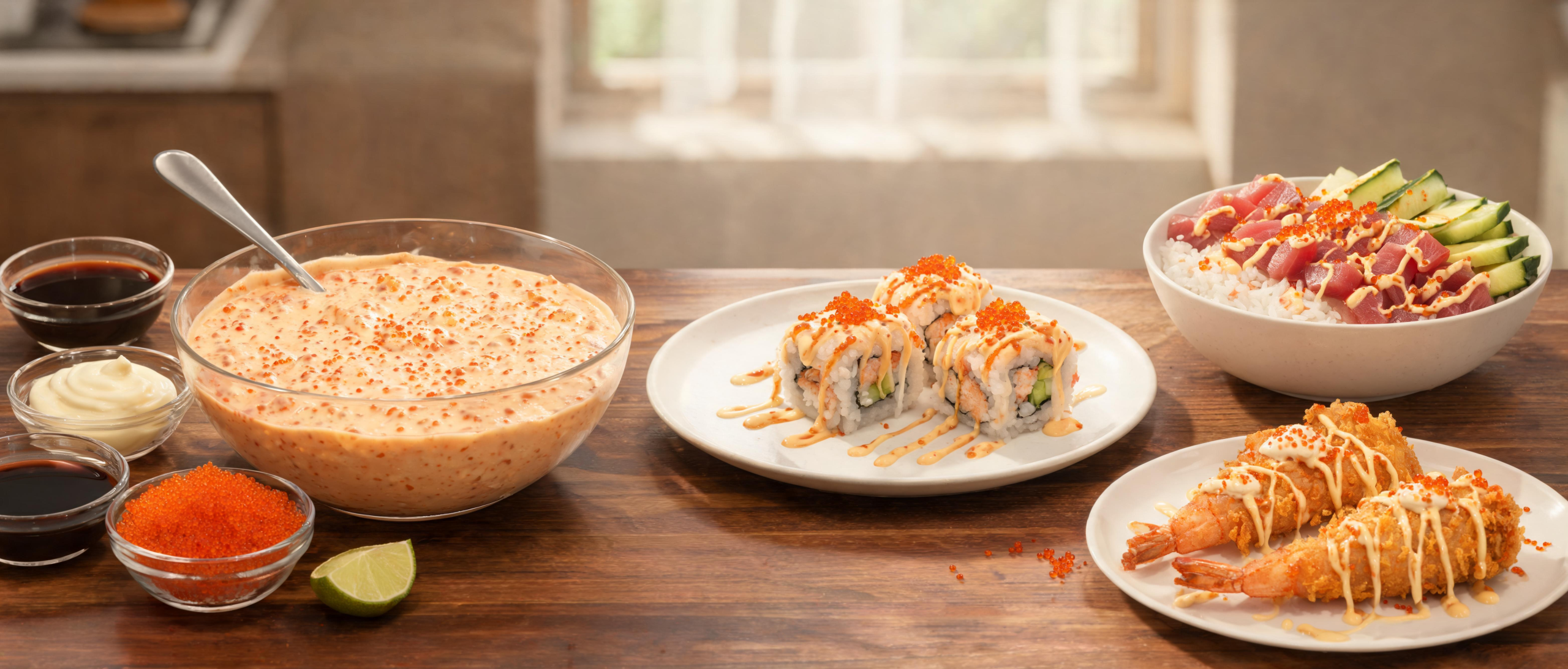
That pale orange sauce drizzled over a spicy tuna roll, pooled under a piece of crispy tempura, or dotted across a poke bowl at the place you keep going back to – that’s masago sauce. It’s one of the most quietly addictive condiments in Japanese-influenced cooking, and it takes about two minutes to make at home.
So why does it taste that good? And why does every sushi restaurant seem to have their own version of it?
Here’s what’s actually going on.
What Masago Sauce Is
Masago sauce is a creamy, briny condiment built around masago – the tiny orange roe of the capelin fish – mixed with Japanese mayonnaise, a squeeze of lime, and a hit of sriracha. That’s the core formula. Four ingredients, ready in the time it takes to find a mixing bowl.
The sauce itself is smooth and creamy with small bursts of texture from the roe. The flavor lands somewhere between rich and bright – the mayo brings body, the lime cuts through it, the sriracha adds warmth without heat, and the masago ties everything together with a gentle ocean salinity that you can’t quite name but would immediately miss.
It’s the kind of sauce that makes people ask what’s in it. The answer always surprises them.
If you’re new to masago entirely, our full guide on what masago actually is covers the ingredient from scratch – where it comes from, what it tastes like on its own, and why it ends up on almost every sushi menu you’ve ever looked at.
Why It Works So Well
Masago is mild on its own. In raw form, it’s a soft, lightly briny ingredient that adds texture and a subtle savory note to whatever it touches. It’s not trying to dominate anything.
But mix it into mayo – especially Kewpie, the Japanese mayo made from egg yolks only, giving it a richer, more custardy texture than standard Western mayonnaise – and something clicks. The masago distributes evenly through the sauce, every spoonful carries that gentle brininess, and the overall result tastes more complex than four ingredients have any right to taste.
The lime juice is doing more work than people realize. It keeps the sauce from feeling heavy. Without it, the richness of the mayo starts to sit on the palate. With it, the whole thing lifts – brighter, cleaner, noticeably better.
Sriracha adds warmth rather than sharpness. A full tablespoon of it in masago sauce isn’t going to blow anyone’s head off. It just adds a background heat that rounds the sauce out and gives it a little more interest.
The Classic Masago Sauce Recipe
Makes about ¾ cup – serves 6 as a drizzle or dipping sauce
Ingredients:
- ½ cup Kewpie mayonnaise (or regular mayo in a pinch)
- 2 tablespoons masago
- 1 tablespoon sriracha
- Juice of ½ lime
Instructions:
- Add all four ingredients to a bowl.
- Stir until fully combined.
- Taste and adjust – more sriracha for heat, more lime for brightness, more masago if you want the texture to be more pronounced.
- Serve immediately or refrigerate in an airtight container.
Done. Two minutes, maximum.
On Kewpie vs. regular mayo: Regular mayo works, but the sauce will taste noticeably flatter. Kewpie’s egg-yolk-only formula gives it a creaminess and depth that regular mayo simply doesn’t have. It’s worth finding. Most Asian grocery stores carry it, and Whole Foods and Target stock it in the international aisle. If you’re making masago sauce more than once – and you will be – Kewpie is worth keeping in the fridge permanently.
How to Adjust It to Your Taste
The base recipe is a starting point, not a law.
Want more heat? Add a full tablespoon and a half of sriracha, or swap half of it for a teaspoon of gochujang for a different kind of spice – deeper, slightly fermented, more complex.
Want it lighter? Reduce the mayo slightly and add an extra squeeze of lime. The sauce gets thinner and more drizzle-friendly, which works well over rice bowls.
Want more texture? Double the masago. The flavor gets more pronounced and the texture becomes more obvious – you’ll actually notice the individual eggs in each bite.
Want it milder? Skip the sriracha entirely and add a small drizzle of soy sauce instead. The heat disappears, the sauce takes on a more savory, umami-forward character, and it pairs better with more delicate fish like flounder or snapper.
What to Put Masago Sauce On
This is where most people underestimate it. Masago sauce is not just a sushi condiment.
Sushi rolls and nigiri – the obvious one. It works as a drizzle over finished rolls, as a dipping sauce alongside, or squeezed into the inside of a roll before the final cut. If you want a deeper look at how masago shows up across the sushi menu, this breakdown of masago in sushi is worth reading before your next restaurant visit.
Poke bowls – a spoonful stirred through a poke bowl is the fastest upgrade you can make. It binds everything together and adds a richness that soy sauce alone doesn’t provide.
Rice bowls – plain steamed rice, a fried egg, some scallions, and a drizzle of masago sauce is a complete meal. It doesn’t need to be more complicated than that.
Grilled or roasted fish – spoon it over salmon, cod, or halibut right before serving. The sauce doesn’t need heat. It just needs the warmth of the fish to loosen it slightly and start doing its job.
Cucumber and avocado – slice both thin, fan them on a plate, drizzle masago sauce over the top. It’s a side dish that takes four minutes and looks like something from an actual restaurant.
Deviled eggs – pipe the standard filling, then add a small dot of masago sauce and a few extra masago eggs on top. The briny, creamy combination with the egg is one of those things that makes people stop mid-bite and ask what you did differently.
Roasted vegetables – broccoli, cauliflower, asparagus. Anything that comes out of a hot oven with some caramelization takes well to a cold, creamy sauce. Masago sauce is an underused option here.
A Quick Note on Nutrition
Masago itself brings real nutritional value to the sauce – protein, omega-3 fatty acids, vitamin B12, and selenium all show up in meaningful amounts even in small servings. Healthline’s breakdown of masago’s nutritional profile is worth a look if you want the full picture. The one thing to track is sodium – masago is salted during processing, and Kewpie adds a little more. As a drizzle or dipping sauce, the amounts stay manageable. Just worth knowing if you’re eating four rolls and doubling the sauce.
Storing It
Masago sauce keeps in the fridge for two to three days in an airtight container. The lime juice will soften slightly over time and the heat from the sriracha mellows a little. If anything, a day-old batch sometimes tastes more integrated than a freshly made one.
Don’t freeze it. The mayo-based emulsion breaks when thawed and the texture turns grainy. Make it fresh, use it within a few days.
One practical note: if you’re making it for a group, scale up proportionally and keep it in a squeeze bottle. The drizzle is part of the appeal. A spoon works, but a squeeze bottle looks and feels intentional.
Masago Sauce vs. Spicy Mayo
These two get conflated constantly. They’re not the same thing.
Spicy mayo is just mayonnaise and sriracha – sometimes with a small amount of sesame oil added. It’s heat-forward and one-dimensional by design. It’s meant to add richness and spice to a roll without competing with anything else.
Masago sauce has a third dimension: the masago itself. That brininess, that subtle ocean quality, that added texture – it changes the character of the sauce entirely. Spicy mayo is a supporting player. Masago sauce has more personality.
And while you’re comparing ingredients, it’s worth knowing the difference between masago and tobiko – the two most common types of fish roe you’ll encounter in sushi. This masago vs. tobiko breakdown covers which is which, why restaurants sometimes swap one for the other, and how to tell them apart on the plate.
If a recipe calls for spicy mayo and you use masago sauce instead, the dish will taste better. Try it once and see.
The Short Version
Masago sauce is four ingredients, two minutes, and the reason you keep ordering the same roll at the same restaurant. Make it at home with Kewpie mayo, masago, sriracha, and lime. Use it on everything.
Start with the base recipe. Adjust from there. The version you land on after a couple of tries will be the one you make on autopilot.
Small things. Big flavor.
FAQs
What does masago sauce taste like?
Creamy, mildly briny, with a gentle heat from the sriracha and brightness from the lime. It’s rich without being heavy. The masago adds small bursts of texture and a subtle ocean salinity throughout.
What is masago sauce made of?
The base recipe is Kewpie mayonnaise, masago (capelin roe), sriracha, and fresh lime juice. Some versions add soy sauce, sesame oil, or gochujang depending on the intended use.
Is masago sauce the same as spicy mayo?
No. Spicy mayo is mayonnaise and sriracha. Masago sauce adds masago roe to that base, which changes both the texture and flavor significantly – brininess, ocean depth, and small pops of texture that spicy mayo doesn’t have.
Can I use regular mayo instead of Kewpie?
Yes, but the result will taste flatter. Kewpie is made with egg yolks only and has a richer, more custardy texture with natural umami. It’s worth using if you can find it.
How long does masago sauce keep?
Two to three days refrigerated in an airtight container. Don’t freeze it – the emulsion breaks on thawing.
Where can I buy masago to make the sauce at home?
Japanese grocery stores, Asian supermarkets, Whole Foods, and online retailers. It’s usually in the freezer section, sold in small jars. Keep it frozen until you’re ready to use it, then refrigerate once opened.
Can I make masago sauce without sriracha?
Yes. Swap the sriracha for a small drizzle of soy sauce for a milder, more umami-forward sauce. Or skip the heat entirely and just use the mayo, masago, and lime – the result is lighter and pairs better with more delicate fish.