The Best Fluffy Pancakes recipe you will fall in love with. Full of tips and tricks to help you make the best pancakes.


Most people buying sushi rice for the first time reach for whatever bag says “sushi rice” on the front. That’s understandable. It’s also how you end up with rice that’s fine but never quite right – slightly too firm, not sticky enough, missing the subtle sweetness that makes sushi rice distinct from just seasoned rice.
The label “sushi rice” is not regulated. Any brand can put it on any short or medium-grain rice and sell it at a premium. What actually matters is the variety – and once you know the two or three varieties worth looking for, the whole category gets a lot simpler.
The Variety Question Comes First
Every brand conversation about sushi rice starts in the same place: Koshihikari or Calrose.
Koshihikari is the gold standard. It’s a short-grain Japanese variety developed in Niigata and Fukui prefectures in the 1950s that now accounts for over 30% of Japan’s entire rice crop. Sushi University, which draws on professional Japanese chef expertise, describes Koshihikari as sticky with strong density, plump with good luster when cooked – qualities that have earned it the top reputation among sushi chefs. The flavor has a natural sweetness and an almost buttery quality that makes it genuinely distinct from any other rice variety. Brands using Koshihikari cost more. They’re worth it if you’re cooking sushi regularly and want the actual thing.
Calrose is a medium-grain Japonica rice developed in California in the early 1900s and released commercially in 1948. America’s Test Kitchen, which blind-tested 19 Japanese rice varieties including supermarket standbys and specialty products, notes that Calrose is the best-selling variety of Japanese-style rice in the United States by a significant margin. It’s reliable, affordable, widely available, and produces a good sushi result – not a great one, but a good one. For occasional home cooking or a first attempt at sushi, Calrose brands are the right starting point.
The third variety worth knowing is Hitomebore – a cross between Koshihikari and other Japanese varieties that’s the second most popular rice in Japan. It’s slightly softer than pure Koshihikari, with a gentle sweetness and a texture that holds well even when cold. It’s harder to find in the US but worth seeking out if you come across it.
The Brands, Ranked Honestly
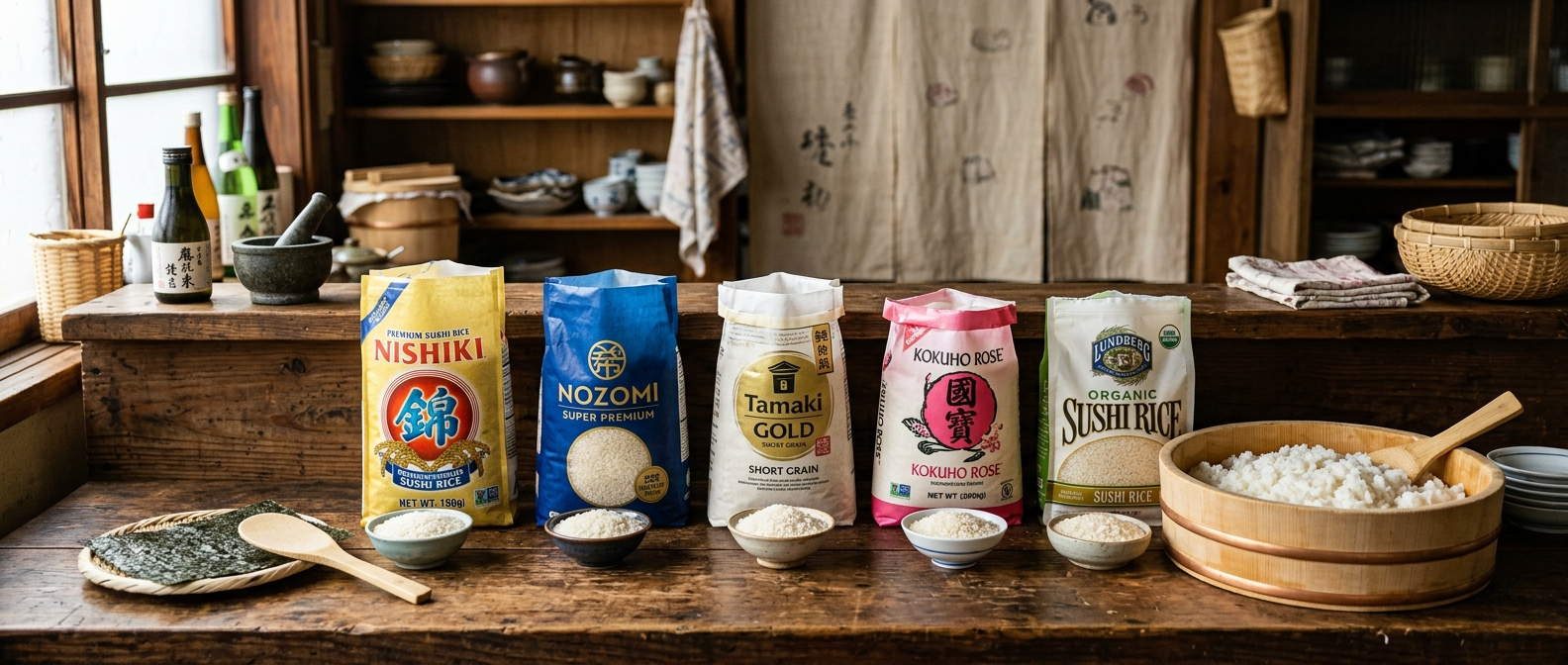
Tamanishiki Super Premium Short Grain Rice
The consistent top pick across multiple blind tasting panels and Japanese cooking communities. Just One Cookbook, the largest English-language Japanese recipe resource – founded by Nami, who was born and raised in Japan – recommends Tamanishiki for its depth of flavor and texture, describing it as a blend of California-grown Koshihikari and Yumegokochi varieties. The Yumegokochi component adds a softness and sweetness that pure Koshihikari sometimes lacks. The result is rice that cooks evenly, seasons well, and holds its shape in nigiri without feeling dense.
It’s more expensive than supermarket options – typically $15 to $25 for a 15-pound bag depending on the retailer. Available at Asian grocery stores, Whole Foods in some markets, and online. If you’re making sushi more than once a month and want to match the quality you’d get at a good restaurant, this is the one to buy.
Tamaki Gold California Koshihikari
A single-origin California-grown Koshihikari packaged in nitrogen-flushed bags to preserve freshness – a detail that actually matters because rice quality degrades with oxygen exposure over time. Tamaki is a Japanese-owned company, and the nitrogen packaging distinguishes it from brands that use standard sealed plastic. The rice itself is premium Koshihikari with the characteristic plump grain, natural sweetness, and sticky cohesion the variety is known for.
Comparable in price to Tamanishiki, and the choice often comes down to personal preference between the two. Tamanishiki’s blend gives it slightly more sweetness; Tamaki Gold’s single-variety Koshihikari is more traditional. Both are excellent.
Nishiki Medium Grain Rice
The most widely available Japanese-style rice in US supermarkets, stocked at most major chains. Nishiki uses California-grown Calrose and delivers consistent, reliable results – not the complexity of Koshihikari, but genuinely good sushi rice for everyday cooking. The price is right at roughly $8 to $12 for a 5-pound bag.
For first-time sushi makers or anyone making it infrequently, Nishiki is the practical answer. The technique matters more than the premium variety at the beginner stage – and Nishiki cooked correctly will outperform Koshihikari cooked badly.
Kokuho Rose
A California-developed hybrid variety – a crossbreed of a Persian long-grain and a Japanese short-grain rice, launched in California in the 1960s. Slightly stickier than standard Calrose, with a texture that sits between medium-grain and short-grain. It’s been a staple in Japanese American households for decades and remains one of the best value options on the market. Wide availability, consistent performance, affordable price. A strong everyday choice.
Lundberg Organic Sushi Rice
The best organic option. California-grown short-grain Japanese-style white rice certified organic, available at Whole Foods, Sprouts, and online. The texture and stickiness are comparable to Nishiki – solid Calrose-tier performance with organic certification for those who prioritize farming practices. Worth noting: organic rice does not produce better sushi texture than conventional Koshihikari. If texture is the priority, Tamanishiki wins. If organic farming is the priority, Lundberg is the pick.
Nozomi Super Premium Short Grain Rice
A premium California-grown Koshihikari with a loyal following among serious home cooks. Similar positioning to Tamaki Gold – single-variety Koshihikari at a premium price point, available primarily through Asian grocery stores and online. Less widely distributed than Tamanishiki or Tamaki Gold but worth picking up if you find it.
What the “Sushi Rice” Label on the Bag Actually Means
Nothing regulated. The FDA has no standard definition for “sushi rice” as a label. Any brand can print it on any short or medium-grain rice. Some bags labeled “sushi rice” contain high-quality Koshihikari. Others contain generic Calrose with a premium font and a higher price tag.
The way to read a sushi rice bag: look past the front label and find the variety name – Koshihikari, Calrose, Hitomebore, or a blend. That tells you what you’re actually buying. If the variety isn’t listed anywhere on the packaging, treat it as Calrose-tier regardless of what the front says.
Just One Cookbook’s Japanese rice guide advises specifically looking for short-grain or Japonica rice and checking labels for variety names like Koshihikari, Hitomebore, or Akitakomachi – and notes that Calrose, while not as sticky or glossy as true Japanese short-grain Koshihikari, is still a good option for sushi in a pinch. That’s the honest hierarchy: Koshihikari first, Calrose as the practical backup.
Where to Buy Each Brand
Tamanishiki and Tamaki Gold are reliably available at Japanese and Korean grocery stores (H-Mart, Mitsuwa, Marukai), Whole Foods in some markets, and on Amazon. Nishiki and Kokuho Rose are in most mainstream supermarkets – Kroger, Safeway, Walmart, Target in many regions. Lundberg is at Whole Foods, Sprouts, and natural grocery chains.
Sushi University’s rice guidance for professional and home cooks notes that for those outside major markets, California-grown Koshihikari varieties like Tamaki Gold, Nozomi, and Kagayaki are widely available through Amazon, making the premium tier accessible regardless of location.
If you’re in a city with a Japanese grocery store, go there first. The rice turnover is higher, the packaging dates are fresher, and staff can usually point you to what’s selling well. Old rice – regardless of variety – absorbs water inconsistently and produces worse results than fresh Calrose. Freshness matters more than variety in that specific scenario.
The Storage Point Nobody Mentions
Rice quality degrades after the bag is opened, faster than most people expect. Oxygen and humidity are the enemies. Store opened rice in an airtight container – a glass jar or a dedicated rice storage container – in a cool, dry location away from direct sunlight. The fridge works in humid climates. Premium brands like Tamaki Gold address this with nitrogen-flushed sealed packaging before opening; after opening, the responsibility shifts to you.
If you buy the best Koshihikari and store it in the open bag it came in, clipped at the top, you’ll be eating degraded rice within a few weeks. Proper storage is the part of the brand conversation that most buying guides skip.
The Honest Answer by Budget
Under $15 total: Nishiki 5-pound bag. Widely available, consistent, reliable. Season it correctly and it will make good sushi.
$15 to $30 for a 15-pound bag: Kokuho Rose or Lundberg Organic. Better everyday performance than Nishiki, organic option available.
$20 to $30 for a 15-pound bag of Koshihikari-tier rice: Tamanishiki or Tamaki Gold. This is where the results become noticeably different from supermarket Calrose. Worth the investment if sushi is a regular cooking project.
The technique gap between a beginner and an experienced cook is bigger than the gap between Calrose and Koshihikari. Buy the best rice you can afford, but don’t expect premium grain to compensate for rice that isn’t washed properly, cooked correctly, or seasoned at the right temperature.
For more on what to do with your rice once you have it – the preparation, the seasoning ratios, and what makes sushi rice different from plain white rice – our sushi rice vs white rice breakdown covers the full technique. The masago in sushi piece covers the fish roe component that goes on top of finished sushi rice in many preparations. And if you’re thinking about calories across different sushi formats once you’ve made your rice choice, the sushi calories breakdown has every format from nigiri to specialty rolls.
For everything the site covers about Japanese food, ingredients, and technique, the masago.blog homepage and Eat & Drink section have more. What masago actually is – the small orange fish roe you’ll find topping many sushi rice dishes – is covered in our guide to what masago is and in the detailed masago vs tobiko comparison.
Small things. Big flavor.
FAQs
What is the best sushi rice brand?
Tamanishiki Super Premium Short Grain Rice is the most consistently top-rated brand across blind tasting panels and Japanese cooking communities. It’s a blend of California-grown Koshihikari and Yumegokochi varieties, producing rice with exceptional stickiness, sweetness, and texture. Tamaki Gold California Koshihikari is a strong alternative at the same price tier.
What is the best sushi rice brand for beginners?
Nishiki Medium Grain Rice. It’s in most major supermarkets, affordable, consistent, and produces reliably good results. At the beginner stage, technique matters more than premium grain – learn to wash, cook, and season correctly with Nishiki before investing in Koshihikari.
Is Calrose rice good for sushi?
Yes, with the understanding that it’s the practical middle tier, not the premium option. Calrose is a medium-grain California Japonica rice that’s softer and slightly less sticky than true short-grain Koshihikari. It produces good sushi rice when cooked and seasoned correctly. Nishiki and Kokuho Rose are the two most widely available Calrose-based sushi rice brands.
What variety of rice do sushi restaurants use?
Most quality sushi restaurants use Koshihikari or a Koshihikari blend. Some source directly from specific Japanese regions – Niigata-grown Koshihikari is the most prized. At the home cooking level, California-grown Koshihikari varieties like Tamanishiki, Tamaki Gold, and Nozomi deliver comparable quality to what most sushi restaurants use.
Is Koshihikari better than Calrose for sushi?
Yes, for most purposes. Koshihikari is stickier, glossier, sweeter, and more cohesive when cooked than Calrose. It holds nigiri shapes better and has a flavor complexity that Calrose doesn’t replicate. The trade-off is cost and availability – Koshihikari brands cost more and aren’t in every supermarket.
What does “sushi rice” on a bag actually mean?
It’s a marketing label with no regulatory definition. Any brand can use it on any short or medium-grain rice. To know what you’re actually buying, look for the variety name on the packaging – Koshihikari, Calrose, Hitomebore, or a named blend. If no variety is listed, assume Calrose-tier quality regardless of price.
Where can I buy Tamanishiki or Tamaki Gold rice?
Japanese and Korean grocery stores (H-Mart, Mitsuwa, Marukai), Whole Foods in some markets, and Amazon. Both are reliably available online with delivery across the US.
Does rice freshness affect sushi quality?
Significantly. Old rice absorbs water inconsistently and produces drier, less sticky results regardless of variety. Look for packaging dates when available, buy from stores with high turnover, and store opened bags in airtight containers. Fresh Calrose will outperform stale Koshihikari.