The Best Fluffy Pancakes recipe you will fall in love with. Full of tips and tricks to help you make the best pancakes.


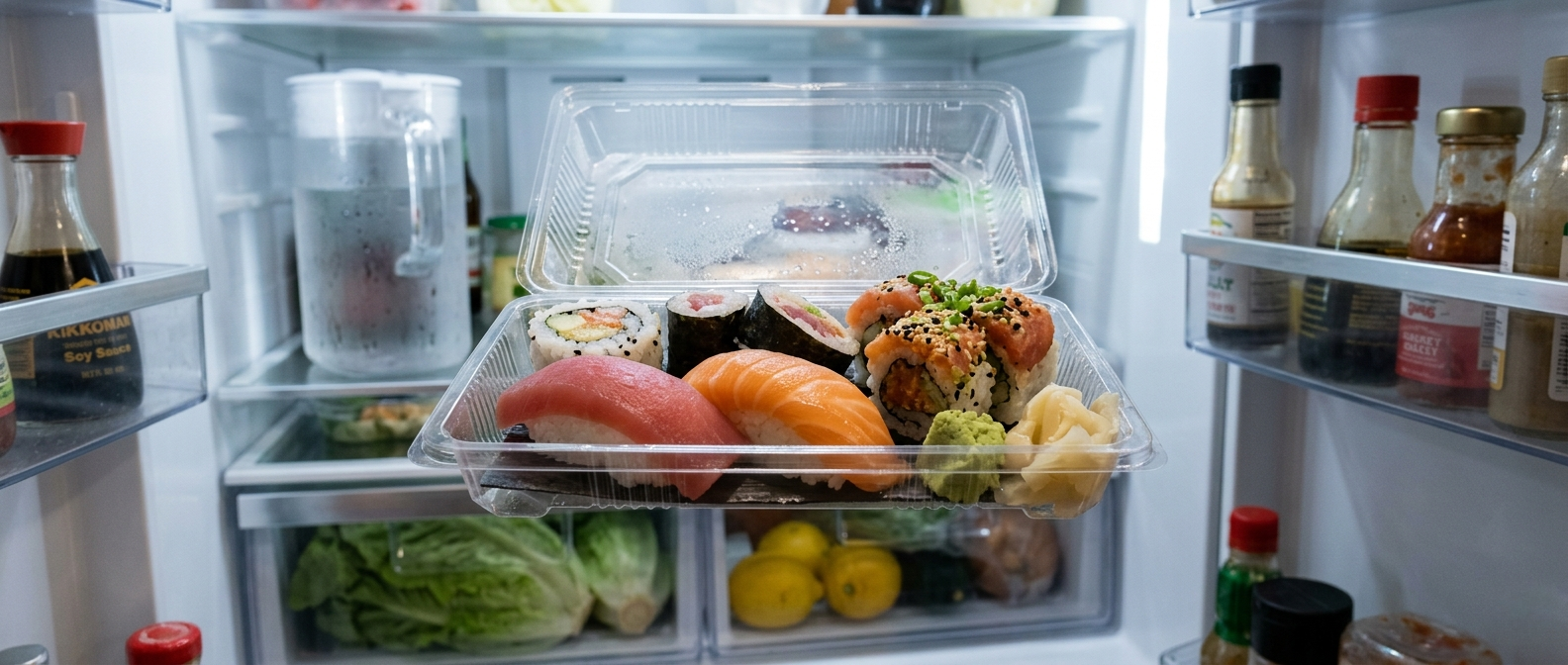
The answer is yes, with conditions. And the conditions matter.
Leftover sushi is not automatically dangerous. It’s also not automatically fine. The answer changes depending on whether the sushi contains raw fish, how quickly it was refrigerated, how it was stored, and how long ago you bought it. Getting any one of those variables wrong is the difference between a perfectly acceptable lunch and a genuinely unpleasant 24 hours.
Here is the full breakdown – by sushi type, by storage method, and by what to actually look for before you eat it.
The Two-Hour Rule Comes First
Before any discussion of the next day applies, the night before has to go right. The USDA and FDA guidelines published on FoodSafety.gov are unambiguous on this: perishable food left at room temperature for more than two hours enters the bacterial danger zone – between 40 and 140 degrees Fahrenheit – where bacterial growth accelerates rapidly. Sushi left on the table through a long dinner, sitting in a takeout bag in a warm car, or forgotten on the counter while you cleaned up is a different situation from sushi refrigerated promptly.
If it sat out for more than two hours, the next-day question is already answered. Toss it.
If it went into the fridge within two hours, you’re in the conversation.
Raw Fish Sushi: 24 Hours, No More
Sushi containing raw fish – tuna nigiri, salmon sashimi, spicy tuna rolls, yellowtail anything – has the shortest safe window. The USDA guidelines for raw fish and shellfish are one to two days refrigerated. In practical terms for leftover sushi, most food safety experts land on 24 hours as the outer limit before quality and safety both decline meaningfully.
The Healthline piece on how long sushi lasts, medically reviewed by a registered dietitian, confirms this: raw sushi can be stored in the fridge for one to two days, while cooked varieties extend to three to four days. Those aren’t arbitrary numbers – they reflect the rate at which bacteria multiply in raw seafood under refrigeration, and the fact that some pathogens like Listeria can continue growing at refrigerator temperatures.
The safety window and the quality window are actually the same here. Raw fish sushi that has spent the night in the fridge is technically safe to eat the next day if properly stored – but it won’t taste like it did. The rice firms up and dries out. The nori softens. The fish loses its texture and gains a stronger smell. Eating it is unlikely to harm you if storage was correct and it’s within the 24-hour window. Enjoying it is a different question.
Cooked Sushi: Three to Four Days
Cooked sushi – California rolls, shrimp tempura rolls, unagi nigiri, anything with imitation crab – behaves more like standard leftovers. The USDA’s guidelines put cooked seafood at three to four days refrigerated, and cooked sushi aligns with that range.
The caveat is texture. By day two, the rice is noticeably drier and harder, the nori has gone soft and chewy, and the overall eating experience is a significant step down from fresh. Technically safe, genuinely worse. Whether that trade-off is worth it depends on how much you paid for it and how hungry you are.
Vegetarian rolls – cucumber, avocado, pickled daikon – fall into roughly the same safe window as cooked sushi. The avocado is the weak link: it oxidizes and browns quickly under refrigeration, and a browned, mushy avocado is the fastest way a vegetable roll becomes unappealing well before any safety concern arises.
How to Actually Store Leftover Sushi
The difference between sushi that’s acceptable the next day and sushi that’s a disappointment is almost entirely about how it was wrapped before it went in the fridge.
The rice is the main problem. Sushi rice is seasoned with vinegar and meant to be served at room temperature. Cold temperatures cause the starch in the rice to retrograde – a process where the starch molecules recrystallize and the rice becomes firm, dry, and dense. This is why cold sushi from a bad restaurant fridge feels like eating seasoned gravel. Wrapping it tightly in plastic wrap before refrigerating slows moisture loss significantly and limits the retrogradation somewhat, though it doesn’t stop it.
Wrap each piece individually, or wrap the whole container tightly. Use an airtight container on top of that. Keep it in the coldest part of the fridge – back of the bottom shelf, away from the door where temperatures fluctuate every time it opens. Keep it away from strong-smelling foods. Sushi rice and raw fish absorb ambient odors faster than almost anything else in a refrigerator.
Do not stack pieces directly on top of each other without wrapping. The pressure compresses the rice and the weight breaks apart rolls. Do not store in a container that isn’t sealed.
The Listeria Problem Worth Knowing About
Most food safety conversations about raw fish focus on Salmonella and general bacterial contamination. Listeria deserves specific mention because it behaves differently from most foodborne pathogens.
Listeria monocytogenes can grow at refrigerator temperatures – between 34 and 40 degrees Fahrenheit – where most bacteria slow down significantly. This means properly refrigerated raw fish sushi does not have the same protection from bacterial growth that refrigeration provides for most foods. Healthy adults who consume a small amount of Listeria rarely get sick; the immune system handles it. Immunocompromised individuals, pregnant women, elderly people, and young children can develop serious illness from relatively low exposure levels.
This is not a reason to never eat leftover sushi. It is a reason why those specific groups should treat day-old raw fish sushi with extra caution and default to the cooked options.
The Smell and Texture Test
The most practical tool you have before eating leftover sushi is your senses. They are reliable guides here and align with what food scientists actually recommend.
Smell it first. Fresh sushi smells clean and faintly of the sea. Sushi that has started to turn smells distinctly fishy in a way that’s different from the normal fish smell – sour, slightly pungent, off. If it smells wrong, it is wrong. The nose is not infallible, but it is a useful and legitimate tool for evaluating seafood.
Look at it. Sushi rice that has dried out and hardened is a quality issue, not necessarily a safety one. Discoloration in the fish – grey edges on salmon, browning where tuna should be red – is a more meaningful signal. Sliminess on the fish or the rice is a clear sign of bacterial activity and a reason to discard immediately.
Feel the rice. Properly stored refrigerated sushi rice will be firm but not rock hard. Slimy rice means bacterial growth has progressed. Hard, dry rice means storage wasn’t airtight enough – safe but not enjoyable.
If any of these signals are off, the guidance is the same: toss it. The cost of a wasted meal is considerably lower than the cost of food poisoning.
What About Store-Bought Packaged Sushi?
Supermarket sushi and gas station sushi are packaged with a sell-by date printed on the label, which makes the calculation more straightforward. Check the packaged date, not just the sell-by date. If the sushi was packaged two days ago and the sell-by date is tomorrow, the quality clock started earlier than the sell-by label suggests.
Store-bought sushi often contains preservatives that extend shelf life modestly beyond restaurant-made sushi. It also typically travels a longer cold chain from preparation facility to shelf. The same storage principles apply once you’ve opened the packaging: airtight, refrigerated within two hours, consumed within the type-specific window.
Reheating Leftover Sushi: The Cooked Version Only
For cooked sushi rolls – shrimp tempura, California, unagi – reheating is a legitimate option that partially restores texture. A microwave at 30-second intervals, covered with a damp paper towel to trap steam, softens the rice back toward something workable without completely destroying it. Ten to fifteen seconds per piece, checking as you go, keeps you from desiccating it further.
Do not reheat raw fish sushi to make it “safe.” Cooking previously raw fish that has been sitting in the fridge overnight does not eliminate the safety risk if bacterial toxins have already developed. Some of those toxins are heat-stable and survive cooking. Reheating does not reset the clock on fish that has been sitting. The only version of this worth doing is transforming leftover cooked sushi components into a quick sauté with rice, vegetables, and a splash of soy sauce – which is genuinely good and genuinely different from trying to eat day-old nigiri as-is.
For more on the sushi ingredients you’re actually storing, our guide to what masago actually is covers the fish roe you’ll find on many rolls. If the raw versus cooked question came up while reading this, is sushi raw fish covers the full breakdown of what’s raw and what isn’t on a standard sushi menu. And if you’ve been thinking about calories across your leftover order, the sushi calories piece has every format from sashimi to specialty rolls.
For broader food safety and health context, the Health & Wellness category has more. And the masago.blog homepage has the full range of Eat & Drink coverage.
Small things. Big flavor.
FAQs
Can you eat sushi the next day?
Yes, with conditions. Raw fish sushi refrigerated within two hours of purchase is generally safe within 24 hours. Cooked sushi can last three to four days refrigerated. The rice and nori quality degrades significantly overnight regardless of safety, so expect a noticeably different texture from fresh.
How long does sushi last in the fridge?
Raw fish sushi: one to two days maximum. Cooked sushi such as California rolls, shrimp tempura rolls, and unagi: three to four days. Vegetarian rolls: three to four days, though avocado browns and softens faster than other ingredients. All of these assume the sushi was refrigerated within two hours of preparation.
How do you store leftover sushi overnight?
Wrap each piece tightly in plastic wrap or place in an airtight container. Store in the coldest part of the refrigerator – typically the back of the bottom shelf. Keep away from strong-smelling foods. Proper wrapping is the most important variable: it limits rice retrogradation and moisture loss that makes leftover sushi unpleasant to eat.
Can you eat leftover sushi if it smells a little fishy?
A mild sea smell is normal. A sour, pungent, or noticeably off smell is a sign of bacterial activity and the sushi should be discarded. When in doubt, throw it out – the smell test is a reliable guide for raw seafood.
Is it safe to reheat sushi?
For cooked sushi only – California rolls, shrimp tempura, unagi – gentle reheating in the microwave with a damp paper towel can partially restore texture. Do not reheat raw fish sushi to make it safe. Bacterial toxins that develop in raw fish can survive cooking and are not eliminated by reheating.
Why does sushi rice get hard in the fridge?
Starch retrogradation. The starch molecules in rice recrystallize under cold temperatures, making the rice firm, dry, and dense. Tightly wrapping sushi before refrigerating slows this process by limiting moisture loss, but doesn’t stop it entirely. Bringing refrigerated sushi to room temperature for 15 to 30 minutes before eating partially restores the texture.
Can pregnant women eat leftover sushi?
Pregnant women should avoid raw fish entirely, including fresh sushi and leftover raw fish sushi. Listeria monocytogenes – a pathogen that can grow at refrigerator temperatures – poses a particular risk during pregnancy. Cooked sushi options such as California rolls, shrimp tempura rolls, and vegetable rolls are safe choices.
How long can sushi sit out before it’s unsafe?
Two hours at room temperature is the outer limit according to USDA and FDA guidelines. In temperatures above 90 degrees Fahrenheit, that window drops to one hour. Sushi left out beyond these limits should be discarded regardless of how it looks or smells.