The Best Fluffy Pancakes recipe you will fall in love with. Full of tips and tricks to help you make the best pancakes.


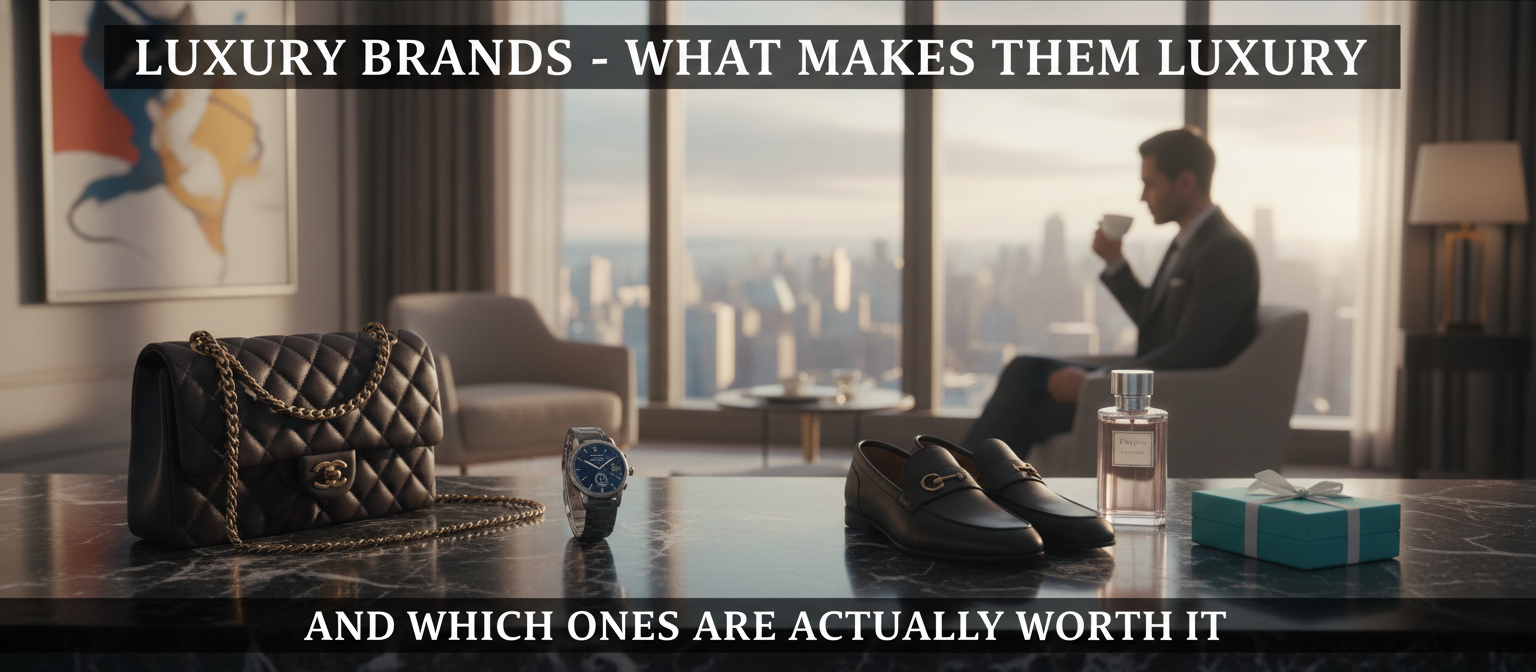
Spend enough time around luxury brands and you start to notice something.
The price tag is rarely the point. Nobody walks into a Hermès store because they need a bag. They walk in because of everything the bag means – the craftsmanship, the history, the quiet understanding that some people will recognize it and most won’t. That exclusivity is the product. The leather is almost secondary.
That’s what separates a genuinely luxury brand from an expensive one. And the line between the two is sharper than most people think.
What Actually Makes a Brand Luxury
Price alone doesn’t do it. A $900 coat from a fast fashion brand doing a “luxury” collection isn’t luxury. A $300 scarf from Hermès is.
The difference is a combination of things that take decades to build and can unravel faster than anyone expects.
Heritage is usually where it starts. The oldest luxury houses – Hermès founded in 1837, Louis Vuitton in 1854, Cartier in 1847 – carry a history that can’t be manufactured or bought. That history creates the foundation for everything else. When a brand has been doing one thing exceptionally well for over a century, the product itself becomes evidence of that continuity.
Craftsmanship is the second pillar. A Hermès Birkin takes one artisan roughly 18 to 24 hours to make by hand. Every stitch is placed deliberately. The hardware is hand-polished. The leather is selected individually. That level of production isn’t scalable in the way mass manufacturing is, and it isn’t meant to be. Scarcity is built into the process.
Then there’s the cultural dimension. Luxury brands don’t just sell products – they sell membership in a particular idea of taste, refinement, and status. Buying a Rolex isn’t just buying a watch. It’s buying into 120 years of association with achievement, precision, and a certain kind of understated success.
The Brands Actually Leading
According to Brand Finance’s 2025 Luxury and Premium report – the most rigorous annual brand valuation in the industry – the top ten most valuable luxury brands in 2025 are Porsche, Chanel, Louis Vuitton, Hermès, Rolex, Dior, Cartier, Ferrari, Gucci, and Guerlain. The combined brand value of the top fifty luxury and premium brands reached $317 billion this year.
A few things in that ranking are worth paying attention to.
Porsche holds the top spot for the eighth consecutive year with a brand value of $41.1 billion. That’s an automotive brand sitting above every fashion house on the list. It makes sense when you think about what Porsche actually sells – performance, engineering obsession, and a heritage of motorsport that goes back to the 1940s. The brand scores a 9.3 out of 10 for price acceptance, meaning consumers are consistently willing to pay a premium without much resistance.
Chanel made the biggest move of 2025 – a 45% increase in brand value to $37.9 billion, overtaking Louis Vuitton to become the most valuable French fashion brand for the first time in years. What’s driving that? Tighter distribution, fewer discounts, and a deliberate strategy of maintaining mystique in a market where most brands have gone more accessible. Chanel does not sell online. That choice is not accidental.
Hermès sits at fourth with a brand value of roughly $19.9 billion, but its valuation on the stock market tells a different story – the house is worth over $200 billion by market cap, making it one of the most valuable companies in France. The Birkin and Kelly bags resell above retail consistently. Not many fashion items function as financial assets. These do.
Dior is named the strongest luxury brand in 2025 by Brand Strength Index – a score of 93.5 out of 100, the highest among all luxury and premium brands globally. Brand strength and brand value are different measurements. Dior wins on reputation, awareness, and recommendation metrics. It’s the brand consumers trust and talk about most.
Gucci is the notable mover in the wrong direction – a 23.6% decline in brand value, dropping from fifth to ninth. The brand is mid-creative transition after years of maximalist logo-heavy collections. It’s a useful reminder that luxury brands aren’t immune to overexposure. Getting everywhere and being accessible to everyone is exactly the thing that erodes the luxury positioning that made the brand valuable in the first place.
Fashion’s Big Three
In pure fashion terms – setting aside automotive and watches – three houses have dominated global luxury for decades and show no sign of changing that.
Louis Vuitton is the most valuable pure fashion brand in the world, with some valuations putting it above $129 billion. The monogram canvas is one of the most recognized patterns on earth. The brand’s ability to maintain high margins while operating thousands of retail locations globally – without discounting, without outlet stores, without markdown events – is genuinely impressive from a business standpoint. That discipline is the whole strategy.
Chanel takes a different approach entirely. No e-commerce. No licensing agreements that dilute the brand. A strategy built entirely on control of distribution and experience. When you buy Chanel, you go to a Chanel boutique or an authorized department store. That’s it. The friction is intentional.
Hermès is the most selective of the three. The brand actively limits how much it produces. Waitlists for Birkins are real, and getting on one requires an existing purchase history with the brand. This is not customer inconvenience – it’s a strategy that makes the bag more desirable the harder it is to get.
Watches Worth Knowing
Rolex with a brand value of $18 billion is the most recognized watchmaker in the world and the clearest example of a brand becoming a global benchmark for an entire category. When most people picture a luxury watch, they picture a Rolex. The secondary market for Rolex is enormous – certain models trade above retail for years after release.
Patek Philippe doesn’t appear in the top ten by brand value rankings because it’s a private company and doesn’t disclose financials. But among watch collectors, it occupies a tier of its own. The brand has manufactured timepieces for Queen Victoria, Albert Einstein, and various heads of state. Their marketing tagline – that you never truly own a Patek Philippe, you merely look after it for the next generation – is one of the most effective pieces of brand positioning in the history of advertising.
Jewelry That Holds Its Value
Cartier at seventh with a $15.7 billion brand value is the house that essentially defined modern luxury jewelry. The Love bracelet, the Panthère watch, the Trinity ring – these aren’t just pieces of jewelry, they’re objects with cultural weight that has compounded over decades.
Tiffany & Co. sits at eleventh after LVMH’s acquisition in 2021 and a subsequent repositioning upmarket. The blue box remains one of the most recognizable pieces of brand identity in any industry – a color so associated with one brand that it has its own Pantone number.
What’s Actually Happening in Luxury Right Now
The market is shifting in a few important directions simultaneously.
Consumers – particularly younger ones – are moving toward experiences over objects. Travel, dining, events. The brands responding to this are the ones investing in hotels, restaurants, and exclusive experiences alongside their product lines. LVMH owns hospitality assets for a reason.
China’s luxury market, which drove enormous growth through the 2010s and early 2020s, has cooled significantly. Glion’s analysis of the top luxury brands notes that macroeconomic uncertainty has caused luxury shoppers in China to pull back in ways not seen since before the pandemic. Brands with overexposure to that market – which includes much of the LVMH portfolio – are feeling it.
Sustainability is becoming a genuine value driver rather than a PR exercise. The luxury consumer in 2025 is paying attention to where things come from and how they’re made. Brands with authentic craft heritage and transparent production are better positioned here than brands that have to retrofit sustainability messaging onto a volume-driven model.
And secondhand luxury is no longer a niche. The resale market for luxury goods has grown into a multi-billion dollar category, and the brands that benefit most are the ones – Hermès, Rolex, Chanel – whose pieces hold or gain value over time. Resale value has become part of the purchasing calculus in a way it wasn’t twenty years ago.
The Short Version
Luxury brands are selling something beyond the object. They’re selling heritage, craft, exclusivity, and the cultural weight that comes from decades of doing one thing exceptionally well.
The ones at the top of the 2025 rankings – Porsche, Chanel, Louis Vuitton, Hermès, Rolex – earned their positions by being disciplined about what they make, who they sell to, and how much of it they let out into the world.
The brands that lose their footing are almost always the ones that got too accessible, too fast.
Small things. Big flavor.
FAQs
What is the most valuable luxury brand in 2025?
Porsche is the most valuable luxury and premium brand in 2025 according to Brand Finance’s annual ranking, with a brand value of $41.1 billion. Among fashion houses specifically, Chanel overtook Louis Vuitton this year to become the most valuable French fashion brand.
What makes a brand truly luxury?
A combination of heritage, craftsmanship, scarcity, and cultural positioning. Luxury brands take decades to build – they rely on authentic history, genuinely skilled production, controlled distribution, and the cultural associations that come from consistently maintaining those standards over time.
Which luxury brand holds its value best?
Hermès consistently tops resale value rankings, particularly for the Birkin and Kelly bags, which frequently resell above retail price. Rolex watches also hold and often gain value on the secondary market. Chanel handbags have significantly appreciated over the past decade.
Is Gucci still a top luxury brand?
Gucci remains one of the ten most valuable luxury brands globally but posted a 23.6% decline in brand value in 2025, dropping from fifth to ninth. The brand is navigating a creative transition after years of maximalist styling, with tighter distribution and a rebuilding of brand exclusivity underway.
What is the difference between luxury and premium brands?
Luxury brands prioritize exclusivity, heritage, and craftsmanship above accessibility or volume. Premium brands offer high quality at elevated prices but compete more on features and value proposition. Luxury is about what the product means. Premium is about what it does.
Why is Chanel not available online?
Chanel’s decision not to sell through e-commerce is a deliberate brand strategy. It controls the purchase experience by requiring customers to visit a boutique or authorized retailer, maintaining the exclusivity and service quality associated with the brand. It also protects against counterfeiting and grey market sales.
What luxury brands does LVMH own?
LVMH owns over 75 luxury brands across fashion, jewelry, watches, spirits, and hospitality. Key names include Louis Vuitton, Dior, Givenchy, Celine, Fendi, Bulgari, TAG Heuer, Moët & Chandon, Hennessy, and Tiffany & Co., among many others.