The Best Fluffy Pancakes recipe you will fall in love with. Full of tips and tricks to help you make the best pancakes.


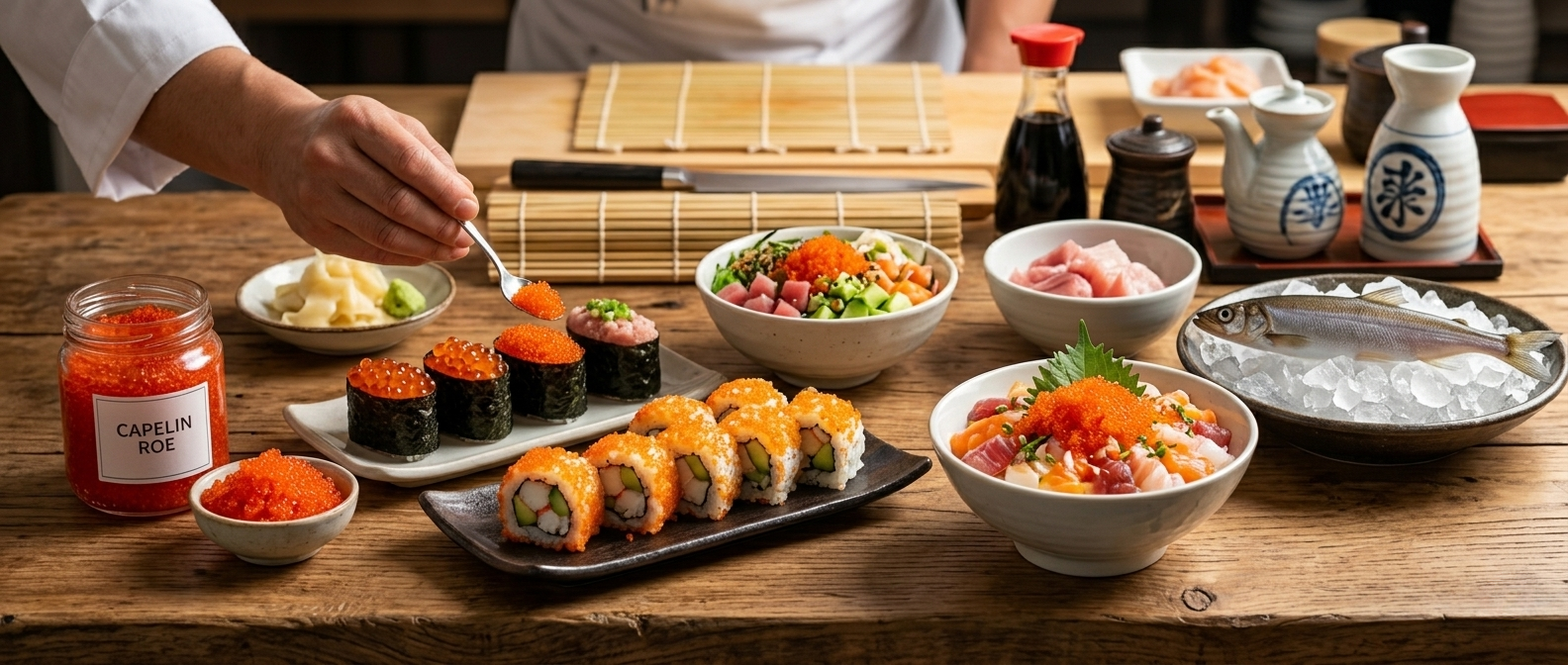
Those tiny orange beads on your California roll. The fine, briny coating pressed into the rice on the outside of a spicy tuna roll. The small mound sitting on top of a piece of nigiri in a gunkan-maki cup. That’s masago. Most people eat it every time they order sushi. Almost nobody stops to ask what it actually is.
This is the complete answer.
What Is Masago?
Masago is the roe – the eggs – of the capelin fish, a small cold-water species from the smelt family whose scientific name is Mallotus villosus. Capelin live primarily in the North Atlantic and Arctic Oceans, concentrated in the waters around Iceland, Norway, Canada, and Greenland. They’re small, silvery-green fish that closely resemble sardines, and they’re ecologically significant as a forage species – a critical food source for cod, seabirds, seals, and whales throughout the North Atlantic ecosystem.
The fish itself has limited culinary use. About 80% of harvested capelin becomes fishmeal and fish oil for animal feed. The remaining 20% is where masago comes from. Female capelin are harvested before spawning – when the fish are full of eggs – and the roe is extracted, cured with salt, and processed for culinary use.
The word masago (真砂) is Japanese and translates literally to “true sand” or “fine sand.” Look at a cluster of masago and the name makes immediate sense. Each individual egg is under a millimeter wide. Packed together they look exactly like fine, damp sand – thousands of tiny spheres pressed into a tight, grainy mass.
For a deeper look at the origin of the name, the Japanese linguistic context, and the history of masago in Japanese cuisine, our full guide to masago meaning covers all of it.
What Does Masago Look Like?
In its natural state, capelin roe is pale yellowish-white. The bright orange you see at sushi restaurants is food dye added during processing – a standard industry practice that gives masago its visually distinctive appearance on rolls and nigiri. The dye is typically food-safe orange coloring, though red, green, and black versions also exist. Black masago uses squid ink for coloring and has a slightly more pronounced briny flavor.
The eggs are extraordinarily small – far smaller than tobiko (flying fish roe) or ikura (salmon roe). They sit in dense clusters and hold their shape well, which is why they press cleanly into the outside of a rice roll without scattering. At normal viewing distance on a sushi plate, masago reads as a fine, uniform orange coating rather than individual eggs. Up close, you can see the individual spheres.
What Does Masago Taste Like?
Mild. That’s the defining characteristic and the whole point.
Masago has a light, clean brininess – a quiet saltiness without any of the pungency that puts people off stronger seafood. There’s a very faint sweetness underneath the salt. No strong fish smell. Nothing that overpowers whatever it’s sitting on top of. The flavor is subtle enough that it adds dimension to a roll without competing with the fish, avocado, or sauce around it.
The texture is fine and slightly grainy. The eggs are too small to pop individually the way tobiko does. They compress gently against the palate – a soft give rather than a burst, a smooth release of flavor rather than a dramatic one. That softness distinguishes masago immediately from tobiko, which has a noticeably firmer, more pronounced crunch.
The mildness isn’t a weakness. It’s a feature. Masago works in sushi precisely because it doesn’t fight anything. It’s the ingredient that makes a roll more interesting without announcing itself.
How Is Masago Used in Sushi?
Masago appears in more sushi preparations than most diners realize – often in places they don’t immediately identify as fish roe.
California rolls. The most common place most people encounter masago without knowing it. That fine orange coating pressed into the rice on the outside of the roll is masago. It’s not decoration. It’s pressed into the surface before the roll is cut so every piece has the brininess and texture built into the bite.
Spicy mayo rolls. Many spicy tuna and spicy salmon rolls blend masago directly into the spicy mayo mixture. This is where it contributes texture – small, firm granules in a creamy sauce – as well as a briny counterpoint to the richness of the mayonnaise.
Nigiri topping. A thin layer of masago pressed directly onto the fish on top of a nigiri. It adds both visual contrast and a second layer of ocean flavor to the preparation.
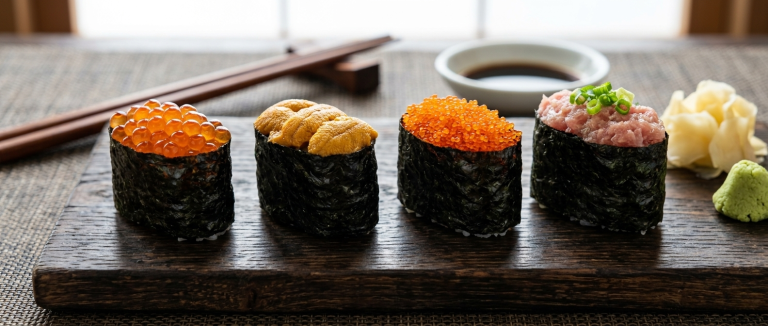
Gunkan-maki. Literally “battleship sushi” – a small oval of rice wrapped with a tall band of nori to form a cup, filled with masago and sometimes a quail egg cracked on top. This is one of the few formats where masago is the feature rather than an accent, and it’s the preparation most likely to convert someone who thinks they don’t like fish roe.
Sauces and condiments. Masago sauce – a blend of masago, mayonnaise, lime juice, and garlic – is increasingly common as a finishing sauce for grilled seafood, baked mussels, and Japanese-style pasta. The roe disperses through the mayo and delivers an ocean-forward creaminess that’s distinctly different from plain spicy mayo. Our full guide to masago sauce covers how to make it and every application it works in.
For a complete map of every sushi preparation masago appears in, the full masago in sushi guide covers every format from roll types to nigiri to gunkan-maki.
Masago vs Tobiko: The Comparison That Comes Up Most
These two are confused constantly, and understandably so. Both are small, brightly colored fish roe used as sushi toppings. They look similar enough at a glance that most diners don’t distinguish between them.
The differences are meaningful once you know what to look for.
Tobiko is flying fish roe. The eggs are noticeably larger than masago – roughly 0.5 to 0.8mm versus masago’s 0.5mm or smaller – and the size difference is visible up close. The color of natural tobiko is a deep reddish-orange before any dye is applied, darker and more vibrant than undyed masago. The texture is considerably firmer, with a pronounced crunch and a pop when you bite that masago doesn’t replicate. The flavor is bolder and more complex – slightly smoky, more intensely oceanic. Tobiko commands a significantly higher price, which is why masago is frequently substituted in rolls where cost matters.
Masago is smaller, softer, milder, and more affordable. Tobiko is larger, crunchier, more flavorful, and more expensive. Neither is a better ingredient in absolute terms – they serve different purposes. Tobiko is used when a stronger sensory impact is the goal. Masago is used when an accent is what’s needed.
The full masago vs tobiko breakdown covers every difference in detail – size, texture, flavor, color, price, and which situations each one is the right choice.
Masago vs Caviar: A Completely Different Category
Caviar is a specific term. It refers exclusively to the roe of sturgeon species – Beluga, Osetra, Sevruga, and others. Any product labeled “caviar” that doesn’t come from a sturgeon is a misnomer, technically speaking. The price difference reflects this: genuine sturgeon caviar can cost hundreds of dollars per ounce. Masago costs a fraction of that.
The flavor profiles are entirely different. Sturgeon caviar has a complex, rich, nutty flavor with a buttery finish and a pronounced pop. Masago is mild, briny, and simple. They’re not substitutes for each other – they’re different ingredients occupying different positions in completely different price brackets.
What they share: both are fish roe, both are used as garnishes in their respective culinary contexts, and both are nutrient-dense. The comparison comes up because people see “fish eggs” and group them mentally. The actual culinary relationship is minimal.
Our masago vs caviar guide covers the full comparison with complete detail.
Masago Nutrition: What’s Actually in It
For something most people eat as a topping, the nutritional density is remarkable.
One tablespoon (approximately 15 grams) of masago contains around 40 calories, 4 grams of protein, and 2.9 grams of fat – primarily heart-healthy omega-3 fatty acids. That same tablespoon delivers approximately 47% of the recommended daily intake of vitamin B12, along with meaningful amounts of selenium and magnesium.
Healthline’s full nutritional analysis of masago, reviewed by a registered dietitian, identifies the key nutritional profile in detail: masago is a complete protein – containing all nine essential amino acids – and provides selenium, which acts as an antioxidant and supports thyroid function and immune response. The omega-3 fatty acids support cardiovascular health and help reduce systemic inflammation.
WebMD’s overview of masago health benefits notes that the omega-3s in masago help produce hormones that regulate blood clotting and prevent inflammation of artery walls, contributing to reduced cardiovascular disease risk. Two to three servings of fatty fish or fish roe per week is a widely cited threshold for cardiovascular benefit.
The main nutritional caveat is sodium. Masago is cured with salt during processing, and the sodium content per serving is significant. People monitoring blood pressure or sodium intake should be mindful of portion size. It’s a topping, not a main ingredient – the amounts typically consumed in a sushi meal are modest enough that sodium is a background consideration rather than a disqualifying one.
For the complete breakdown of every nutrient, the health benefits, and what the research actually says, our masago health guide covers it in full.
Is Masago Safe to Eat?
For the vast majority of healthy adults, yes. A few specific considerations apply.
Mercury. Capelin is a small forage fish low on the food chain. It accumulates minimal mercury compared to larger predatory fish like tuna, swordfish, or mackerel. The FDA lists masago as a low-mercury seafood option – the small size of the fish and its position in the food chain keep mercury levels well below the thresholds of concern. The FDA’s guidance on eating fish classifies it in the “best choices” category for frequency of consumption, including for pregnant women.
Pregnancy. Masago is typically pasteurized or cured during processing rather than served truly raw, which distinguishes it from raw sashimi. The American Pregnancy Association notes that masago in moderate amounts is considered safe during pregnancy, supported by its low mercury classification. The sodium content is the more relevant consideration for pregnant women than raw fish concerns.
Allergies. Masago is a seafood product and triggers seafood allergies. It may also contain added soy sauce in some preparations. Anyone with seafood or soy allergies should confirm ingredients with the restaurant before eating masago.
Raw fish clarification. Masago is cured and salted, not heat-cooked – but it’s also not served in the same way as raw sashimi. It’s processed, preserved, and food-safe. The “raw” question that applies to nigiri and sashimi doesn’t apply to masago in the same way. For a full discussion of what’s raw and what’s cooked across all sushi ingredients, is sushi raw fish covers the complete breakdown.
Masago Sustainability: What You Should Know
The sustainability question around masago is genuinely nuanced and worth understanding.
Capelin is an ecologically important species – a keystone forage fish in the North Atlantic whose population health affects everything above it in the food chain. Cod, puffins, seals, whales, and humpbacks all depend on capelin as a primary food source. When capelin populations decline, the effects ripple upward through the ecosystem.
The good news: Icelandic capelin fisheries are MSC certified by the Marine Stewardship Council as sustainable and well-managed – the first capelin fishery in the world to achieve that certification. The total allowable catch is set trilaterally between Iceland, Norway, and Greenland. Icelandic masago is generally considered a sustainable choice.
The less good news: not all masago comes from Iceland. Canadian capelin is considered moderately sustainable. Russian and Norwegian capelin have received lower sustainability ratings from some environmental organizations due to less rigorous management. Most masago at sushi restaurants doesn’t specify origin, which makes it difficult for consumers to verify sourcing.
The practical approach: if sustainability matters to you, ask your sushi restaurant where their masago is sourced. MSC-certified Icelandic masago is available and worth requesting. The 80/20 rule – 80% of capelin becomes fishmeal, 20% becomes masago – also means that masago production is a byproduct of a fishing industry that would exist regardless, which some analysts consider a mitigating factor in its environmental accounting.
Where to Buy Masago
Masago is widely available and not expensive. Asian grocery stores (H-Mart, Mitsuwa, 99 Ranch) carry it in the refrigerated or frozen seafood section, typically in small jars or vacuum-sealed packs at $6 to $12. Most well-stocked supermarkets with seafood sections carry it. Online retailers ship it with cold packs.
Look for masago with an even, bright color and a clean, neutral aroma. Avoid anything with a sour or ammonia smell. Check that it’s been kept refrigerated or frozen throughout the cold chain – temperature breaks are the most common cause of quality issues in fish roe products.
Unopened and frozen, masago keeps up to six months. Refrigerated and opened, use within three to four days. Do not refreeze after opening. Our full guide to where to buy masago covers every retail channel with detail on what to look for.
Masago in Cooking Beyond Sushi
Masago isn’t confined to the sushi restaurant. It’s one of the most versatile garnishes in Japanese-influenced cooking once you start looking for ways to use it.
Mixed into a simple mayonnaise with lime juice and garlic, it becomes masago sauce – one of the best finishing sauces for grilled fish, baked mussels, or anything that benefits from a creamy, ocean-forward condiment. Stirred through warm rice or noodles it adds a quiet briny depth. Used as a garnish on a poke bowl it adds texture and visual contrast without overpowering the bowl’s primary flavors.
The key in all of these applications is the same principle that makes masago work in sushi: it accents without dominating. A little goes a long way. The serving size at a sushi restaurant – a tablespoon or less – is genuinely the right quantity for most preparations.
The Masago.Blog Coverage
This site is built around masago – the ingredient and everything connected to it. The full depth of that coverage is here:
The ingredient itself:
- What is masago – origin, meaning, and complete overview
- Masago meaning – the Japanese word, its translation, and cultural context
- Masago roe – the eggs themselves, what they look like, and how they’re harvested
- Masago eggs – the biology of capelin roe and what makes it distinctive
Comparisons:
- Masago vs tobiko – the complete side-by-side breakdown
- Masago vs caviar – why they’re completely different categories
Sushi applications:
- Masago in sushi – every sushi format masago appears in
- Masago sushi – the full guide to ordering and making sushi with masago
- Masago nigiri – the specific nigiri preparation with masago
- Masago sashimi – masago in sashimi preparations
Cooking and recipes:
- Masago sauce – the creamy spicy condiment and how to make it
- Masago in sushi recipes – home cooking applications
Buying:
- Where to buy masago – every retail channel, what to look for, and prices
Broader sushi context:
- Is sushi raw fish – what’s raw and what isn’t across sushi ingredients
- Sushi calories – calorie breakdown by sushi type
- Sushi rice vs white rice – the rice that masago sits on top of
- Can you eat sushi the next day – food safety for leftover sushi
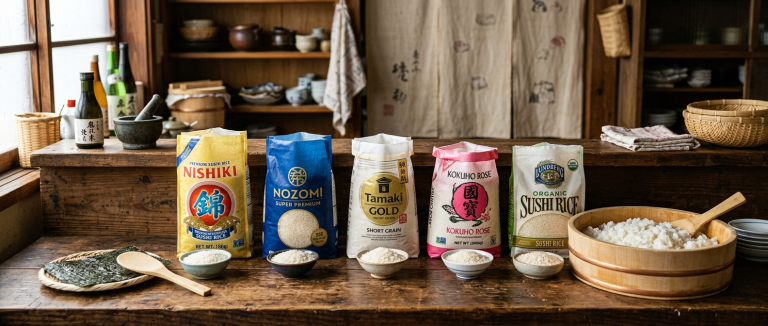
- Best sushi rice brands – the rice that makes the difference
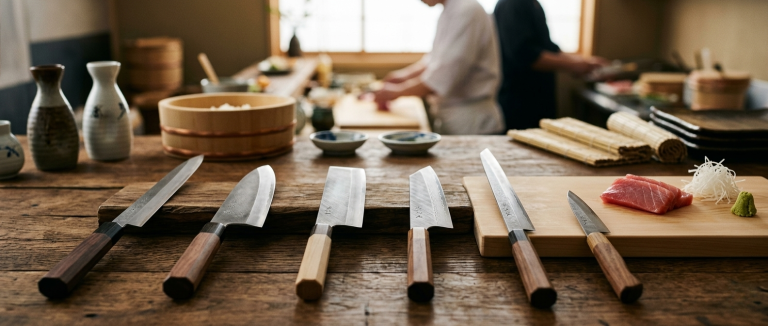
- Best sushi knives – the tools used to cut and prepare it
For everything else across food, culture, health, style, and tech, the masago.blog homepage has the full range.
Small things. Big flavor.
FAQs
What is masago?
Masago is the roe – the eggs – of the capelin fish (Mallotus villosus), a small cold-water species from the smelt family found in the North Atlantic and Arctic Oceans. The eggs are harvested from female capelin before spawning, cured with salt, and processed for culinary use. The word masago is Japanese for “fine sand,” a reference to the tiny size of the individual eggs.
What does masago taste like?
Mild, lightly briny, with a faint sweetness. It does not taste strongly fishy or pungent. The texture is fine and slightly grainy – the eggs are too small to pop individually, giving a soft, gentle texture rather than a burst. The mildness is the defining characteristic and the reason it works as a sushi accent.
Is masago raw?
Masago is cured and salted rather than heat-cooked, but it’s processed and food-safe in a way that differs from raw sashimi. It’s not served in the raw-fish sense that raises food safety questions about sushi-grade seafood. It’s processed, preserved, and safe to eat directly.
What is the difference between masago and tobiko?
Tobiko is flying fish roe. It’s larger, crunchier, more intensely flavored, and more expensive than masago. Masago is smaller, softer, milder, and more affordable. Both are used as sushi toppings. Masago is frequently used as a substitute for tobiko in cost-sensitive preparations.
Is masago healthy?
Yes, in the quantities typically consumed. One tablespoon delivers about 40 calories, 4 grams of complete protein, omega-3 fatty acids, approximately 47% of daily vitamin B12, selenium, and magnesium. The primary caveat is sodium – masago is salted during curing and high in sodium per serving. Moderation is the appropriate approach.
Is masago sustainable?
It depends on the source. Icelandic capelin fisheries are MSC certified as sustainable – the first capelin fishery to achieve that designation. Canadian capelin is considered moderately sustainable. Russian and Norwegian sources have received lower sustainability ratings. Most sushi restaurants don’t specify origin, so asking your chef about sourcing is the most direct way to verify.
Is masago safe during pregnancy?
The FDA classifies masago as a low-mercury seafood in the “best choices” category, including for pregnant women. It’s typically cured rather than served truly raw. Moderate consumption is generally considered safe. Sodium content is the main dietary consideration. Consult your doctor for guidance specific to your situation.
What is masago sauce?
Masago sauce is a creamy condiment made from masago, mayonnaise, lime juice, and garlic. It’s used as a finishing sauce for grilled fish, baked mussels, sushi, and Japanese-style pasta. The masago disperses through the mayo and delivers a briny, ocean-forward creaminess. Full recipe and applications in our masago sauce guide.
Where is masago from?
The capelin fish is found primarily in the North Atlantic and Arctic Oceans, with commercial fisheries concentrated in Iceland, Norway, Canada, and Greenland. Iceland is the primary source of MSC-certified sustainable masago. The ingredient became a sushi staple through its adoption in Japanese cuisine, where it spread globally as sushi culture expanded worldwide.