The Best Fluffy Pancakes recipe you will fall in love with. Full of tips and tricks to help you make the best pancakes.


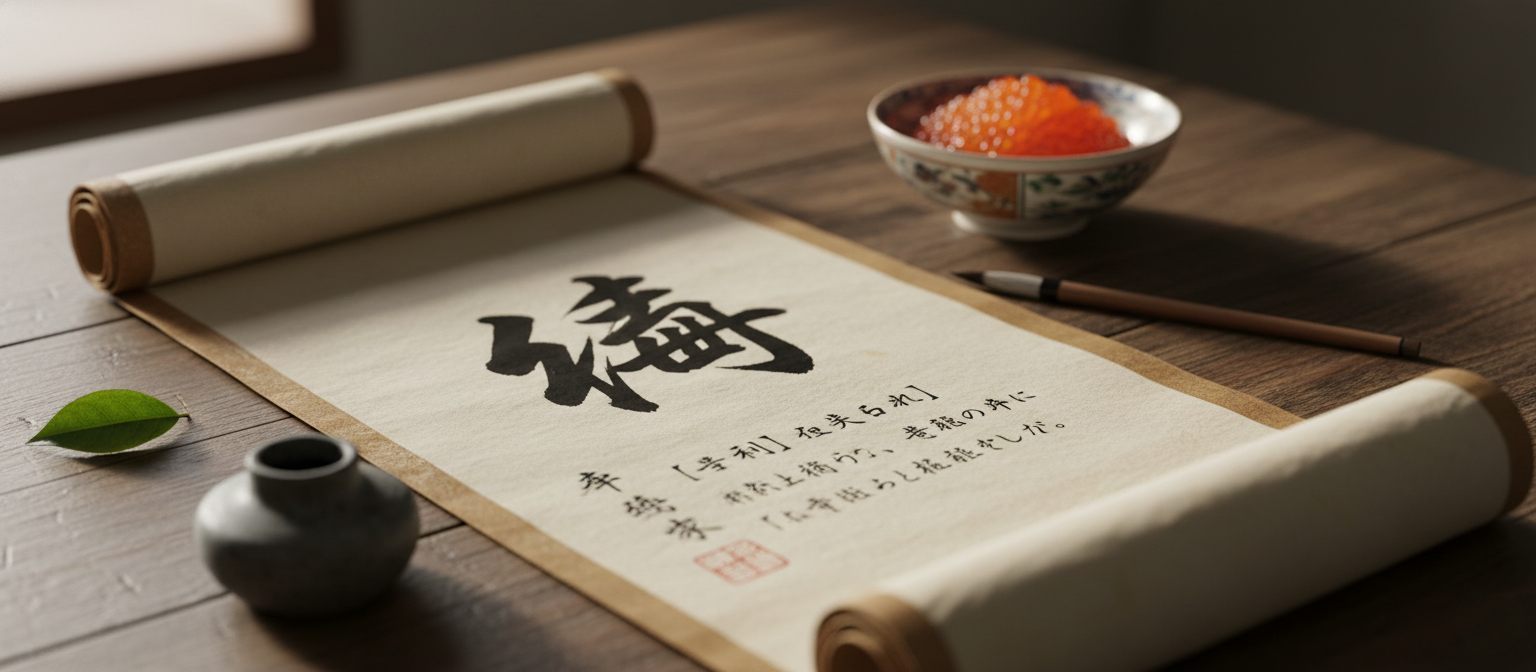
You’ve probably said the word a dozen times without once thinking about what it means.
Masago. It rolls off easily enough. You order it, you eat it, you move on. But the word itself has an actual meaning – one that tells you more about the ingredient than any menu description ever does.
And once you know it, you’ll never look at those tiny orange beads the same way again.
What Masago Means in Japanese
Masago (まさご) is a Japanese word that translates to sand.
Not fish eggs. Not roe. Sand.
The word is written in traditional kanji as 真砂 – two characters that break down into 真 (ma), meaning “true” or “genuine,” and 砂 (sago), meaning “sand.” Put them together and you get something closer to “true sand” or “fine sand” – a phrase that captures the texture of the ingredient with a precision that any food scientist would struggle to match.
It’s worth noting that 砂 on its own is more commonly read as suna (すな) in modern Japanese. Masago uses an older, less common reading of the same character. Which means the word itself is a small piece of linguistic history sitting on your California roll.
The “go” at the end of masago – and in words like tobiko, tarako, kazunoko – comes from “ko” (子), which means “child” in Japanese. It’s a suffix that appears across dozens of Japanese food terms to indicate eggs or roe. Takenoko means “child of bamboo” – a bamboo shoot. Tarako means “child of tara” – cod roe. Tobiko means “child of the flying fish.” And masago, following the same logic, means the eggs – the children – of whatever “masa” refers to.
In this case: fine sand. The roe of sand. Tiny, granular, innumerable.
Why Sand? The Naming Makes Complete Sense
Japanese food naming tends to be descriptive rather than decorative. The name tells you what you’re looking at.
And masago, when you actually look at it, looks exactly like sand. Each individual egg is less than a millimeter across. They cluster together in a fine, dense mass. The texture against the palate is soft and slightly grainy – not the sharp crunch of tobiko, not the gooey pop of ikura. Just a gentle, fine-grained give, like pressing your finger into wet sand and feeling it compress.
Whoever named it saw the eggs and reached for the most accurate word available. They weren’t being poetic. They were being precise.
There’s a whole category of Japanese ingredient names that work this way – the visual or physical character of the thing becomes its identifier. Once you understand that logic, reading a Japanese menu becomes less about memorizing terms and more about reading descriptions. The names are telling you what’s on the plate. You just have to know how to listen.
The Ingredient Behind the Name
The eggs that earned this name come from the capelin – a small, cold-water forage fish from the smelt family, known scientifically as Mallotus villosus. It spends its life in the icy waters of the North Atlantic and Arctic Ocean, swimming in vast schools and rarely growing longer than about eight inches.
The capelin isn’t a fish most people have ever eaten whole. Its roe, on the other hand, has ended up on more plates than most people realize. Masago is one of the most widely used ingredients in Western-style sushi – coating California rolls, topping nigiri, disappearing into sauces – and most diners have eaten it dozens of times without knowing what it was called, let alone what the name meant.
Traditionally, masago referred specifically to the roe of the shishamo (Spirinchus lanceolatus), a smelt native to Japan. But as shishamo stocks came under pressure from overfishing and demand increased globally, capelin roe became the de facto standard. Today, nearly all of the masago sold and served outside of Japan – and much of what’s served inside it – comes from capelin harvested in Iceland, Norway, and Canada. The name stayed. The fish changed.
For the full ingredient story – what masago tastes like, how it’s used, and where to buy it – our complete guide to what masago is covers all of it in detail.
Masago as a Name
The word masago isn’t only used for food. In Japan, it’s also a given name – typically feminine, carrying associations with the sea, with smallness, with quiet precision.
Names drawn from natural imagery are common in Japanese culture. And masago – with its connotations of sand, of shore, of the countless grains that make up something larger – carries a certain elegance when applied to a person. It’s not a common name, but it’s not extinct either. And the fact that the same word serves as both an ingredient name and a human name says something about how Japanese language works: the physical world and the personal world share vocabulary in ways that English rarely allows.
How the Meaning Connects to the Experience
Understanding the name changes how you eat it.
Knowing that masago means “fine sand” makes you pay attention to the texture in a way you probably didn’t before. You notice the way the eggs compress softly and release flavor quietly. You notice that there’s no dramatic event – no pop, no burst, no moment that announces itself. It’s accumulation. Hundreds of tiny things working together to create one coherent impression.
That’s what sand does. It doesn’t make a statement as a single grain. It makes a surface, a texture, a landscape. And that’s exactly what masago does inside a sushi roll – or on top of nigiri, or mixed through a sauce. It builds something. Quietly. Without announcing itself.
Masago in sushi covers how that plays out across the menu – every format and presentation where this ingredient shows up and what it’s doing there.
Masago vs. Tobiko – What the Names Tell You
Now that you know masago means “true sand” and the “ko/go” suffix signals eggs or roe, tobiko becomes easier to decode.
Tobiko (とびこ) breaks down as tobi – from tobiuo, meaning “flying fish” – and ko, meaning “child.” So tobiko literally means “child of the flying fish.” Flying fish roe.
The two names follow the same structural logic. Both end in ko/go. Both are descriptive. But where masago tells you about texture – fine, sand-like, soft – tobiko tells you about origin: the fish that produced it.
That difference in naming actually reflects a difference in character. Masago is defined by how it feels. Tobiko is defined by where it comes from. And on the plate, that tracks perfectly – masago is the texture ingredient, the one that integrates and adds without declaring itself, while tobiko is the bolder, more assertive option with a pop that makes you notice it.
The full masago vs. tobiko breakdown goes into the size, texture, flavor, and price differences between the two – worth reading if you’ve ever wondered why a menu charges more for one than the other.
Why the Name Matters
There’s a practical reason to know what masago means, beyond the curiosity of it.
When you understand that the name comes from sand – from the visual and textural quality of the ingredient – you start to understand what the ingredient is doing in a dish. It’s not trying to pop. It’s not trying to be the most interesting thing on the plate – building texture, adding depth, doing the quiet structural work that makes everything else taste more complete.
That’s a different relationship with food than most people have with their sushi toppings. And it starts with a single word.
Masago. True sand. The eggs that look like the shore.
Small things. Big flavor.
FAQs
What does masago mean in English?
Masago translates from Japanese as “sand” or more precisely “true sand.” The name comes from the kanji 真砂 – 真 meaning “true” or “genuine” and 砂 meaning “sand.” It refers to the fine, granular texture of the roe, which resembles grains of sand clustered together.
Is masago a Japanese word?
Yes. Masago (まさご) is a Japanese word that predates its use as a food term. It appears in classical Japanese literature as a word for fine sand or beach sand, and is also used as a given name in Japan, typically feminine.
What fish does masago come from?
Masago traditionally referred to the roe of the shishamo, a Japanese smelt. Today, nearly all commercial masago comes from the capelin (Mallotus villosus), a small cold-water fish from the smelt family found in the North Atlantic and Arctic Ocean.
What does the “go” in masago mean?
The “go” in masago derives from “ko” (子), a Japanese suffix meaning “child.” This suffix appears across many Japanese food terms to indicate eggs or roe – tobiko (flying fish roe), tarako (cod roe), and kazunoko (herring roe) all follow the same pattern.
Why is masago named after sand?
Because the eggs look and feel like fine sand. Each egg is less than a millimeter across, and they cluster together in a dense, grainy mass. The name is descriptive – Japanese food naming tends to identify ingredients by their most obvious physical characteristic, and for masago, that characteristic is its sand-like texture.
Is masago also a name in Japan?
Yes. Masago is used as a Japanese given name, typically feminine, with associations rooted in natural imagery – the sea, the shore, fine sand. It’s not a common name but it remains in use.
How is masago different from tobiko if they’re both roe?
Masago comes from capelin, tobiko from flying fish. Masago is smaller, softer, and milder. Tobiko is larger, has a distinct pop when bitten, and has a bolder, slightly sweet flavor. Masago is also more affordable. The names themselves reflect this difference – masago is named for its texture, tobiko for its origin fish.