The Best Fluffy Pancakes recipe you will fall in love with. Full of tips and tricks to help you make the best pancakes.


You’ve eaten it more times than you can count.
That orange coating on a California roll. The tiny beads sitting on top of a spicy tuna piece. The bright cluster inside a sauce that made you wonder what was in it.
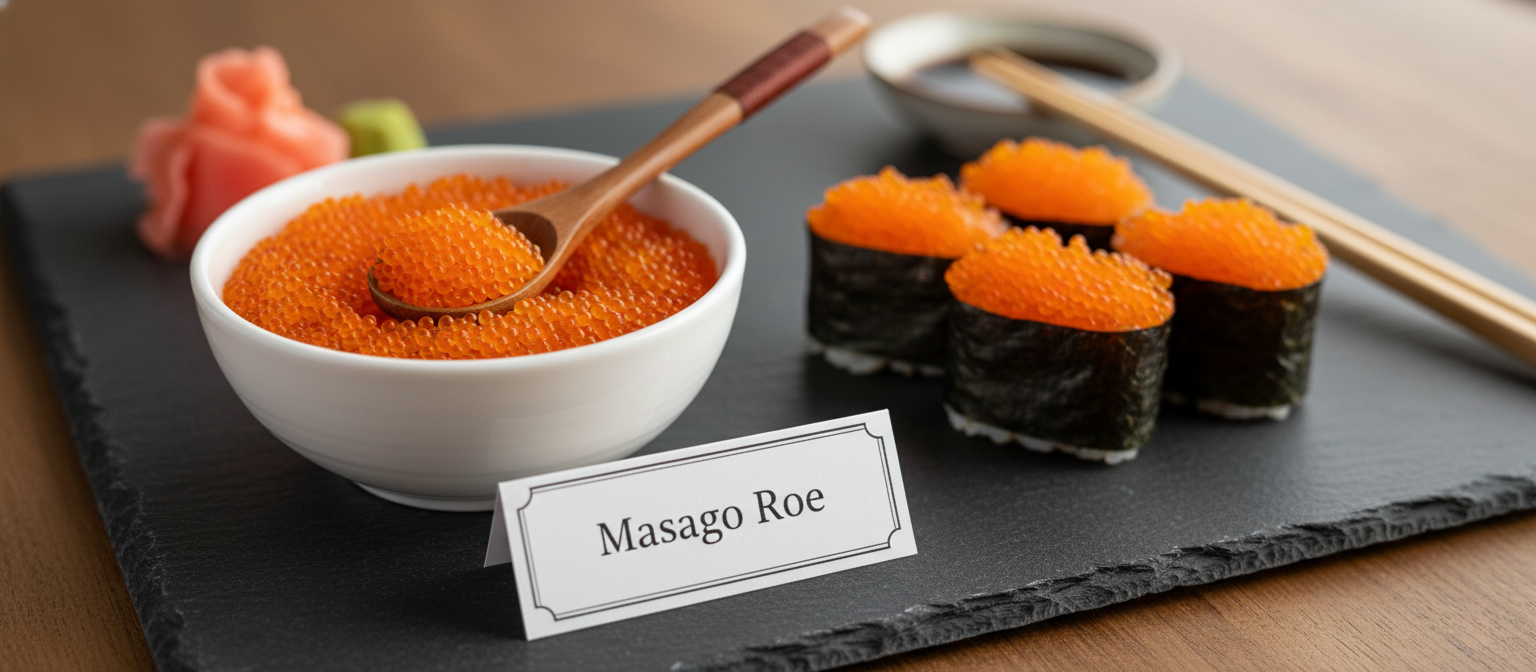
That’s masago roe. Most people eat it every single time they order sushi. Almost nobody stops to ask what it is.
Here’s the plain answer.
What Is Masago Roe?
Masago roe is the eggs of the capelin fish.
Capelin is a small, cold-water fish from the smelt family. It lives in the North Atlantic and Arctic Ocean. The fish itself is mostly used for fish oil and animal feed. But its eggs are a different story.
Those eggs get harvested, cured with salt, and sent to sushi restaurants all over the world. That’s masago roe. Simple as that.
The word masago is Japanese for “sand.” Look at a cluster of the eggs and you’ll see why immediately. Each egg is less than a millimeter wide. Packed together they look exactly like fine, damp sand. It’s one of those names that just makes sense.
What Does Masago Roe Look Like?
Small. Very small.
Each egg is tiny – far smaller than tobiko or salmon roe. They sit close together in a dense, fine cluster that holds its shape on a roll or a piece of nigiri.
The natural color is pale yellowish-white. Almost translucent. What you see at restaurants is dyed.
Bright orange is the standard. Most masago roe gets dyed orange before it reaches the kitchen. Black, red, and green versions exist too. Green masago usually has wasabi added during curing, so the color comes with a mild heat. The others are purely visual.
The dye doesn’t change the flavor. It just makes the roe look more vibrant on white rice.
What Does Masago Roe Taste Like?
Mild.
That’s the most honest single-word answer. Masago roe has a soft, gentle brininess. A clean ocean note. Nothing sharp. Nothing that announces itself loudly or sticks around too long.
It’s not pungent the way some seafood can be. It doesn’t taste “fishy” in the way that puts people off. It just tastes like a quiet, clean, lightly salty thing.
The texture is fine and slightly grainy. The eggs are so small and soft that they compress gently against the palate. There’s no pop. No burst. Just a gentle give and a soft release of flavor.
That mildness is the whole point. Masago roe works in sushi because it doesn’t fight anything. It adds texture and saltiness to a roll without competing with the fish, the avocado, or the sauce around it.
As Tasting Table puts it, masago is best understood as a unique ingredient in its own right – not just a cheaper stand-in for something else.
Where Does Masago Roe Show Up?
Everywhere, once you start paying attention.
The most common place is the outside of a California roll. That orange coating on the rice – the thing most people think is decoration – is masago pressed into the rice before the roll is cut.
It shows up in spicy tuna rolls too. Either on the outside of the rice or mixed directly into the spicy tuna filling for extra texture.
It goes into sauces. The creamy orange drizzle on your rolls at a sushi restaurant? Almost always masago mixed with Kewpie mayo and sriracha. Our masago sauce guide shows you how to make it at home in two minutes.
It gets served on its own too. Gunkan-maki is a small battleship-shaped sushi piece where masago sits on top of rice inside a nori cup. That’s where masago roe gets the spotlight all to itself – no fish slice sharing the plate. Sometimes a quail egg gets cracked on top. That combination is the one that changes minds.
For a full breakdown of every roll and format masago appears in, our masago in sushi guide covers all of it.
Is Masago Roe Good for You?
For something this small, it brings a surprisingly solid nutritional profile.
One tablespoon of masago roe contains about 40 calories and roughly 4 grams of protein. It delivers around 47% of the recommended daily intake of vitamin B12 in a single tablespoon – which is remarkable for an ingredient most people eat as a topping.
It’s also a good source of omega-3 fatty acids. According to WebMD’s overview of masago health benefits, the omega-3s in masago support heart health and help reduce inflammation in the body. It also provides selenium, which supports immune function and thyroid health.
Capelin sits low on the food chain. It feeds on small organisms rather than other fish. That means mercury doesn’t accumulate in its eggs the way it does in larger predatory species. Masago is one of the lower-mercury seafood options available.
The one thing to watch is sodium. Masago roe is salted during curing. One tablespoon contains around 240mg of sodium. As a topping it stays manageable. If you’re eating several rolls and dipping everything in soy sauce, it adds up.
Who Should Be Careful
Most people eat masago roe without any issues.
People with seafood allergies should avoid it entirely. The egg protein in fish roe can trigger allergic reactions even in people who handle regular fish fine.
Pregnant women can generally eat masago in moderation. The FDA lists it as a low-mercury option. But checking with a doctor first is always the better call.
People managing high blood pressure should keep the sodium content in mind and factor it into their daily totals.
How Is Masago Roe Different from Tobiko?
This question comes up at every sushi bar.
Both are small fish roe. Both show up as tiny colored beads on sushi. But they’re not the same thing.
Masago comes from capelin. Tobiko comes from flying fish. Tobiko eggs are larger – you can see the difference clearly once you know what to look for. Tobiko also has a firm, satisfying pop when you bite into it. Masago doesn’t pop. It compresses softly.
The flavor difference is real too. Tobiko is bolder and slightly sweet. Masago is milder and cleaner.
Tobiko costs about twice as much at wholesale. Some restaurants substitute masago where the menu says tobiko. The texture is the giveaway. Tobiko pops. Masago doesn’t. The full masago vs. tobiko comparison has everything you need to tell them apart.
How to Use Masago Roe at Home
It’s easier than most people think.
Find it in the freezer section at Japanese grocery stores, Asian supermarkets, or Whole Foods. It comes in small jars, already dyed and lightly seasoned. Keep it frozen until you need it. Once opened, refrigerate it and use it within three to four days.
The easiest way to start is the sauce. Mix masago roe with Kewpie mayo, a squeeze of lime, and a little sriracha. Stir it together. That’s the same sauce your sushi restaurant charges extra for. Drizzle it over a rice bowl, spread it on cucumber slices, or use it as a dip for homemade rolls.
From there, try rolling it into sushi at home. Coat the outside of a rice-out roll before cutting. Use it as a topping on handmade nigiri. Crack a quail egg over a small mound of masago on rice and eat the whole thing in one bite.
It takes one or two attempts to understand what it does. After that you’ll reach for it automatically.
The Short Version
Masago roe is the tiny, briny, mildly flavored eggs of the capelin fish. It’s on almost every sushi menu in the world. It adds texture, saltiness, and depth to rolls without ever demanding attention.
You’ve been eating it for years. Now you know exactly what it is and what it’s doing there.
Small things. Big flavor.
FAQs
What is masago roe made from?
Masago roe is the eggs of the capelin fish – a small cold-water species from the smelt family found in the North Atlantic and Arctic Ocean. The eggs are harvested before the fish spawns, then cured with salt and seasonings.
Does masago roe taste fishy?
Not in an off-putting way. It has a mild, clean brininess – a gentle ocean note rather than a sharp or pungent fish flavor. Most people who are hesitant about seafood find masago easy to eat because the flavor is subtle.
Is masago roe raw?
Masago is cured and salted rather than heat-cooked. It’s safe to eat directly from the jar, handled with the same food-safety standards as other sushi-grade seafood.
Why is masago roe orange?
The natural color of capelin roe is pale yellowish-white. The bright orange you see at restaurants is food dye added during processing. Black, red, and green versions also exist.
Is masago roe healthy?
Yes, in moderation. It’s low in calories, high in protein, and a good source of omega-3 fatty acids, vitamin B12, and selenium. The main thing to watch is sodium – masago is salted during curing and can be high in sodium per serving.
How long does masago roe last?
Unopened and frozen, up to six months. Once opened, refrigerate and use within three to four days. Don’t refreeze after opening.
Is masago roe the same as caviar?
No. Caviar refers specifically to the roe of sturgeon. Masago is capelin roe – a completely different fish, a very different flavor, and a fraction of the price. The two are not the same product.