The Best Fluffy Pancakes recipe you will fall in love with. Full of tips and tricks to help you make the best pancakes.


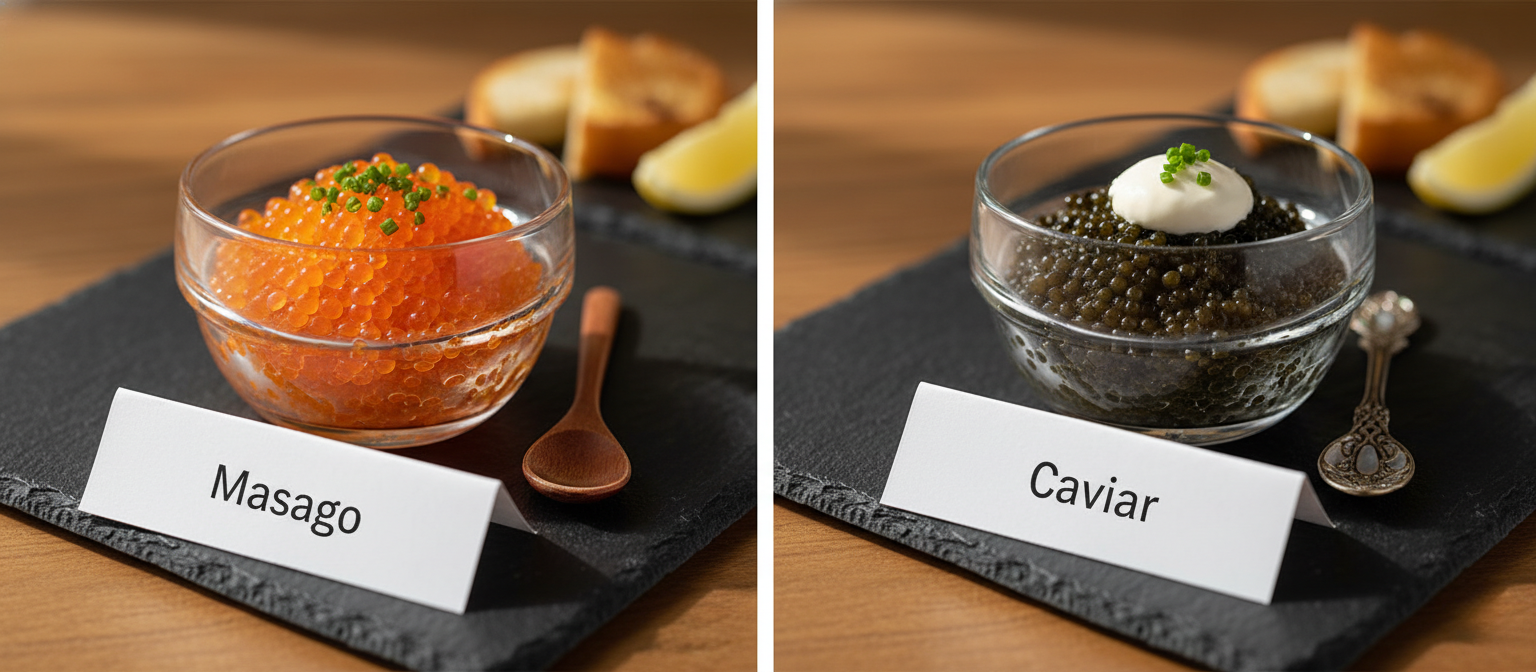
People call masago “sushi caviar” all the time.
It sounds right. Both are fish eggs and sit on top of fancy food. Both have that briny, oceanic quality that makes you feel like you’re eating something intentional.
But calling masago caviar is like calling sparkling wine champagne. Close enough to understand. Not actually the same thing.
Here’s what actually separates them – and why the difference matters more than most people think.
Where They Come From
This is the whole story in two sentences.
Masago comes from capelin – a small, cold-water fish from the smelt family found in the North Atlantic and Arctic Ocean. Caviar comes from sturgeon – a large, ancient species that takes seven to fifteen years just to reach maturity.
That biological difference drives everything else. Capelin is abundant and matures quickly. Sturgeon is slow-growing, heavily regulated, and in some species actively endangered. The scarcity of one and the abundance of the other explains the price gap before you even get to taste either.
Legally, the word “caviar” is protected in most of the world. Only roe from sturgeon species qualifies. Salmon roe, flying fish roe, masago – none of these can legally be called caviar in the US or EU, even when they’re marketed with caviar-adjacent language.
For a full background on what masago is and where it comes from, our complete masago guide has everything you need.
What They Look Like
The size difference is obvious the moment you see them side by side.
Masago eggs are tiny. Less than a millimeter each. They cluster together in a fine, dense mass that looks almost sandy. Natural masago is pale yellowish-white – almost translucent. Most of what you see at restaurants is dyed bright orange.
Caviar pearls are larger. Much larger. Depending on the sturgeon species, they range from small peas to generous round beads. The color runs from pale golden to deep black, with Beluga, Osetra, and Sevruga being the most recognizable varieties. There’s no dye involved. The color you see is the natural color of the egg.
Put them next to each other on a plate and you’d never confuse one for the other. The scale difference is immediate.
How They Taste
This is where the gap becomes undeniable.
Masago is mild. A soft, clean brininess. A gentle ocean note that adds saltiness without demanding attention. According to Tasting Table’s guide to masago, it works so well in sushi precisely because it doesn’t overpower anything around it. It integrates and completes the bite. It steps back.
Caviar is something else entirely. Rich, buttery, and deeply complex. Depending on the species and processing method, tasting notes range from hazelnut to seaweed to cream to a lingering umami that stays on the palate long after you’ve swallowed. It doesn’t step back. It’s the whole point of the dish it’s on.
Neither is better in any absolute sense. They’re doing completely different things. Masago is architecture. Caviar is the main event.
The Texture Difference
Both are fish eggs. The texture experience couldn’t be more different.
Masago compresses softly against the palate. The eggs are so small and fine that they give gently and release flavor without any real textural drama. No pop. No burst. Just a quiet, accumulative release.
Caviar pearls rupture. When you bite into a proper caviar pearl, it releases a creamy, rich burst of flavor that spreads across your palate. That’s the experience people are paying for when they order it. The texture is as much a part of the appeal as the taste.
Masago texture is subtle and supportive. Caviar texture is the whole conversation.
The Price Gap
Here’s where most people’s eyes widen.
Masago costs around $7 to $15 for a small jar at retail. Per ounce, it’s one of the more affordable seafood ingredients you can buy.
Caviar starts at around $50 per ounce for entry-level farmed varieties and climbs steeply from there. Premium Beluga caviar – the most prized type – can reach $200 per ounce or more. A small serving at a fine dining restaurant can cost more than an entire sushi dinner.
The price isn’t marketing. It’s biology. Sturgeon take years to mature. Harvesting is labor-intensive. Wild populations are regulated under international conservation law. When supply is that constrained and demand is that consistent, the price follows.
Masago is harvested from abundant capelin stock. The process is efficient. The cost reflects that.
How Each One Gets Served
Masago and caviar live in completely different worlds on the plate.
Masago is a team player. It coats the outside of sushi rolls, gets mixed into sauces, sits inside gunkan-maki cups, and adds texture to spicy tuna fillings. It enhances whatever it’s paired with. Our masago sauce recipe is a perfect example – masago blended with Kewpie mayo and sriracha becomes the sauce that pulls a whole roll together.
Caviar is served alone, or nearly alone. The classic presentation is a small glass bowl of caviar on ice with a mother-of-pearl spoon – metal spoons are avoided because they interact with the flavor. Accompaniments are minimal: blinis, toast points, crème fraîche. Anything more would compete with the caviar itself.
One is a supporting ingredient. The other is the whole dish.
Is Masago a Budget Substitute for Caviar?
Not really. And framing it that way misses the point.
Masago isn’t trying to be caviar. It’s not a cheaper version of the same experience. It’s a different ingredient with a different purpose and a different flavor profile entirely.
If you’re looking for the luxurious, buttery, complex experience of high-quality sturgeon caviar – masago won’t deliver that. The flavor is too mild, the texture too soft, the whole character too understated.
But if you want to add a briny, textural element to a sushi roll, a rice bowl, or a sauce at home – masago is exactly what you need. It does its job consistently and well, and no amount of caviar would do that job better.
As Healthline’s breakdown of masago nutrition confirms, masago also brings real nutritional value – protein, omega-3 fatty acids, vitamin B12, and selenium – in a small, affordable serving. That’s not nothing.
Use each one for what it’s actually good at. Don’t compare them like they’re competing for the same job.
Which One Do You Actually Need?
Depends entirely on what you’re doing.
Making homemade sushi rolls this weekend? Spicy tuna rice bowls for dinner? A sauce for grilled fish? Masago is the answer. Affordable, easy to find, easy to use, and genuinely delicious in every one of those contexts. Our masago in sushi guide covers every format and recipe worth knowing.
Planning something special? A tasting menu dinner, a celebration that calls for luxury, an experience you want to remember? Caviar earns its place there. It’s not everyday food. It’s not meant to be.
The real mistake is spending caviar money on a Tuesday night rice bowl, or expecting masago to replicate an experience it was never designed to deliver.
Know what you’re cooking. Get the right ingredient for it.
Small things. Big flavor.
FAQs
Is masago the same as caviar?
No. Masago is the roe of the capelin fish. Caviar refers specifically to the roe of sturgeon species. Legally, in the US and EU, only sturgeon roe can be labeled caviar. They differ in origin, size, taste, texture, price, and how they’re used in cooking.
Why is caviar so much more expensive than masago?
Sturgeon take seven to fifteen years to reach maturity and spawn infrequently. Wild populations are protected under international conservation law. Harvesting is slow and labor-intensive. Masago comes from capelin, which is abundant and matures quickly. Biology drives the price gap more than branding.
Can masago replace caviar in a recipe?
Not meaningfully. The flavor profiles are too different. Masago is mild and subtle. Caviar is rich, buttery, and complex. Substituting one for the other would produce a completely different dish. They work best when used for their actual intended purposes.
What does caviar taste like compared to masago?
Caviar is rich, buttery, and complex with a lingering finish. Tasting notes vary by species but often include hazelnut, cream, seaweed, or deep umami. Masago is mild and lightly briny with a clean, quick flavor that doesn’t linger.
Is masago considered a luxury food?
Not in the way caviar is. Masago is an affordable, widely available sushi ingredient used in everyday cooking. It carries no particular prestige. Caviar is traditionally associated with fine dining, luxury occasions, and significant expense.
Which is healthier – masago or caviar?
Both are nutritionally solid. Masago provides protein, omega-3 fatty acids, vitamin B12, and selenium at around 40 calories per tablespoon. Caviar offers similar nutritional benefits with slightly higher fat content and a more complex amino acid profile. Both are high in sodium. Neither is dramatically healthier than the other.
Where can I buy masago in the US?
Japanese grocery stores, Asian supermarkets, Whole Foods, and online retailers all carry it. It’s in the freezer section, sold in small jars. Affordable and easy to find in most cities.