The Best Fluffy Pancakes recipe you will fall in love with. Full of tips and tricks to help you make the best pancakes.


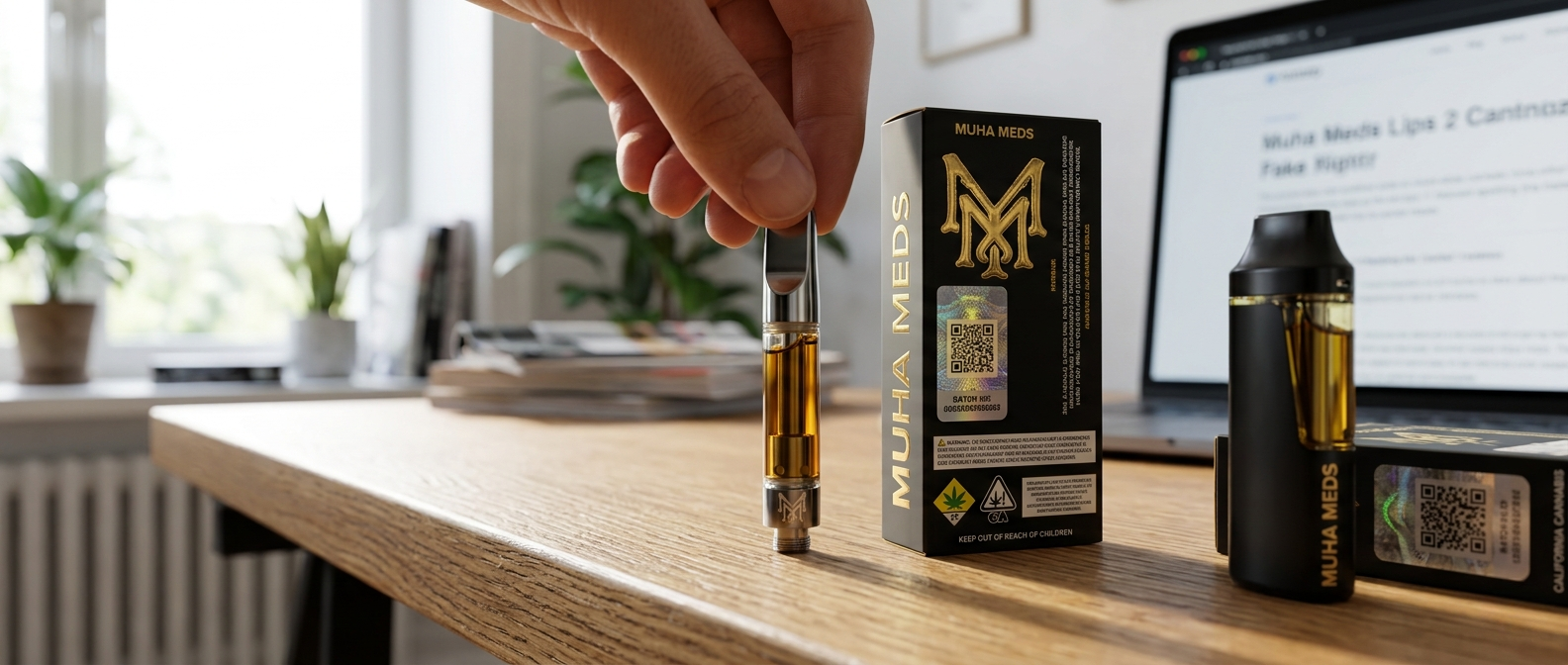
If you’ve heard the name Muha Meds and want to know what it actually is, you’re not alone.
The brand has exploded across social media – TikTok especially – with users showing off carts, reviewing flavors, and sparking a lot of conversation about whether these products are safe, whether what people are buying is real, and what the difference between licensed and unlicensed products actually means for the person inhaling it.
Here’s the honest picture. No promotion. Just what you actually need to know.
What Muha Meds Actually Is
Muha Meds is a California-based cannabis brand, founded in Los Angeles in 2018, that produces THC vape cartridges, disposable vape pens, concentrates, pre-rolls, and flower. The brand built its early reputation on high-potency oil – their cartridges typically test between 85% and 95% THC – and bold strain-inspired flavors.
The name has roots in Arabic – “muha” being a diminutive form used in some North African and Middle Eastern communities – though the brand uses it more as a cultural identity marker than as a direct linguistic reference.
Their flagship products are 510-thread cartridges that attach to standard vape batteries, and prefilled disposable pens. The oil inside is cannabis distillate or live resin – cannabis extract that preserves terpenes from the original plant material, which affects both flavor and the overall experience. Their Melted Diamonds line, which combines THC crystalline with live resin terpenes, is their most premium product and the one that gets the most attention from experienced users.
Muha Meds is now a licensed operation with active distribution in California, Michigan, New York, New Mexico, and several other states. That licensing matters enormously. It’s the difference between a product that has been through state-regulated testing and one that hasn’t.
The History That Matters
This part gets skipped in most content about Muha Meds. It shouldn’t be.
Before the brand went fully licensed, Muha Meds packaging and branding circulated widely on the black market. Counterfeit products using the Muha Meds name – not made by the actual company, just copying the look – were everywhere from 2018 onward. This was during the same period as the nationwide EVALI outbreak.
EVALI stands for E-cigarette or Vaping product use-Associated Lung Injury. According to CDC’s published research on the EVALI outbreak, 82% of hospitalized EVALI patients nationwide reported using THC-containing vaping products, and vitamin E acetate – used as a cheap cutting agent in unregulated black market carts – was strongly linked to the outbreak. Over 2,800 cases were hospitalized and more than 60 deaths were confirmed.
The FDA issued a public warning urging the public to stop using THC-containing vaping products and any vaping products obtained off the street – directly connecting informal sourcing with serious lung injury risk. That warning remains relevant today. The black market for vape carts didn’t disappear when the outbreak made headlines.
The products linked to those cases came primarily from informal sources – friends, family, online dealers – not licensed dispensaries. That distinction is the most important thing any cannabis vape buyer can understand. A cart from a licensed dispensary in a regulated state has been through state-mandated lab testing before it reached the shelf. A cart from an informal source has not. Nobody checked what’s in it.
Muha Meds the brand has moved away from that gray market history. Muha Meds the counterfeit problem has not gone away.
What Licensed Muha Meds Products Go Through
In states where Muha Meds operates legally, their products go through mandatory third-party lab testing before reaching dispensary shelves. That testing covers several categories that matter directly to the person using the product.
Potency testing confirms that the THC and cannabinoid percentages on the label are accurate. A cart labeled 90% THC that actually contains 60% is misleading at best and a signal of poor quality control at worst.
Heavy metals testing is one of the most critical categories. Healthline’s reporting on a 2024 study presented at the American Chemical Society found that cannabis vape liquids – particularly from unregulated sources – can contain toxic metal particles including lead, arsenic, mercury, and cadmium, even before the device is heated. Unregulated samples in that research contained up to 100 times more lead than regulated samples. State testing requirements for licensed products are specifically designed to catch contamination at these levels before products reach consumers.
Pesticide testing screens for over 60 commonly used agricultural chemicals that can persist in concentrated cannabis oil after extraction. Pesticides that break down in the body over time can become significantly more concentrated in extracted oil than they were in the original plant.
Residual solvent testing verifies that extraction chemicals used to create the distillate have been fully purged from the final product.
Microbial testing checks for mold, bacteria, and other biological contaminants.
Every legitimate Muha Meds product sold through a licensed dispensary includes a QR code on the packaging that links directly to the Certificate of Analysis (COA) for that specific batch. That document shows the actual lab results for every testing category. If a product doesn’t have a scannable QR code or batch number that connects to a real COA, that’s a serious red flag.
The Counterfeit Problem Is Real and Ongoing
This is not a minor issue. It’s one of the most significant consumer safety problems in the cannabis vape market.
Because Muha Meds is a recognizable brand with strong consumer trust, counterfeiters copy the packaging in detail. Fake boxes, fake holographic stickers, fake QR codes that link to nothing or to pages that don’t verify anything. The oil inside can be anything – recycled distillate, cutting agents, unknown compounds.
The people buying these fakes are often not aware they’re buying fakes. The packaging looks right. The price might even be similar. The difference only becomes apparent when you try to verify the batch number and nothing comes up, or when you notice the hardware feels cheap, or – in worse cases – when you experience respiratory symptoms that prompt a doctor’s visit.
Healthline’s guide to vape cartridge safety is clear on this point – only opt for products that have been third-party tested, and always look for a third-party lab report to verify ingredients. For any cannabis vape product, that verification step is not optional. It’s the only reliable signal that what’s inside the cart is what the label says it is.
Red flags that suggest a counterfeit product: no scannable QR code, a QR code that doesn’t resolve to a real lab result, no batch number on the packaging, unusually low pricing from an unlicensed source, purchasing from social media, Telegram, Snapchat, or any informal channel rather than a licensed dispensary.
The only reliable protection against fakes is buying exclusively from licensed dispensaries in states where cannabis is legally regulated. Not from friends. Not from Instagram. Not from any informal source regardless of how trusted that person seems.
Legality – Where Things Stand
Muha Meds products are legal for adults 21 and older in states where adult-use or medical cannabis is legal and where the brand operates a licensed distribution. California, Michigan, New York, and New Mexico are among the primary markets.
In states where cannabis remains illegal – regardless of what’s available informally – possession and purchase of any THC product carries legal risk that varies significantly by state. Federal law still classifies cannabis as a Schedule I controlled substance, which creates additional complications around interstate commerce and banking.
If you’re in a state without legal cannabis and you’re encountering Muha Meds products through informal channels, you’re encountering either a counterfeit product or a black market product. Neither has gone through state lab testing. Both carry the risks that unlicensed products carry.
What the Research Says About Vaping Generally
Beyond Muha Meds specifically, anyone using cannabis vape products regularly should understand what the research says about vaping as a consumption method.
The EVALI outbreak established clearly that the specific risk in the 2019 crisis was vitamin E acetate used as a cutting agent in black market THC carts. Licensed, regulated products that do not use vitamin E acetate or similar cutting agents present a different risk profile than the unregulated products linked to EVALI.
That said, vaping any substance – including regulated cannabis oil – is not without risk. The long-term effects of inhaling vaporized cannabis oil are not yet fully understood. The CDC and FDA continue to recommend that people with concerns about respiratory health consult a healthcare provider before using any vape product, THC-containing or otherwise.
High-THC products carry their own considerations. Products testing at 85-95% THC are significantly more potent than traditional flower. Tolerance, dosing, and frequency of use all affect the individual experience. Regular daily use of high-potency THC products has been associated in some research with tolerance buildup and, in susceptible individuals, with effects on memory and cognitive function.
None of this means the product category is uniquely dangerous compared to other cannabis consumption methods. It means that the same informed approach worth applying to any substance – understanding what you’re taking, where it came from, what’s in it, and how much is appropriate for you – applies here.
How to Verify a Muha Meds Product
Three steps. Takes about two minutes.
Find the QR code on the packaging. Every authentic Muha Meds product has one. Scan it with your phone camera. It should resolve to a verification page showing lab results for the specific batch number on your package.
Cross-reference the batch number. The number on the box should match the number in the COA. If they don’t match, the documentation has been copied rather than generated for that specific product.
Check the purchase source. If you bought it from a licensed dispensary in a legal state, you have state regulatory assurance that it went through mandatory testing. If you bought it anywhere else, verification of the QR code is even more critical.
If the QR code doesn’t work, links to a page that doesn’t load, or returns results that seem generic rather than batch-specific – do not use the product. Return it or dispose of it.
The Short Version
Muha Meds is a legitimate licensed cannabis vape brand operating in multiple states, known for high-potency cartridges and disposable pens with strain-inspired flavors.
The counterfeit market around Muha Meds is significant. Fakes copy the packaging closely and can contain unknown substances – including heavy metals and cutting agents – that present real health risks consistent with what drove the 2019 EVALI outbreak.
Buy only from licensed dispensaries in legal states. Scan the QR code and verify the COA before using any product. If anything doesn’t verify, don’t use it.
For more health and wellness content covering consumer safety, ingredients, and informed decision-making, the full health category has the broader reading.
Small things. Big flavor.
FAQs
What is Muha Meds?
Muha Meds is a California-based cannabis brand founded in 2018 that produces THC vape cartridges, disposable pens, concentrates, pre-rolls, and flower. They are now a licensed operation in multiple US states including California, Michigan, and New York, with products available at licensed dispensaries.
Are Muha Meds carts safe?
Authentic Muha Meds products sold through licensed dispensaries in regulated states go through mandatory third-party lab testing for potency, heavy metals, pesticides, residual solvents, and microbial contaminants. Counterfeit products using the Muha Meds name do not. Buying exclusively from licensed dispensaries is the only reliable way to ensure you are getting a tested product.
What is EVALI and does it relate to Muha Meds?
EVALI is E-cigarette or Vaping product use-Associated Lung Injury, a serious respiratory condition linked to a nationwide outbreak in 2019. CDC research connected most cases to THC-containing vape products from informal sources containing vitamin E acetate as a cutting agent. The FDA issued a public warning urging people to stop using THC vape products obtained off the street. Counterfeit Muha Meds products circulated during this period. Licensed, lab-tested products that do not use vitamin E acetate present a different risk profile than the unregulated carts linked to EVALI.
How do I verify if my Muha Meds product is real?
Scan the QR code on the packaging – it should link to a Certificate of Analysis with batch-specific lab results. Cross-reference the batch number on the box with the number in the COA. If the QR code doesn’t work or the results seem generic rather than batch-specific, the product may be counterfeit.
Where can I legally buy Muha Meds?
At licensed cannabis dispensaries in states where adult-use or medical cannabis is legal and where Muha Meds holds active distribution licenses. These include California, Michigan, New York, and New Mexico among others. Purchasing from informal sources carries both legal risk and product safety risk.
What is the difference between a real and fake Muha Meds cart?
Authentic products have a functional QR code linking to batch-specific lab results, a batch number on the packaging, quality hardware, and are sold through licensed dispensaries. Fakes copy the packaging but have non-functional or generic QR codes, no verifiable batch data, and can contain unknown or potentially harmful substances including heavy metals.
What THC percentage are Muha Meds carts?
Authentic Muha Meds cartridges typically test between 85% and 95% THC – significantly more potent than traditional cannabis flower. This level of potency is suited to experienced users. New users are advised to start with a very small amount to assess individual response.