The Best Fluffy Pancakes recipe you will fall in love with. Full of tips and tricks to help you make the best pancakes.


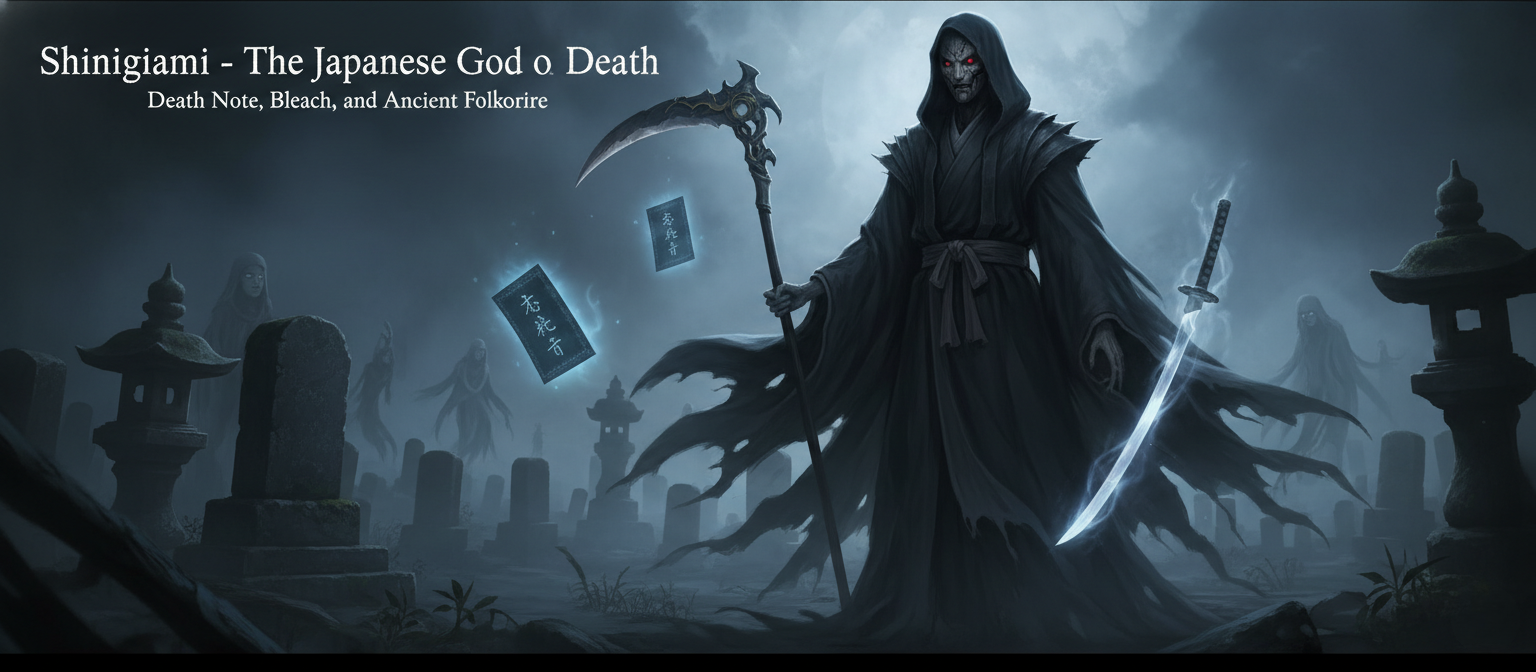
Most people first hear the word in an anime.
Death Note. Bleach. Soul Eater. A dark, powerful figure with hollow eyes and an unsettling calm. Something between a god and a ghost. Something that knows when you’re going to die.
That’s a shinigami. But the character you saw on screen is only part of the story. The real origin of shinigami is older, stranger, and more interesting than most people realize.
Here’s where they actually come from.
What Shinigami Means
The word shinigami is made from two Japanese words.
“Shi” means death. “Kami” means god or spirit. Put them together and you get “god of death” – or more precisely, “kami of death.”
In Japanese religion and culture, kami are spirits that inhabit and govern everything in the natural world. There are kami of rivers, kami of mountains, kami of luck, kami of fire. It follows logically that there would be kami of death too. Those are the shinigami.
According to Wikipedia’s detailed entry on shinigami, they are kami that invite humans toward death – not gods who kill, but guides who usher. That distinction matters, and it’s one of the most important differences between shinigami and the Western Grim Reaper.
Where Shinigami Actually Come From
Here’s the surprising part. Shinigami are not ancient.
The word does not appear in classical Japanese literature at all. No ancient texts. No Kojiki references. No early Shinto scripture. The concept is relatively modern, first appearing during Japan’s Edo period – roughly the 18th and 19th centuries.
This was a time when Japan began opening its borders to Western influence. Christian ideas about death, the soul, and divine judgment started mixing with traditional Shinto, Buddhist, and Taoist beliefs. From that cultural collision, a new figure emerged. One that reflected both Eastern and Western ideas about what death looks like when it comes for you.
The first known written use of the word shinigami appears in the puppet theater works of playwright Chikamatsu Monzaemon in the early 1700s. His plays dealt with double suicides and death spirits – dark territory for 18th-century Japan. The shinigami in those early texts weren’t majestic death gods. They were possessing spirits. Unseen forces that crept into the minds of the living and guided them toward self-destruction.
That early version is quite different from the noble soul-guides of modern anime. The character evolved significantly over time.
Shinigami vs. The Grim Reaper
The comparison comes up constantly. It’s worth addressing properly.
Both are associated with death. Both serve as a bridge between the living world and whatever comes after. But the philosophy behind each is fundamentally different.
In Western culture, the Grim Reaper is death itself. A singular, terrifying figure. Hooded, scythe in hand. When it arrives, there is no negotiation. Your time is up and you are taken.
Shinigami work differently. Japanese cosmology views death not as a dramatic event imposed from outside but as a natural part of life’s cycle. Shinigami don’t drag unwilling souls into the afterlife. They guide people toward a death that was always coming. They’re facilitators, not hunters.
As All That’s Interesting explains in their deep dive on shinigami, while the Grim Reaper harvests souls, shinigami ensure that people die at their appointed time and then escort them peacefully onward.
There are also many shinigami, not just one. They come in different forms and work in different regions. Unlike the singular Western death figure, shinigami exist as a collective – numerous, varied, and mostly invisible to the living.
The Folklore Behind the Figure
The most famous traditional shinigami story comes from Japanese rakugo – a classical form of comedic storytelling.
A poor, desperate man encounters a shinigami who teaches him a trick. If the shinigami is sitting at the foot of a sick person’s bed, the patient can be saved. The man can recite a spell to banish the shinigami and the patient will recover. If the shinigami sits at the head of the bed, however, death is certain. Nothing can be done.
The man uses this knowledge to pose as a miraculous doctor. He becomes rich. But greed eventually gets the better of him. He takes a bribe to save a patient whose shinigami is sitting at the head of the bed – he turns the bed around to trick the spirit. It works, briefly. But the shinigami shows him the consequences afterward.
The shinigami leads the man to a vast dark cavern filled with candles. Each candle represents a human life. The man’s candle is nearly burned out. The shinigami offers him a chance to transfer his flame to a new candle. He tries. He drops it. The flame goes out.
The story is about greed and the natural order of death. It’s also one of the clearest windows into how traditional Japanese culture thought about shinigami – not as monsters to be feared, but as inevitable forces to be respected.
Shinigami in Modern Japanese Culture
The Edo period gave Japan the concept. Manga and anime gave it to the world.
Death Note – released as a manga in 2003 and adapted into a hugely popular anime shortly after – brought shinigami to a global audience. The shinigami Ryuk drops a supernatural notebook into the human world out of boredom. Anyone whose name is written in it dies. The story is really about power, justice, and corruption – but the shinigami framing gives it a mythological weight that made it unforgettable.
Bleach reimagines shinigami entirely. In Tite Kubo’s world they are samurai souls, warriors called Soul Reapers who protect humans from malevolent spirits and escort the dead to their afterlife realm called Soul Society. It’s a radical departure from folk tradition but keeps the core function – shinigami as guides between worlds.
Soul Eater, Naruto, Black Butler – each title interprets shinigami differently. Sometimes fearsome, sometimes comical, sometimes deeply human. What they share is the underlying concept: a being that exists at the boundary between life and death and has a role to play in how that boundary is crossed.
The Connection to Izanami and Izanagi
Before the word shinigami existed, Japan already had figures who presided over death.
The creator gods Izanami and Izanagi are central to Shinto mythology. Together they created the islands of Japan and gave birth to many of the other kami. Izanami died giving birth to the fire god Kagutsuchi. Izanagi, devastated, traveled to Yomi – the land of the dead – to retrieve her.
What he found there changed everything. Izanami had already eaten the food of the underworld and could not return. When Izanagi saw her decaying form and fled in horror, Izanami was furious. She promised to kill a thousand people every day in retribution.
Izanagi replied that he would create fifteen hundred new lives to replace them.
That exchange – death and creation in a constant, negotiated balance – is the philosophical root from which shinigami eventually grew. Izanami is sometimes considered the first shinigami, or at least the first figure in Japanese tradition who governs death deliberately.
Why Shinigami Still Resonate
The reason shinigami appear across so many stories, in so many different forms, is that the concept captures something universal.
Every culture has to make sense of death. The Western Grim Reaper does it through fear and inevitability. The shinigami do it through guidance and natural order. There’s something almost comforting in the idea that death isn’t random violence but a managed transition – that something exists specifically to make sure the journey happens the way it’s supposed to.
Modern anime took that idea and ran with it in a dozen different directions. Some made shinigami terrifying. Some made them funny. Some made them sympathetic in ways that reframe the experience of loss entirely.
What the folklore and the fiction share is the core question. What happens at the moment between life and what comes next? Who – or what – is there?
The shinigami is Japan’s answer to that question.
The Short Version
Shinigami means “god of death” in Japanese. The concept emerged during the Edo period as Western ideas mixed with traditional Japanese beliefs. They are not singular terrifying figures like the Grim Reaper. They are guides – numerous, mostly invisible, ensuring that the natural cycle of life and death runs as it should.
Manga and anime brought them to global audiences. But the idea underneath all of those stories is older, quieter, and more interesting than any of them let on.
Small things. Big flavor.
FAQs
What does shinigami mean in Japanese?
Shinigami is a combination of “shi” meaning death and “kami” meaning god or spirit. The literal translation is “god of death” or “kami of death.” They are supernatural beings in Japanese culture associated with guiding humans toward and through death.
Are shinigami from ancient Japanese mythology?
No. Shinigami are a relatively modern concept that first appeared during Japan’s Edo period in the 18th and 19th centuries. The word does not appear in classical Japanese literature. The concept emerged partly from Western influence mixing with traditional Shinto, Buddhist, and Taoist beliefs.
How are shinigami different from the Grim Reaper?
The Grim Reaper in Western culture is a singular, terrifying personification of death itself. Shinigami are multiple beings who guide people toward a death that was always coming – more like escorts than collectors. Japanese culture views death as part of a natural cycle, which is reflected in how shinigami are understood.
What is the most famous shinigami in anime?
Ryuk from Death Note is arguably the most globally recognized shinigami. Bleach features an entire society of shinigami reimagined as Soul Reapers. Other notable depictions appear in Soul Eater, Naruto, and Black Butler.
Is Izanami a shinigami?
Izanami, the creator goddess who became the ruler of Yomi – the underworld – after her death, is sometimes considered the first shinigami or a precursor to the concept. She predates the formal use of the word but shares the core function of governing death in Japanese mythology.
Do people still believe in shinigami in Japan?
Modern Japan is largely secular and most people don’t hold literal beliefs in shinigami as supernatural beings. However, the concept remains deeply embedded in Japanese culture, folklore, and popular media. Shinigami are a recognized and respected part of the cultural imagination even without literal religious belief.
What is the shinigami candle story?
A traditional Japanese rakugo story where a man learns from a shinigami that each person’s life is represented by a candle. The shinigami teaches him to read whether a patient can be saved based on where the death spirit sits beside the sickbed. The man’s greed eventually leads to his own candle being extinguished.