The Best Fluffy Pancakes recipe you will fall in love with. Full of tips and tricks to help you make the best pancakes.


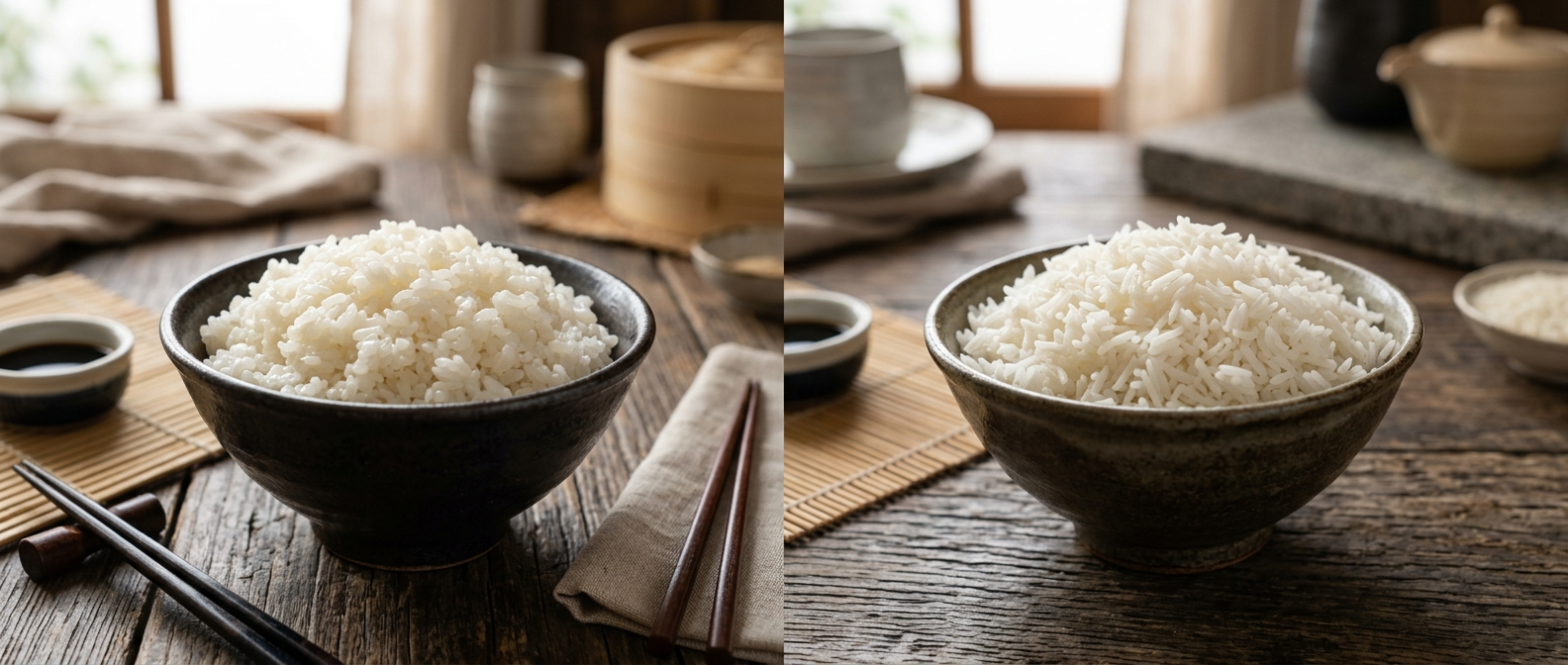
People substitute them for each other all the time. It usually doesn’t go well.
Sushi rice and white rice look almost identical in a bag, cost roughly the same, and both sit in the rice aisle at the same eye level. The assumption that they’re interchangeable is a reasonable one. It’s also wrong, and the gap between them is more specific and more interesting than most people expect.
Here is exactly what makes them different, where those differences actually matter, and when it’s genuinely fine to stop worrying about it.
What Sushi Rice Actually Is
Sushi rice is short-grain Japanese rice – specifically a Japonica variety – that has been cooked and then seasoned with a mixture of rice vinegar, sugar, and salt. The name “sushi rice” refers not just to the raw grain but to the finished preparation. Unseasoned, it’s just Japanese short-grain rice, which home cooks in Japan use for practically everything from onigiri to everyday steamed rice. The “sushi” part comes from what happens after cooking.
The seasoning is non-negotiable to the dish. Rice vinegar lowers the pH of the rice, which extends shelf life and adds brightness. Sugar balances the sharpness of the vinegar. Salt brings the flavors together. The proportions vary by chef and region – there’s no single authoritative ratio – but the combination of all three is standard. Skip the vinegar and you have Japanese rice. Add the vinegar mixture and you have sushi rice.
What White Rice Actually Is
White rice is the broader category. It refers to any rice that has been milled to remove the outer husk, bran, and germ, leaving only the starchy endosperm. That milling process applies across all grain lengths – short, medium, and long. Jasmine rice is white rice. Basmati is white rice. The long-grain rice in a takeout container of fried rice is white rice. And Japanese short-grain rice, before it becomes sushi rice, is also white rice.
This is why the comparison is slightly awkward. Sushi rice is a subset of white rice – a specific variety prepared a specific way. The question people are usually actually asking is: can regular long-grain white rice (the kind in most pantries) substitute for short-grain Japanese rice in sushi? The answer to that question is no, and the reason comes down to starch.
The Starch Difference: Why It Matters More Than You Think
Rice starch is made up of two components: amylose and amylopectin. Amylose is a long, straight-chain molecule that keeps rice grains separate and fluffy when cooked. Amylopectin is a branched molecule that makes rice sticky and cohesive.
Short-grain Japanese rice has a significantly higher amylopectin content than long-grain varieties. When cooked, the grains swell and cling together in a way that long-grain rice simply doesn’t replicate. This stickiness is structural – it’s what allows a piece of nigiri to hold its shape under a slice of fish, or a maki roll to stay together when cut. Without it, sushi falls apart. Literally.
The Harvard T.H. Chan School of Public Health’s breakdown of rice types and their nutritional profiles notes that the distinction between rice varieties comes primarily from grain length and starch composition – factors that determine both how rice behaves during cooking and how it affects the body after eating. For sushi, the behavioral difference is decisive.
Long-grain rice cooked at home can be washed to remove surface starch and cooked with slightly less water to encourage more cohesion. It will still be noticeably less sticky than short-grain Japanese rice. The difference is most obvious in nigiri, where the rice ball needs to hold a firm shape while remaining tender. In a simple maki roll wrapped tightly in nori, substituted rice is more forgiving. But if you have access to the right grain, there’s no reason to substitute.
Flavor: More Different Than the Ingredients Suggest
Plain short-grain Japanese rice and plain long-grain white rice taste broadly similar – mild, slightly starchy, neutral. The gap is in texture and mouthfeel more than flavor.
Sushi rice changes that. The vinegar-sugar-salt seasoning gives finished sushi rice a distinctive character: slightly tangy, subtly sweet, with a clean brightness that balances the salt and fat in fish. It’s not strongly flavored, but it’s not neutral. This seasoning is why a piece of nigiri tastes coherent rather than just like fish sitting on top of rice.
Regular long-grain white rice, unseasoned, is genuinely neutral. It works as a base, a side dish, a vehicle for sauces. That neutrality is a feature in everyday cooking. In sushi, it’s a problem – the rice needs to contribute something.
Calories and Nutrition: Nearly Identical, With One Exception
For most practical purposes, sushi rice and white rice are nutritionally the same. Both provide around 130 calories per 100 grams cooked. Both are primarily carbohydrates with minimal protein and virtually no fat. The differences in mineral content – slightly more potassium and calcium in some long-grain varieties – are so small as to be irrelevant in any real dietary context.
The seasoning in sushi rice adds a very modest amount: roughly 5 to 10 calories per serving from the sugar, and around 50mg of sodium. Neither number is meaningful in the context of a full meal.
The one genuine nutritional difference worth understanding is the glycemic index. Short-grain Japanese rice has a notably high GI – typically measured around 72 to 83 depending on the study and preparation method. Long-grain white rice varies by variety: jasmine rice tends toward the higher end, basmati sits in the low-to-medium range. The Mayo Clinic’s explanation of the glycemic index describes high-GI foods as those that cause a faster, sharper rise in blood glucose – not inherently harmful for healthy people, but relevant for anyone managing blood sugar or diabetes.
This matters practically in one direction: if you’re eating sushi frequently and monitoring blood glucose, the short-grain base is marginally less favorable than a long-grain alternative in this specific respect. It’s not a reason to avoid sushi. It’s context.
Harvard researchers have also examined the broader white rice question in a study of over 157,000 participants, finding that higher consumption of white rice was associated with increased type 2 diabetes risk, while replacing portions of it with whole grains showed meaningful reduction. The Harvard School of Public Health’s research on white rice and diabetes risk puts the short-grain versus long-grain question in a wider context: for frequent rice eaters, the grain length is a secondary concern compared to whole grain versus refined grain overall.
Can You Use White Rice for Sushi?
Short answer: you can, but you’ll notice.
The most common home-cook scenario is making sushi and having only long-grain white rice available. Washing it thoroughly and cooking with slightly less water than usual will bring it slightly closer to short-grain texture. Seasoning it with the standard sushi vinegar mixture will handle the flavor side. The roll will hold together if wrapped tightly in nori. Nigiri will be more difficult – the rice won’t compress as cleanly and is more likely to fall apart when lifted.
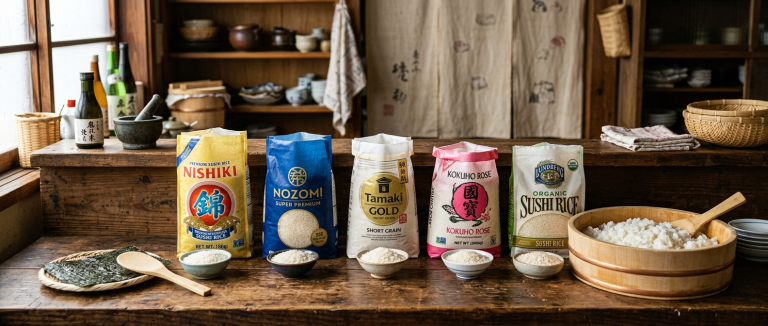
If you’re making a casual home roll for yourself on a Tuesday night, the substitution is fine. If you’re making sushi for guests and want it to look and feel the way it does at a restaurant, it’s worth buying the right rice. Short-grain Japanese rice is widely available at Asian grocery stores and most well-stocked supermarkets. In the US, brands like Koshihikari and Calrose are the most commonly found varieties and both produce the correct texture.
Glutinous rice – sometimes called sticky rice or sweet rice – is not a substitute. Despite the name, it’s too sticky and starchy for sushi, and the texture is wrong entirely.
Brown Sushi Rice: The Trade-off Worth Knowing
Some sushi restaurants now offer brown rice as a substitute for standard sushi rice, and some specialty sushi recipes specifically call for it. Brown rice retains its bran and germ layers, which means it has more fiber, more vitamins and minerals, and a lower glycemic index than white sushi rice. Harvard research on the topic found that brown rice is associated with lower diabetes risk compared to white rice, and the fiber difference is the primary reason why.
The trade-off is texture and flavor. Brown rice doesn’t achieve the same cohesive stickiness as polished short-grain rice. It’s chewier and nuttier, which changes the eating experience noticeably. Most traditional sushi chefs don’t use it. Whether that trade-off is worth making depends on how often you’re eating sushi and what your health priorities are. As an occasional meal either way, it’s not a meaningful nutritional distinction.
How to Season Sushi Rice Correctly
The preparation gap between sushi rice and plain white rice is as much about technique as ingredients. Even with the right short-grain grain, the seasoning step is what finishes it.
The standard ratio for sushi rice seasoning is roughly 3 tablespoons of rice vinegar, 2 tablespoons of sugar, and 1 teaspoon of salt per 2 cups of dry rice. Warm the vinegar mixture gently until the sugar and salt dissolve – don’t boil it – then fold it into freshly cooked rice while the rice is still hot. Use a wooden paddle or flat spatula, folding rather than stirring to avoid crushing the grains. Fan the rice as you fold to cool it quickly and create the characteristic sheen. The rice should be used at room temperature, not cold.
Cold rice is one of the most common reasons home sushi fails. Refrigerated rice loses the cohesion and pliability that makes sushi work. If you’re preparing in advance, keep seasoned sushi rice at room temperature covered with a damp towel for up to a few hours.
For the full story on what sushi rice becomes once it’s finished – the dish itself, the components, and how everything fits together – our guide to what masago actually is covers the fish roe component you’ll find topping many sushi rice preparations. The masago in sushi piece goes deeper on how these components combine in the final dish. If you’re thinking about calories across different sushi formats, the sushi calories breakdown covers every type from sashimi to specialty rolls. And if the raw vs cooked question is where you are right now, is sushi raw fish covers the full answer.
For more on the food details that actually matter, the Eat & Drink section has it, and the Health & Wellness category has the nutrition angle.
Small things. Big flavor.
FAQs
Is sushi rice just white rice?
Sushi rice is a type of white rice – specifically short-grain Japanese Japonica rice that has been seasoned with rice vinegar, sugar, and salt after cooking. Not all white rice is sushi rice. Long-grain white rice varieties like jasmine or basmati lack the starch composition and stickiness required for sushi.
Can I substitute white rice for sushi rice?
You can use long-grain white rice as a substitute if short-grain Japanese rice isn’t available, but the texture will be noticeably different. The lower amylopectin content in long-grain rice means it won’t be as sticky, and nigiri and tight roll shapes are harder to achieve. The flavor substitution – vinegar, sugar, salt seasoning – is straightforward. The texture substitution is the limiting factor.
What is the difference between sushi rice and regular rice?
Grain length and starch composition are the primary structural differences. Short-grain Japanese rice has more amylopectin, making it stickier when cooked. It’s also specifically seasoned with rice vinegar mixture after cooking. Regular long-grain white rice has more amylose, making it fluffier and less cohesive – better for side dishes, fried rice, and general cooking, but not suitable as a sushi rice substitute.
Is sushi rice healthier than white rice?
Nutritionally they are nearly identical – same calories, same macronutrient profile, negligible differences in minerals. Short-grain sushi rice tends to have a slightly higher glycemic index than some long-grain varieties like basmati. Brown rice of any variety is more nutritious than either, due to higher fiber and lower GI, but it doesn’t produce the correct sushi texture.
Does sushi rice have more calories than white rice?
Not meaningfully. Both provide around 130 calories per 100 grams cooked. The vinegar-sugar-salt seasoning in sushi rice adds approximately 5 to 10 calories per serving from the sugar. The difference is too small to factor into any practical calorie calculation.
Why is sushi rice sticky?
Because of its high amylopectin content. Amylopectin is a branched starch molecule that causes rice grains to cling together when cooked. Short-grain Japanese rice varieties have significantly more amylopectin than long-grain varieties, which is why they achieve the cohesive, moldable texture required for nigiri and maki.
What kind of vinegar do you use for sushi rice?
Rice vinegar – specifically Japanese rice vinegar, which is milder and less acidic than other vinegar types. Seasoned rice vinegar (with sugar and salt already added) can also be used as a shortcut. Regular white vinegar or apple cider vinegar can work in a pinch but produce a sharper flavor. The vinegar is what gives sushi rice its brightness and slight tang, so the type matters.