The Best Fluffy Pancakes recipe you will fall in love with. Full of tips and tricks to help you make the best pancakes.


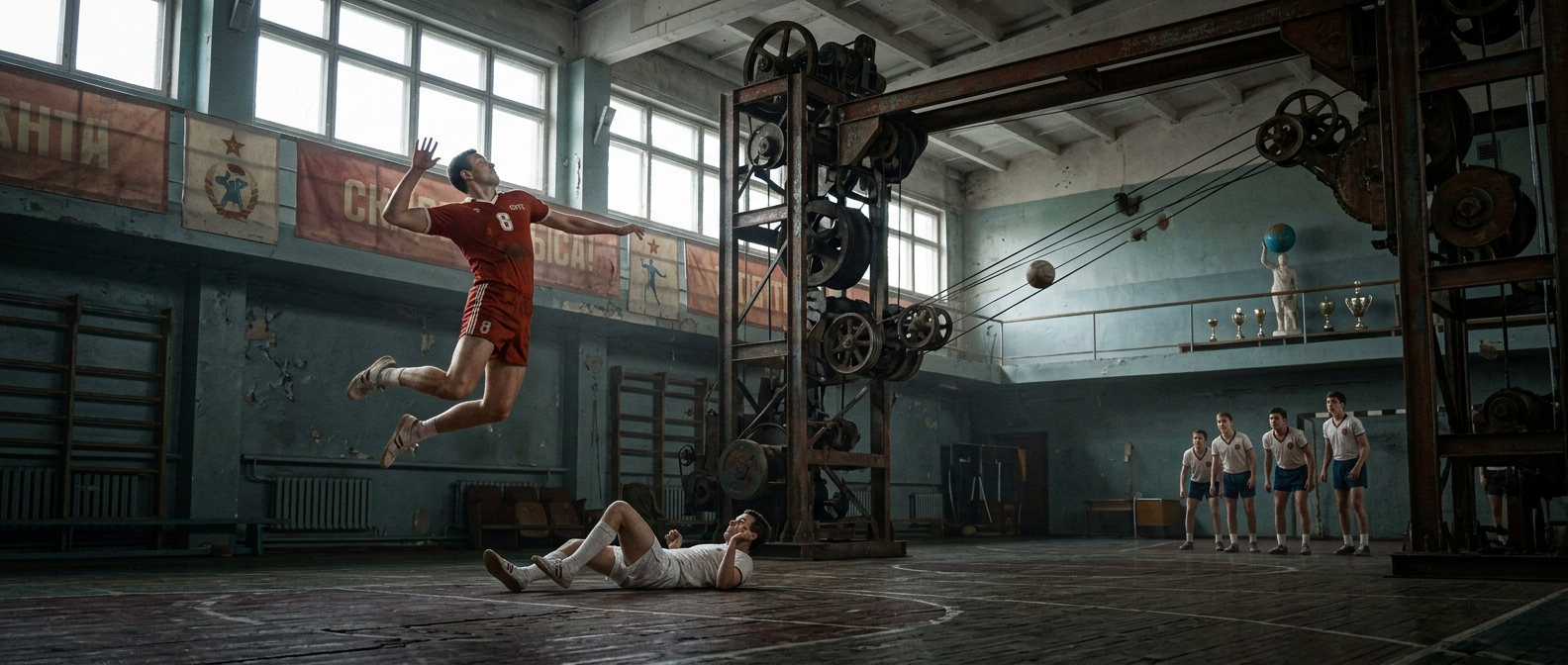
Olympic champions don’t appear. They’re produced. The production system is the story that most sports memoirs skip over, because the system is institutional and the memoir is personal, and it’s easier to write about what you did than about the architecture that made it possible for you to do it.
The Flying Elephant: Memoirs of an Olympic Champion is notable for not making this mistake. Alexander Savin writes about the system – his coaches, his club structure, the training environment that built him – because he understood something most athletes don’t articulate clearly: the individual achievement is inseparable from the collective apparatus behind it. You can’t understand what Savin did without understanding what the Soviet volleyball system was. And that system is one of the most fascinating and underanalyzed stories in the history of sport.
What the Soviet Sports Machine Actually Was
The Soviet approach to elite sport development was not, as Western media often characterized it during the Cold War, simply a matter of having athletes who did nothing but train and were paid to perform. That framing was both accurate in narrow respects and fundamentally misleading about the structural sophistication involved.
The Soviet Sports Machine, documented in Hanover College’s historical review, describes the architecture: a state-supported system that treated athletic success as direct ideological proof of socialism’s superiority over capitalism. Sport victories were not just sport victories. They were validation of a political and economic system. That ideological weight funded the infrastructure that made the results possible – sports schools, scientific research institutes, full-time coaching staffs, and a national talent identification pipeline that had no equivalent in the capitalist West.
The pipeline began at the DYUSH – Detsko-Yunosheskiye Sportivniye Shkoly, or Children and Youth Sports Schools. By the 1970s there were 1,350 of these schools across the Soviet Union, growing to 7,500 by 1987. More than 50,000 coaches and instructors staffed them. Children identified with athletic potential were streamed into sport-specific schools early, receiving coaching and training alongside their general education. The most promising were eventually funneled into specialized higher-level programs, then into club teams that fed the national program.
For volleyball specifically, the Voluntary Sports Societies – workplace-affiliated clubs that organized Soviet sport at the club level – provided the competitive environment beneath the national team. Clubs like CSKA Moscow (the Central Army Sports Club) and Zenit operated at a level of organization and resource that no Western club volleyball structure matched in the 1970s and 80s. They were full-time training environments, not weekend leagues.
The Two Coaches Who Defined the System in Savin’s Era
The Soviet men’s volleyball national team during Savin’s playing career was shaped by two men whose coaching philosophies were distinct enough to define eras within the program’s dominance.
Yuri Tchesnokov, inducted into the Volleyball Hall of Fame in 2000, was the coach who took Savin to his first Olympics in Montreal 1976 and delivered the gold in Moscow 1980. Tchesnokov built on the tactical foundation that earlier Soviet coaches had established, emphasizing coordination, reading the game from the back row, and the systematic exploitation of blocking systems that had made Soviet volleyball difficult to attack against for a decade before Savin arrived.
Vyacheslav Platonov succeeded Tchesnokov and led the Soviet team through the early-to-mid 1980s, including the 1982 World Championship gold that Savin was part of. Platonov is, by any serious assessment of volleyball coaching history, one of the greatest coaches the sport has ever produced. Mark Lebedew’s analysis of Platonov’s coaching manual “My Profession: The Game” – the only English-language treatment of Platonov’s coaching philosophy available – describes a coach who operated with a non-specialized system that was radical even by the standards of Soviet volleyball. Multiple receivers. Blockers changing positions. Spikers attacking from all six positions. A refusal to accept the specialization that every other elite program was moving toward. The fact that it worked – not just worked but dominated – is the measure of Platonov’s tactical intelligence.
What’s notable about Savin’s career is that he developed under Tchesnokov and then performed at World Championship level under Platonov. Two different coaches, two different tactical philosophies, one player at the top of the game throughout. That adaptability – the ability to perform within different systems while remaining indispensable – is the mark of genuine elite quality, not just system production.
The Middle Blocker and the System
Savin’s position – middle blocker – was the position the Soviet system had developed most extensively. The middle blocker in Soviet volleyball was not simply a tall player standing at the net. The position was architected around the specifics of how the Soviet system attacked and defended.
On attack, the Soviet middle blocker operated in the fast-tempo quick attack system that Soviet coaches had been developing since the 1960s. Rather than setting the ball high and allowing the blocker to organize a defense, Soviet attackers used quick low sets that arrived at the hitter before the opposing middle blocker could read the play and commit. The Soviet middle blocker was the primary threat in this system – the player who made the quick attack viable because his timing, approach speed, and vertical elevation were calibrated to the millisecond precision the system required.
On defense, the Soviet blocking system was the most sophisticated in the world during this era. Blockers were trained not just to stop attacks but to redirect them – to shape the ball’s trajectory when they couldn’t stop it entirely, channeling it toward defenders in positions to dig it. The Soviet approach to blocking was a system, not an individual act. Savin operated within that system as its central figure because his size, timing, and reading of opposing setters allowed him to take away the middle attack and influence how the entire defensive structure behind him needed to organize.
This is the context Savin’s memoir provides that a statistics page or Wikipedia entry cannot. The numbers – six European Championship golds, two World Championship golds, Olympic silver and gold – record what happened. The memoir records why it was possible, which is a fundamentally different kind of information.
Why the System Collapsed and What That Means for the Record
The Soviet volleyball dominance that Savin was central to ended abruptly and completely. After the 1985 World Cup – the last major title under Platonov before he was removed for health and political reasons – the results deteriorated sharply. Silver at the 1986 World Championship. Silver at the 1988 Seoul Olympics. A humiliating loss to Sweden at the 1989 European Championships. The Soviet Union that had been essentially unbeatable for twelve years became beatable within four.
The reasons were multiple and interlocking. Platonov’s removal was part of it – the coaching continuity that had built the program’s tactical sophistication was disrupted. The broader political and economic deterioration of the Soviet system in the late 1980s reduced the resource base that elite sport depended on. An aging roster of players from the dominant era aged out simultaneously. Western European volleyball – Italian, French, Dutch, Swedish – had been studying Soviet methodology for a decade and had developed capable responses to it.
What this collapse illuminates retrospectively is how dependent the Soviet results had been on a specific confluence of circumstances: an exceptional coaching staff, an exceptionally talented generation of players, a state funding structure that provided resources no Western club program could match, and a political context that made winning not just desirable but obligatory. Remove any of those factors and the results changed. Remove most of them simultaneously and a twelve-year dominance ended inside four years.
Savin’s career sits precisely at the peak of that confluence. He entered the national program at 18 when all four factors were aligned. He performed at elite level for over a decade. He retired before the collapse became terminal. The Flying Elephant was a product of the system at its maximum capacity – which means the memoir is also a document of what that maximum capacity looked like from the inside, which is information that cannot be recovered by any other means.
What the Memoir Adds to the Historical Record
The Soviet volleyball system produced extraordinary results and minimal English-language documentation of how it actually functioned. The coaching manuals, training program documentation, and tactical analyses that existed were in Russian. The players and coaches who could have described it from the inside either didn’t write memoirs or wrote them in Russian for Russian audiences.
Savin’s memoir changes this in a specific and irreplaceable way. He was inside the system at its apex – not as a peripheral figure but as one of its central players. He trained under Tchesnokov and Platonov. He experienced the DYUSH pipeline from the inside as a young player developing in Taganrog. He knows what the training environment felt like, how the coaching relationships actually worked, what the tactical discussions sounded like, how the pressure of representing the Soviet state in international competition was communicated to players on the court rather than in official state communications.
That first-person interiority is what the historical record lacks and what the memoir provides. The statistics are available. The medal counts are documented. The match results are recorded. What isn’t documented – except now, in 514 pages translated into English for the first time – is what it was like to be Alexander Savin in that system, in those years, at those tournaments.
The Flying Elephant is, among other things, one of the primary sources for anyone who wants to understand how Soviet volleyball actually worked from the perspective of someone who made it work. That’s a narrow scholarly claim that happens to be true, and it sits alongside the broader claims – readable memoir, fascinating life story, exceptional photographic archive – that make the book worth reading for a much larger audience.
For the full career biography and what the memoir covers, our piece on Alexander Savin and The Flying Elephant has the complete picture. For the specific Kindle reading experience – 514 pages, 240 photographs, device recommendations – the Kindle edition review covers it in full. For everything across the Art & Culture category and the masago.blog homepage, the full range of cultural coverage is there.
Small things. Big flavor.
FAQs
What was the Soviet volleyball system that produced Alexander Savin?
A state-funded talent pipeline running from Children and Youth Sports Schools (DYUSH) through workplace-affiliated club teams to the national program. By the 1970s over 1,350 such schools operated across the USSR, staffed by more than 50,000 coaches. Elite club teams like CSKA Moscow provided full-time training environments. The system treated athletic success as ideological proof of Soviet superiority, which funded the resources that Western programs couldn’t match.
Who coached Alexander Savin at the Soviet national team?
Primarily Yuri Tchesnokov (later inducted into the Volleyball Hall of Fame in 2000), who led the team from 1974 to 1977, coaching Savin through the Montreal 1976 silver and Moscow 1980 gold. Vyacheslav Platonov, widely considered one of the greatest volleyball coaches ever, led the program through the early-to-mid 1980s, including the 1982 World Championship gold that Savin was part of.
Who was Vyacheslav Platonov?
The head coach of the Soviet men’s national volleyball team from 1977 to 1985, and again briefly in 1990-91. Platonov developed a non-specialized tactical system that had multiple receivers, blockers changing positions, and spikers attacking from all six positions – radical even by Soviet standards. His 1985 removal for health and political reasons preceded the sharp decline in Soviet results. His coaching manual “My Profession: The Game” is the primary English-language source on his philosophy.
Why did Soviet volleyball dominance end after 1985?
Multiple simultaneous factors: Platonov’s removal disrupting coaching continuity, political and economic deterioration reducing the state funding base, an aging generation of elite players from the dominant era retiring simultaneously, and Western European programs (Italy, France, Netherlands, Sweden) having studied Soviet methodology for a decade and developed effective counters. Soviet men’s volleyball went from world dominance to silver medals in four years.
What makes Savin’s memoir significant as a historical document?
It provides first-person interior documentation of the Soviet volleyball system at its apex – how the training environment functioned, how coaching relationships worked, how state pressure was communicated to players – that doesn’t exist in English anywhere else. The statistics and medal counts are publicly available. What the memoir provides is the experience of being inside the system that produced those results, which is a different and irreplaceable category of information.
How did the middle blocker role function in Soviet volleyball?
The Soviet middle blocker operated in a fast-tempo quick attack system – low, quick sets arriving before opposing blockers could organize. On defense, Soviet blockers were trained to redirect attacks they couldn’t stop, shaping ball trajectory toward positioned defenders. The system treated blocking as a collective act rather than individual effort. Savin’s size, timing, and ability to read opposing setters made him the central figure in this system during the program’s most dominant years.
What is the DYUSH sports school system?
Detsko-Yunosheskiye Sportivniye Shkoly – Children and Youth Sports Schools – were the foundational layer of the Soviet sports talent pipeline. Numbering 1,350 by the 1970s and 7,500 by 1987, these schools identified athletic talent early and provided sport-specific coaching alongside general education. The most promising athletes were progressively funneled toward club teams and eventually the national program. Alexander Savin entered this pipeline as a young player in Taganrog, eventually reaching the senior national team at 18.