The Best Fluffy Pancakes recipe you will fall in love with. Full of tips and tricks to help you make the best pancakes.


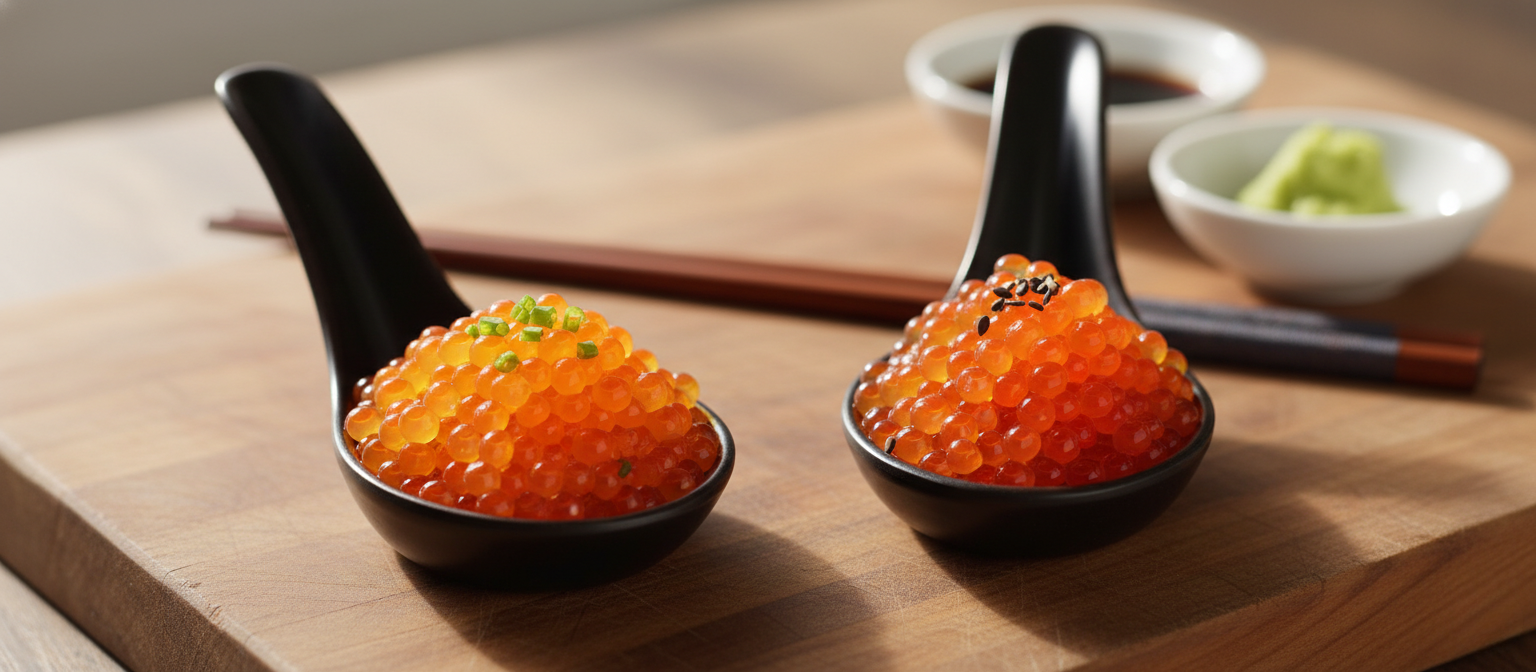
Here’s a question most sushi menus won’t answer for you.
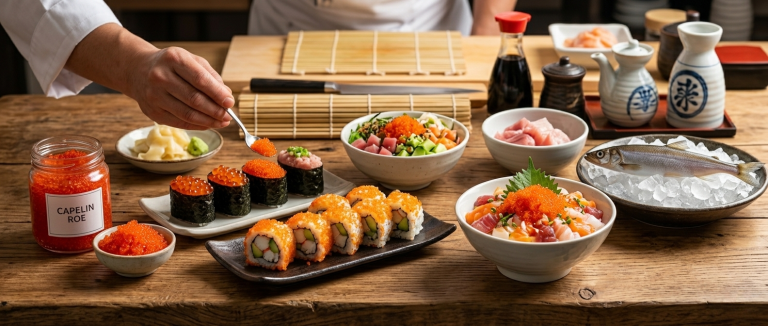
That orange stuff on your roll – is it tobiko or masago?
Odds are you don’t know. Neither does the person sitting across from you. And depending on which restaurant you’re at, the chef may have swapped one for the other without changing the menu description.
This isn’t a scandal. It’s just the reality of how these two ingredients get used. And once you know the actual difference, you’ll be able to tell them apart with one bite.
They Come From Different Fish
This is where it starts.
Masago is the roe of the capelin – a small, cold-water fish from the smelt family that swims around the North Atlantic and Arctic. Tobiko is the roe of the flying fish – a faster, warmer-water species found near Japan and across the Pacific.
Different fish. Different eggs. Different everything from the water up.
According to The Japanese Bar’s deep dive on tobiko and masago, the capelin is small and abundant, which is why masago is affordable and easy to find. Flying fish are harder to harvest and their eggs take more work to process – which is why tobiko costs roughly twice as much at wholesale. Around $30-35 per pound for masago, $60-70 for tobiko. That gap shows up on menus.
The Texture Is Where It Gets Obvious
Read about tobiko and masago all you want. The moment you taste them side by side, the difference lands immediately.
Tobiko pops. Each egg is large enough and firm enough that biting into it produces a clean, satisfying burst. It’s not dramatic – not like biting into a grape. More like a gentle snap that releases flavor right at the moment you notice it. Sushi lovers who seek tobiko out are usually chasing this feeling.
Masago doesn’t pop. The eggs are smaller and softer, so they compress quietly against the palate and release flavor without any textural event. It’s more of an accumulation than a moment. Hundreds of tiny things working together rather than one thing making a statement.
Neither is better. They’re doing genuinely different jobs.
The Flavor Difference Is Real But Subtle
Both are briny. Both have that clean ocean quality that works so well in sushi. But there’s a gap.
Tobiko is more assertive. It carries a slight sweetness, a hint of smokiness from the curing process, and a richer ocean depth that stays on the palate a beat longer. It announces itself, then lingers.
Masago is gentler. The brininess is softer, the flavor cleaner and quicker. It adds without competing. Put it next to a spicy tuna filling, a creamy avocado, a slice of yellowtail – it doesn’t fight any of them. It rounds the bite out and steps back.
That mildness is a feature, not a weakness. It’s why masago coats the outside of California rolls instead of sitting on top as a feature ingredient. As Sushi University explains, masago was adopted widely in Western sushi precisely because its mild character works with almost everything. It knows its role.
The Color Situation
Both get dyed. Often the same shades. Which is part of why they’re so easy to confuse on a plate.
Orange is the default for both. Black is dyed with squid ink. Green typically comes with wasabi flavor added. Red runs deeper than orange, usually from beet dye or food coloring.
The key thing to know: natural tobiko is golden-orange with a slight transparency. Natural masago is paler, almost yellowish. What you see at most restaurants – that bright, uniform orange – is dyed in both cases.
Color alone won’t tell you which one you’re eating. Texture will.
How Restaurants Use Each One
Masago is the workhorse. It coats the outside of rolls, gets mixed into spicy sauces, disappears into fillings. Its job is to add texture and a layer of brininess to everything around it without drawing attention to itself. Our masago sauce guide is built around this exact quality – masago in a sauce is subtle, present, and immediately missed when it’s gone.
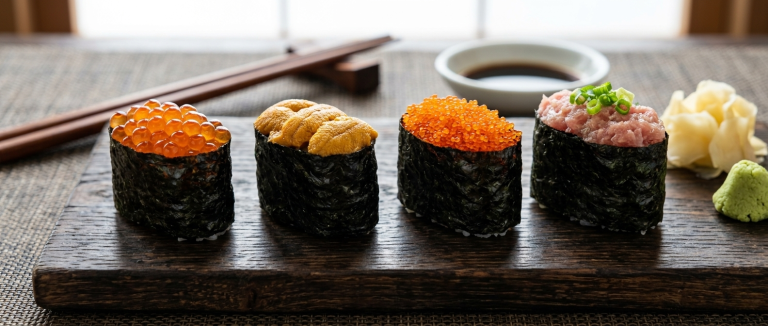
Tobiko is the feature ingredient. Tobiko nigiri. Tobiko gunkan-maki with a raw quail egg cracked on top. Tobiko as a garnish on a finished roll where you want something that looks and tastes intentional. When a dish is designed to showcase roe rather than just include it, tobiko is usually the right call.
Some restaurants use masago everywhere and charge tobiko prices. Now that you know the texture difference, you’ll catch it. Tobiko pops. Masago doesn’t. One bite and you’ll know.
Which One Should You Order
It depends on what you want from the experience.
If you’re new to eating roe on its own, masago is the entry point. Milder, softer, more affordable, and genuinely delicious. A masago nigiri with a quail egg is one of the better-value items at any sushi bar that carries it. Our full breakdown of masago nigiri covers exactly how to order and eat it right.
If you want the texture experience – the pop, the presence, the thing that makes roe-forward dishes memorable – tobiko earns the price difference. Order it as nigiri or gunkan-maki and pay attention to the moment the egg bursts. That’s what all the fuss is about.
Want more on how the two compare across size, sourcing, price, and every format they appear in? The full masago vs. tobiko guide goes deep on all of it.
The Short Version
Masago is capelin roe. Tobiko is flying fish roe. Masago is smaller, softer, milder, and cheaper. Tobiko is larger, firmer, bolder, and more expensive. The easiest way to tell them apart is the texture – tobiko pops, masago doesn’t.
Both belong on the sushi menu. They just belong in different places on it.
Small things. Big flavor.
FAQs
What is the main difference between tobiko and masago?
Tobiko comes from flying fish and masago comes from capelin. The most noticeable difference is texture – tobiko has a distinct pop when bitten, while masago is softer and more fine-grained. Tobiko also has a bolder flavor and costs roughly twice as much.
Can restaurants substitute masago for tobiko without telling you?
Yes, and it happens more than most diners realize. The visual difference is subtle enough that most people don’t notice. The texture difference is the giveaway – tobiko pops, masago doesn’t. If you’re paying tobiko prices, it’s worth asking.
Which tastes better – tobiko or masago?
Neither is objectively better. Tobiko has more presence – bolder flavor, satisfying pop, richer finish. Masago is more versatile – milder, softer, integrates seamlessly into sauces and rolls. What you prefer depends on what you want the roe to do in the dish.
Is tobiko healthier than masago?
Not meaningfully. Both provide protein, omega-3 fatty acids, vitamin B12, and selenium in similar amounts. Tobiko is slightly higher in calories due to its larger size. Both are high in sodium from the curing process.
How do I tell tobiko and masago apart on a plate?
Size and texture are your clearest signals. Tobiko eggs are visibly larger and rounder. When you bite in, tobiko pops. Masago is finer and softer with no real pop. Color is not a reliable indicator since both get dyed in the same shades.
Which is more sustainable – tobiko or masago?
Masago has a general sustainability edge. Capelin is abundant and widely harvested across the North Atlantic with several certified fisheries. Flying fish populations near Japan and the East China Sea are considered healthy but are more vulnerable to overfishing pressure.