The Best Fluffy Pancakes recipe you will fall in love with. Full of tips and tricks to help you make the best pancakes.

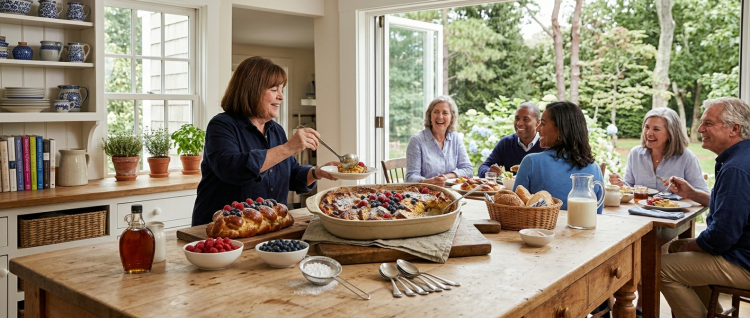
Let’s start with the honest version: most baked French toast casseroles are disappointing. They’re either soggy in the middle, dry at the edges, or so sweet they feel like dessert masquerading as breakfast. You find a recipe online, follow it exactly, and end up with something that looks nothing like the photo and tastes like wet bread.
Ina Garten’s version is different. The Barefoot Contessa baked French toast casserole has become her signature brunch dish for good reason – it actually works. It’s the recipe she makes for overnight guests, for holiday mornings, for any situation where she wants to serve something impressive without being stuck at the stove flipping individual slices while everyone else eats.
But here’s what most recipe blogs won’t tell you: the dish has some non-negotiable elements that separate Ina’s version from the mediocre imitations. Skip them and you have generic French toast bake. Include them and you understand why this recipe has stayed in her rotation for decades.
What Makes Ina’s Version Actually Good
Before getting into the specifics, it helps to understand what separates this casserole from the pile of similar recipes online.
Most French toast casseroles follow a basic formula: bread, eggs, milk, sugar, bake. Ina’s adds specific techniques and ingredients that solve the common problems. The bread gets toasted first, which prevents sogginess. The custard uses half-and-half instead of milk, which creates richness without heaviness. The overnight rest isn’t optional – it’s where the magic happens.
The result is something that hits a specific texture: crisp and caramelized on top, creamy and custard-like in the middle, with distinct layers that hold their shape when you serve it. It’s not bread pudding. It’s not soggy toast. It’s its own thing.
The Real Recipe (With Ina’s Actual Notes)
This is the recipe as it appears in Ina’s cookbooks and shows, with the context that makes it work.
Ingredients:
- 1 loaf challah bread, sliced 3/4 inch thick
- 8 extra-large eggs
- 3 cups half-and-half
- 1/2 cup honey
- 1 tablespoon grated orange zest
- 1 teaspoon pure vanilla extract
- 1 1/2 teaspoons kosher salt
- Unsalted butter for the baking dish
The method that matters:
Preheat your oven to 350 degrees. This isn’t just for baking – you’re using it first to toast the bread. Lay the challah slices on sheet pans and bake for about 10 minutes until lightly toasted. This step seems unnecessary until you skip it and end up with mush. The toasting creates a barrier that lets the bread absorb custard without collapsing.
Butter a 9×13 baking dish generously. Ina specifies “generously” for a reason – the honey in the custard makes this sticky, and you want clean slices later.
Whisk the eggs, half-and-half, honey, orange zest, vanilla, and salt together. The orange zest is the secret weapon here. It cuts through the richness and makes the whole dish taste more expensive than it is. Don’t skip it. Don’t substitute bottled orange juice – the oils in fresh zest are the point.
Arrange the toasted bread in the dish in two layers. Pour the custard over slowly, pressing gently to help absorption. Cover and refrigerate overnight. This isn’t a suggestion for convenience – the resting period lets the bread fully absorb the liquid and transforms the texture from eggy bread to proper custard.
The next morning, bring to room temperature for 30 minutes while your oven preheats to 350. Bake uncovered for 45-50 minutes until puffed and golden. The top should look like a good creme brulee – deeply golden with some darker spots.
The Ingredients That Actually Matter
Ina’s recipes are specific for reasons she doesn’t always explain. Here are the non-negotiables:
Challah bread – The egg content in challah matters. It creates structure that holds up to the custard. Brioche works as a substitute. Regular white bread turns to paste. Sourdough fights the sweetness. If you can’t find challah, look for any enriched egg bread with a tight crumb.
Half-and-half – Not milk, not heavy cream. Half-and-half has enough fat for richness without the weight that makes heavy cream feel like a brick in your stomach. Whole milk works in a pinch but the texture suffers. Heavy cream makes it too dense.
Honey instead of sugar – This changes the flavor profile completely. Honey adds complexity and moisture retention. Maple syrup works as a substitute but changes the character. White sugar makes it bland.
Orange zest – The recipe works without it, but it’s not the same dish. The citrus brightens everything. Lemon zest is too sharp. Orange extract is too artificial. Fresh zest only.
For more on why specific ingredients matter in baking, see our guide on baking substitutions that actually work.
Common Ways People Mess This Up
Even with a good recipe, execution fails happen. Here are the specific mistakes that ruin Ina’s casserole:
Using fresh instead of stale/toasted bread – Fresh bread turns to mush. The toasting step isn’t about flavor – it’s about creating structure. If you’re in a rush, buy day-old challah from a bakery, but the oven toasting is still worth doing.
Skipping the overnight rest – You can bake this after just 30 minutes of soaking, but you shouldn’t. The texture difference is dramatic. The overnight rest lets the custard fully penetrate the bread and creates the custardy interior. Rush it and you have eggy toast.
Overbaking – The casserole should still have a slight jiggle in the center when you pull it out. It continues cooking from residual heat. Overbaked French toast casserole becomes dry and rubbery. Underbaked is actually better than overbaked – it will set more as it cools.
Underseasoning – That 1 1/2 teaspoons of kosher salt seems like a lot for a sweet dish. It’s not. Salt makes the honey taste like honey instead of just sweet. Without adequate salt, the whole thing flattens out.
Wrong pan size – A 9×13 is specified for a reason. Too small and it doesn’t cook through. Too large and it dries out. If you only have an 8×11, reduce the recipe slightly rather than cramming it in.
Make-Ahead Strategy and Timing
This is where Ina’s recipe earns its reputation. The full make-ahead nature lets you host brunch without morning stress.
Two days before: Buy your challah. If it’s very fresh, leave it out overnight to stale slightly.
Day before, evening: Toast the bread, make the custard, assemble the casserole, refrigerate covered. This takes about 30 minutes active time.
Morning of: Remove from refrigerator 30 minutes before baking. Preheat oven. Bake 45-50 minutes. Rest 10 minutes before serving.
Serving: The casserole needs that 10-minute rest to set properly. Cut with a sharp knife or spatula. Serve with warm maple syrup, fresh berries, and if you’re feeling Ina’s style, a dusting of powdered sugar.
The real pro move: have your coffee ready, your table set, and your guests arriving to a kitchen that smells like orange and honey while you’re still in your robe. That’s the Barefoot Contessa promise – maximum impact, minimal morning effort.
Variations That Actually Work
Once you master the base recipe, Ina herself suggests some variations that don’t compromise the dish:
Add fruit: Sliced bananas or berries between the bread layers work well. Don’t use frozen – too much moisture. Fresh blueberries scattered on top before baking create jammy pockets.
Nutella swirl: Dot spoonfuls of Nutella between bread layers. The chocolate-hazelnut spread melts into the custard and creates a marbled effect. This moves the dish firmly into dessert territory but it’s popular with kids.
Boozy version: Replace 1/4 cup of half-and-half with orange liqueur or bourbon for an adults-only brunch. The alcohol mostly cooks off but leaves complexity.
Savory twist: Reduce honey to 2 tablespoons, add 1 cup grated Gruyere and 1/2 cup cooked crumbled bacon to the custard. Serve with hot sauce. This is a completely different dish but uses the same technique.
For more make-ahead brunch recipes, check our best overnight breakfast casseroles roundup.
What to Serve With It
This casserole is rich. Plan your sides accordingly.
Fresh fruit: Non-negotiable. The acid and freshness cut through the richness. Ina suggests a simple fruit salad with orange segments and berries. The citrus theme ties together.
Protein: Crispy bacon or breakfast sausages provide salt and texture contrast. The casserole is sweet enough that savory sides balance rather than compete.
Drinks: Strong coffee is essential. For a full brunch, add a sparkling wine option – the orange notes in the casserole pair well with citrusy mimosas or straight Prosecco.
Skip the pastry basket: You don’t need additional bread. The challah is substantial. If you want something else on the table, make it vegetables or protein.
The Equipment You’ll Actually Need
Ina’s recipes assume standard home kitchen equipment. Nothing fancy required:
- Sheet pans for toasting bread
- 9×13 baking dish (ceramic or glass)
- Large bowl for whisking custard
- Whisk
- Sharp knife for serving
A stand mixer is unnecessary – the custard mixes easily by hand. A microplane makes the orange zesting faster but a box grater works fine.
Why This Recipe Stays Relevant
Food trends come and go. The Barefoot Contessa baked French toast casserole has stayed in rotation because it solves a real problem elegantly. It scales for crowds. It preps ahead. It feels special without requiring technique most home cooks don’t have.
Ina published versions of this recipe in multiple cookbooks over two decades, tweaking slightly each time. The core remains: good bread, proper custard, overnight rest, careful baking. The details matter less than respecting the technique.
If you’ve been burned by bad French toast casserole before, this is the recipe that redeems the category. Follow it precisely the first time. Once you understand how it works, you can adapt. But the original earns its reputation honestly.
Frequently Asked Questions About Barefoot Contessa Baked French Toast Casserole
Can I use regular bread instead of challah?
You can, but the results suffer. Challah’s egg content creates structure that holds up to the custard. Without it, you risk mushiness. If you must substitute, use brioche or another enriched egg bread. Avoid standard sandwich bread entirely.
Do I really have to let it sit overnight?
Yes, for best results. The overnight rest transforms the texture from egg-soaked bread to true custard. You can get away with 4 hours in the refrigerator if you’re desperate, but the texture won’t be the same. Never bake immediately after soaking.
Can I freeze baked French toast casserole?
Yes, though the texture changes slightly. Cool completely, wrap tightly, freeze up to 2 months. Thaw overnight in refrigerator and reheat covered at 350 degrees until warmed through. The top won’t be as crisp as fresh, but it’s still good.
Why is my French toast casserole soggy in the middle?
Either the bread wasn’t toasted enough, the custard ratio was off (too much liquid), or it didn’t bake long enough. The center should be custardy but set, not wet. If consistently soggy, try reducing the half-and-half by 1/2 cup next time.
Can I make this dairy-free?
You can substitute full-fat coconut milk for the half-and-half, but the flavor profile changes significantly. The orange and honey help, but it becomes a different dish. There’s no great dairy substitute that maintains the original character.
How many people does this serve?
The recipe serves 8 generously. For a larger crowd, make two casseroles rather than trying to scale up in a larger pan – the baking becomes uneven. For smaller groups, the recipe halves reasonably well in an 8×8 dish, reducing baking time to 35-40 minutes.
What’s the best way to reheat leftovers?
Individual portions reheat well in the microwave, though the top softens. For multiple servings, cover with foil and bake at 325 degrees until warmed through, then uncover for 5 minutes to re-crisp the top. A toaster oven works well for single servings if you have one.
Can I prepare this the same morning instead of overnight?
You can, but don’t expect the same results. The minimum soak time is 30 minutes, pressed down occasionally to help absorption. It will be more like baked French toast than custard. Edible, but not the dish Ina built her reputation on.
Why does Ina use honey instead of sugar?
Honey adds moisture, complexity, and helps the top caramelize. It also contributes to the signature texture. Maple syrup works as a substitute but makes the dish taste like maple. White sugar makes it bland and slightly gritty.
Is this the same as bread pudding?
Technically similar – both are custards soaked into bread and baked. But the texture goal is different. Bread pudding is uniformly soft and dense. This casserole aims for contrast: crisp top, custardy middle, distinct bread layers. The technique and ingredient ratios create different results.
Explore more tested recipes and honest cooking advice in our Cooking section – real techniques that work in real kitchens.