The Best Fluffy Pancakes recipe you will fall in love with. Full of tips and tricks to help you make the best pancakes.

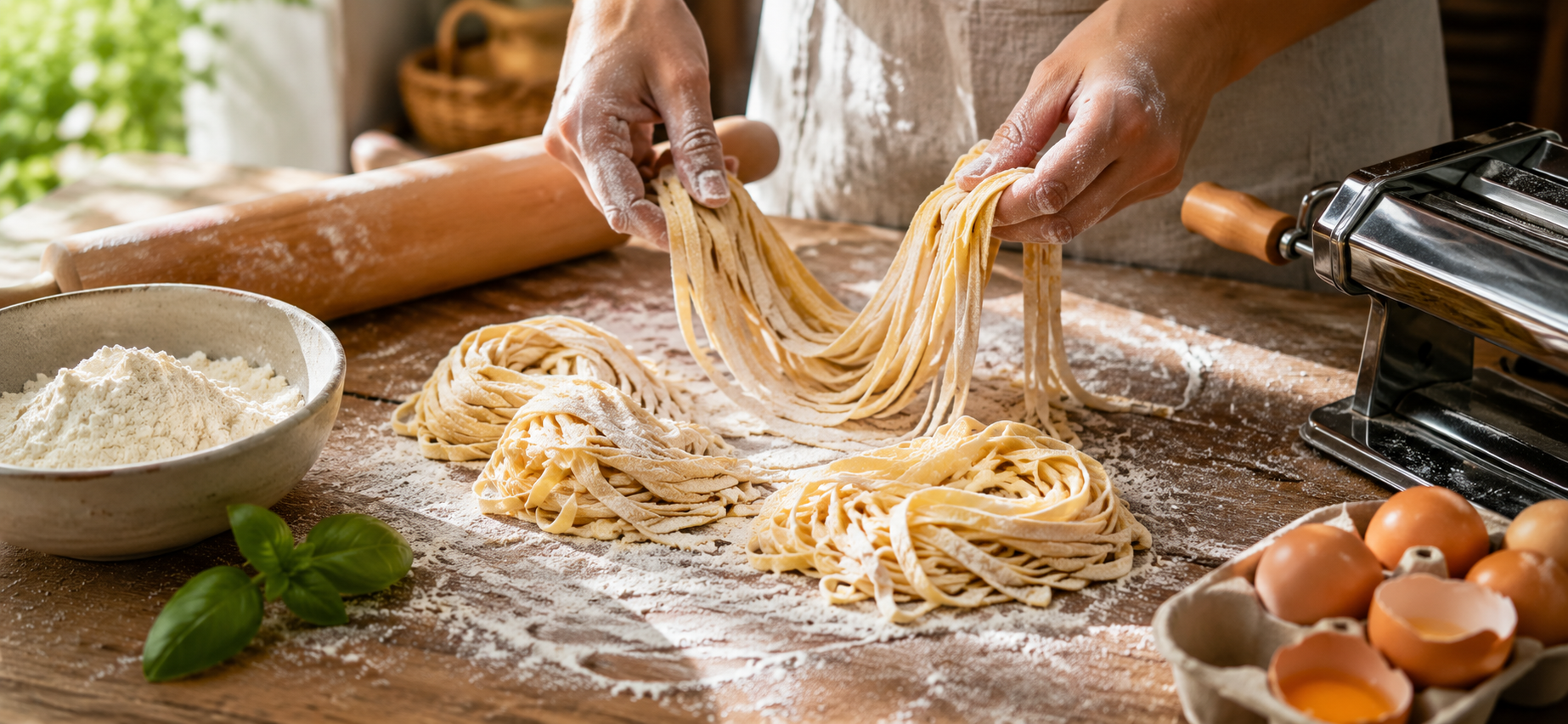
There’s a version of this recipe that lives in nearly every family. Sometimes it came from a grandmother who rolled the dough on a flour-dusted kitchen table and cut the strips by hand. Sometimes it’s something you stumbled into one winter afternoon when the store-bought pasta felt wrong and you had eggs and flour sitting right there. Either way, once you make homemade noodles from scratch for the first time, you understand immediately why people keep coming back to it.
It’s not complicated. It’s not precious. It doesn’t require special equipment or a culinary background or even a particularly tidy kitchen. What it requires is about four pantry staples, a rolling pin, and enough patience to let the dough rest before you start rolling. That’s genuinely the hardest part.
For some reason, making homemade noodles can seem like an arduous and time-intensive task – a place of mystery for a lot of home cooks. However, this couldn’t be further from the truth. Although there is additional time to consider – putting your dough in the fridge to rest, letting your noodles dry – the actual work is quick and easy. Hollywood Life
This is the recipe for homemade noodles that works every time – plus every tip that makes the difference between noodles that are just okay and noodles that make people ask for the recipe.
Why Homemade Noodles Are Worth Making
Before getting into how to make noodles, it’s worth saying why you’d bother at all when a box of pasta is sitting in the pantry.
The honest answer is flavor and texture. When you roll your own dough, you control the ingredients, the flavor, and the story. Making them at home also means no additives or preservatives. You can use quality eggs and your flour of choice, and every batch becomes personal. IMDb
Fresh homemade noodles cook faster, absorb sauces and broths more readily, and have a tenderness that dried pasta simply doesn’t match. Drop them into a pot of chicken soup and they puff up slightly, soaking in the broth as they cook. Toss them with butter and parmesan right after draining and the sauce clings in a way that feels completely different from boxed pasta.
Like most things, you don’t realize how amazing a dish is with the extra homemade factor until you try it. You will never turn back to store-bought egg noodles. IMDb
That’s not an exaggeration. It’s genuinely one of those kitchen experiences worth having at least once, even if you go back to the box on busy weeknights. Find more recipes like this in our Cooking section – simple, from-scratch techniques that make a real difference to what ends up on the table.
What You Need to Make Noodles from Scratch
The ingredient list for a basic homemade noodle recipe is almost embarrassingly short. All you need is four simple pantry ingredients: eggs, flour, milk, and salt. IMDb
Here’s what each one actually does:
Flour is the structure. All-purpose flour is the standard and works beautifully. Bread flour, which has slightly more protein, gives you a chewier, more substantial noodle – worth trying if you like your noodles with more bite. Cake flour, wholemeal flour, gluten-free flour, and self-rising flour are not suitable substitutes for standard noodle recipes as they change the protein structure completely. TheRichest
Eggs do most of the heavy lifting. The yolks add richness, fat, and that characteristic golden color. The whites add structure and elasticity. Using just yolks gives you a richer, more tender noodle – a technique some old-school recipes swear by. Using whole eggs gives you a better balance of tenderness and structure, which is what works best for an all-purpose homemade noodle recipe.
Milk makes the dough softer and more pliable than a water-only version, and adds a very slight richness to the finished noodle. Water works fine if you don’t have milk or want a leaner result.
Salt seasons the dough from the inside out – not just the cooking water. Don’t skip it.
The Homemade Noodles Recipe
Here’s the full recipe for homemade noodles from scratch – no machine needed, no special equipment, and genuinely forgiving even on the first try.
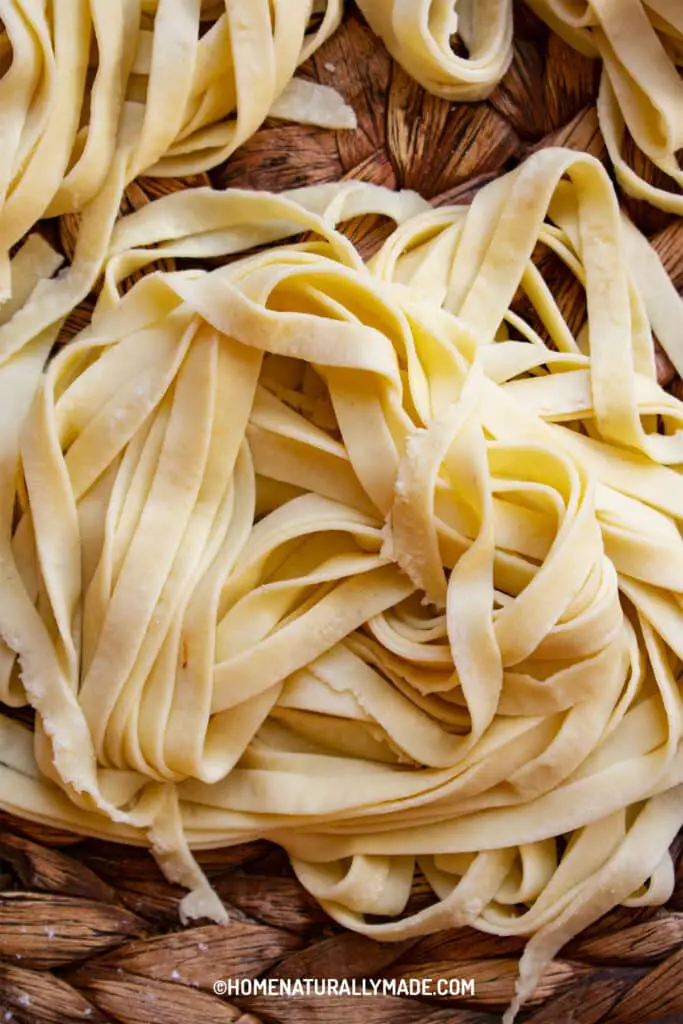
Image: homenaturallymade Image: artofit
 Image: culturedtable
Homemade Noodles From Scratch
Simple, from-scratch egg noodles made with four pantry ingredients and a rolling pin. Perfect for soups, stroganoff, or tossed with butter and parmesan. No pasta machine required.
Servings- 4
Ingredients
- 2 cups all-purpose flour, plus more for dusting
- 2 large eggs
- 3 tablespoons whole milk (or water)
- 0.5 teaspoons salt
Steps
- Mix the dough: Whisk together 2 cups all-purpose flour, plus more for dusting and 0.5 teaspoons salt in a large bowl. Make a well in the center. Crack 2 large eggs into the well, add 3 tablespoons whole milk (or water), and use a fork to beat the eggs lightly, gradually pulling flour in from the edges as you go. Once it starts coming together, switch to your hands and press the dough into a rough ball. It will look shaggy at first – that’s normal. Keep pressing and folding until it holds together.
- Knead until smooth: Turn the dough onto a lightly floured surface and knead for 10 minutes until it becomes smooth, elastic, and no longer sticky. If the dough sticks to your hands, add a small sprinkle of flour. If it feels dry and crumbly, add a tiny splash of milk or water. The finished dough should feel firm but pliable – like Play-Doh that’s been warmed in your hands
- Rest the dough: Wrap the dough tightly in plastic wrap or place in a covered bowl and refrigerate for at least 30 minutes, or up to overnight. This resting time is not optional – it relaxes the gluten so the dough rolls out without springing back, and makes the entire next step dramatically easier.
- Roll it out: Divide the rested dough into two or three portions. On a lightly floured surface, use a rolling pin to roll each portion into a thin sheet – around 1/8 inch thick for standard noodles, slightly thicker if you want a heartier, chewier result. Flip and rotate the dough as you roll to keep it even. Dust lightly with flour if it starts to stick.
- Cut the noodles: Dust the rolled sheet lightly with flour, then roll it up loosely like a jelly roll. Use a sharp knife or pizza cutter to slice across the roll at even intervals – about 1/4 inch wide for standard noodles, wider for a more rustic result. Unroll the cut strips and lay them flat on a clean, lightly floured surface or a cooling rack.
- Dry before storing (optional): If cooking immediately, skip this step – fresh noodles go straight into boiling water. If storing, let the cut noodles air dry on a rack or clean towel for at least 120 minutes at room temperature before packaging. This prevents them from sticking together and going gummy in storage.
- Cook the noodles: Bring a large pot of salted water to a rolling boil. Drop the fresh noodles in and cook for 3 minutes until tender but still with a slight bite. Dried or thicker noodles may take 7-12 minutes. They’re done when they float to the surface and taste right. Drain and serve immediately in soup, tossed with sauce, or simply with butter and a grating of Parmesan.
Notes
Storage: Refrigerate in an airtight container for up to 3 days. Freeze for up to 3 months – lay noodles flat on a tray to freeze first, then transfer to a freezer bag so they don’t clump together. Cook from frozen without thawing.
Scaling up: This recipe doubles and triples easily. Make a big batch and freeze half for a second meal later in the week.
Cutting tip: A pizza cutter is faster and more forgiving than a knife for cutting long noodle strips.
Thickness guide: Thinner noodles (1/16 inch) – soups and light broths. Standard thickness (1/8 inch) – stroganoff, butter sauces, casseroles. Thicker (1/4 inch) – rustic soups and stews where you want the noodle to stand up to long simmering.
FAQs About Homemade Noodles
Can homemade noodles be made without a pasta machine?
Absolutely. This recipe was designed specifically for making noodles by hand. A rolling pin and a sharp knife or pizza cutter are all you need. In fact, plenty of traditional homemade noodle recipes were made long before pasta machines ever showed up in home kitchens.
Why does noodle dough need to rest?
Resting the dough gives the gluten time to relax, which makes the dough much easier to roll out. If you skip this step, the dough tends to spring back and fight you the entire time. Even 30 minutes makes a noticeable difference.
What kind of flour works best for homemade noodles?
All-purpose flour is the easiest and most reliable option for homemade noodles. Bread flour creates a slightly chewier noodle with more bite. Flours like cake flour or self-rising flour usually don’t work well because they change the texture and structure of the dough too much.
Can I use water instead of milk?
Yes. Milk adds a little extra richness and softness to the dough, but water works perfectly fine if that’s what you have on hand. The noodles will still turn out tender and flavorful.
How thin should homemade noodles be rolled?
For most everyday noodles, about 1/8 inch thick is ideal. Thinner noodles work beautifully in light soups, while slightly thicker noodles hold up better in hearty stews or creamy sauces.
How long do fresh homemade noodles take to cook?
Fresh noodles cook surprisingly fast – usually around 2 to 4 minutes in boiling salted water. They are ready when they float and still have a slight bite in the center.
Do homemade noodles need to dry before cooking?
Not if you’re cooking them right away. Fresh noodles can go straight from the counter into boiling water. Drying is mainly important if you plan to store them, since it helps prevent sticking and gumminess.
Can homemade noodles be frozen?
Yes, and they freeze very well. Lay the noodles flat on a tray first so they don’t clump together, then transfer them to a freezer bag once frozen solid. You can cook them directly from frozen without thawing.
Why is my noodle dough too sticky or too dry?
Noodle dough can change slightly depending on humidity, flour brand, and egg size. If it feels sticky, sprinkle in a little extra flour. If it feels crumbly or dry, add a tiny splash of milk or water until the dough comes together smoothly.
What’s the best way to serve homemade noodles?
That’s the beauty of them – they’re incredibly flexible. Homemade noodles are perfect in chicken soup, beef stroganoff, creamy sauces, butter and parmesan, or even just tossed with olive oil and herbs. Fresh noodles tend to absorb flavor beautifully, so simple preparations often work best.
Are homemade noodles better than store-bought pasta?
They’re different in the best possible way. Homemade noodles are softer, richer, and more tender than dried boxed pasta. They also absorb sauces and broths more easily. Once you taste fresh noodles, it’s easy to understand why people keep making them from scratch.
How long do homemade noodles last?
Fresh homemade noodles keep in the refrigerator for about 2 to 3 days in an airtight container. For longer storage, freezing is the better option and keeps them fresh for up to 3 months.