The Best Fluffy Pancakes recipe you will fall in love with. Full of tips and tricks to help you make the best pancakes.

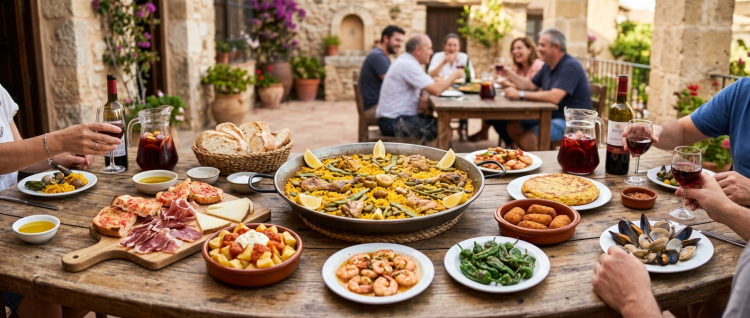
Most people think they already know Spanish food. Paella. Sangria. Tapas. That’s the short list everyone arrives with, and it explains about 10 percent of what Spain actually eats. The honest version is more interesting – a cuisine built on centuries of Arab, Jewish, and New World influences, wildly different from one region to the next, and home to more restaurants on the World’s 50 Best list in 2023 than any other country. This guide covers what Spanish food actually is, which traditional Spanish dishes are worth knowing, what to eat in Spain by region, and what Spaniards actually eat day to day.
What Makes Spanish Cuisine Different
True Spanish food relies on the “Trinidad” – the trinity of garlic, onion, and olive oil. Master this base, and you master Spanish cooking. Everything else builds on it. Spain is the largest producer of olive oil in the world, and it features heavily in Spanish cuisine as the base of most sofrito and vegetable sauces. That’s not a detail – it’s structural. The flavor profile of almost every traditional Spanish dish traces back to that olive oil base and whatever the region grows well.
The other thing to understand upfront: there is no single Spanish cuisine. The menus of Catalonia and Andalusia, the Canary Islands and Mallorca may have almost no overlap, as the cuisine of the regions differs significantly. A food trip through Spain is genuinely four or five different culinary experiences depending on where you go. What’s considered classic in Galicia would seem foreign in Valencia. That regional diversity is not a complication – it’s the whole point.
In 2023, Spain had more restaurants on the World’s 50 Best list than any other country. But the heart of Spanish cooking remains its rustic, homespun nature – a legacy of a time when hard-pressed Spaniards had to work the land for everything it would offer. That tension between world-class restaurant culture and deeply humble origins is what makes Spain food genuinely interesting. The same country that invented molecular gastronomy at El Bulli still considers fried breadcrumbs with chorizo comfort food.
The Most Famous Foods in Spain – What Spain Is Actually Known For
Jamón Ibérico – The Thing Spain Is Most Proud Of
Jamón, or cured ham, is the most celebrated Spanish food product. Legs of ham were traditionally salted and hung up to dry to preserve them through the long winter months. Jamón ibérico de bellota – the top tier, from acorn-fed black Iberian pigs – is a different product entirely from the jamón serrano most people encounter outside Spain. The fat distribution, the depth of flavor, the way it melts at room temperature. If you’re in Spain and ordering jamón, ask specifically for ibérico. The price difference is real. So is the quality difference.
Paella – The Dish Everyone Knows, Mostly Wrong
Paella is the most iconic and famous food in Spain – and also the most misunderstood outside it. The authentic Valencian paella consists of chicken, rabbit, green and white beans, mostly also snails, tomatoes, and paella rice infused with Spanish saffron, smoked paprika, and rosemary. For many people, the key to a good paella is the socarrat – a light crispy layer of rice at the bottom of the pan. No seafood. That’s the authentic version. Seafood paella exists and is delicious, but it’s a different dish. If someone in Valencia serves you a paella with shrimp and mussels and calls it traditional, they’re being generous with the definition.
The most popular food in Spain for tourists is often paella, but the most popular food in Spain for Spaniards is probably something they eat three times a week without thinking about it – tortilla española.
Tapas – A Culture, Not a Dish
Tapas is not one food. Tapas refers to a family of appetizers or snacks popular in Spanish cuisine. They’re one of the most well-known Spanish foods – small dishes you can enjoy all throughout Spain. The culture around them matters as much as the food itself. In Andalusia – particularly in Granada and Jaén – you still get free tapas with every drink you order. That tradition has largely disappeared in Madrid and Barcelona, but in the south it’s very much alive. Order a beer, receive a plate of food. Order another beer, receive different food. That’s the system. It’s one of the best systems in the world.
Tortilla Española – The Everyday Standard
Tortilla española, or tortilla de patatas, is one of the most well-known Spanish foods – a Spanish omelette traditionally made with eggs, potatoes, and olive oil. It sounds simple because it is. The debate that divides Spain is whether it should contain onion or not. Families have argued about this for generations. Both versions exist. Both have passionate defenders. The onion version is softer and sweeter; the no-onion version is firmer. Order it at room temperature, not hot – that’s how it’s meant to be eaten, and how you can tell a restaurant takes it seriously.
Gazpacho and Salmorejo – Cold Soup Done Right
Gazpacho is a cold tomato-based soup and one of the most popular Spanish food dishes, especially during the hot summer months. Unlike most soups, it is served cold and often enjoyed as a drink rather than eaten with a spoon. Salmorejo is the thicker, richer Córdoba version – same tomato and bread base, more olive oil, usually topped with hard-boiled egg and jamón. The difference in texture is significant: gazpacho is thin and bright, salmorejo is almost creamy. Both are worth ordering. Salmorejo is the one most food-literate visitors end up preferring.
Croquetas – The Bar Snack Spain Does Better Than Anyone
The croqueta is one of the most popular tapas dishes in Spanish cuisine – a croquette typically made with a thick bechamel sauce that’s breaded and deep-fried. Croquetas are usually filled with jamón, chicken, or bacalao but can be stuffed with any number of ingredients. The quality of a tapas bar is often judged by its croquetas. A great one has a thin, crispy shell and a molten, intensely flavored interior. A bad one is dense, heavy, and tastes of nothing. The jamón version is the standard by which to judge everything else.
Traditional Spanish Food by Region – What Changes Where
Andalusia – The South
Cold soups, fried fish, and free tapas with every drink. One of the most common tapas is gambas al ajillo – garlic shrimps, a typical seafood dish found everywhere in Spain. Andalusia is also the home of gazpacho, salmorejo, and pescaíto frito – small fish deep-fried whole and eaten with your hands. The food here is lighter, more ingredient-forward, and significantly less expensive than Madrid or Barcelona.
Valencia – Rice Country
Valencia is where paella originates, and rice dishes dominate the regional cuisine in ways that go beyond the famous pan. Arroz a banda – rice cooked in fish stock – is the local sleeper hit that most visitors miss entirely. The region also produces the best oranges in Spain, which end up in the freshly squeezed juice served at breakfast counters throughout the country.
The Basque Country – Spain’s Most Serious Food Region
San Sebastián has more Michelin stars per capita than almost any city on earth. Bacalao al pil-pil is a traditional Basque Country recipe – salted cod served with a sauce made of olive oil, garlic, and the juice of the fish itself. The Basque Country also gave the world pintxos – the northern Spain version of tapas, where small bites are served on bread and pinned with toothpicks across bar counters. Eating your way through a pintxos bar in San Sebastián at 7pm is one of the best food experiences available anywhere in Europe.
Galicia – Seafood and Octopus
Pulpo a la gallega – octopus – is among the most traditional recipes from Galicia in northwest Spain. Connoisseurs say it should be served on a wooden plate and sprinkled with coarse salt, paprika, and olive oil. Galicia also produces the best seafood in Spain – percebes (barnacles), navajas (razor clams), and berberechos (cockles) from the cold Atlantic coast. The region’s empanadas – flat pastry pies filled with fish or meat – are a completely different product from the Latin American version.
Castile – Roasted Meat and Hearty Stews
Typical of the cuisine of Castile-León, the traditional method is to roast a milk-fed lamb in a wood-burning oven in an earthenware dish, producing the golden-brown color that makes it so irresistible. In some areas, the lamb is replaced by suckling pig and cooked in the same way. Cocido madrileño – a chickpea, vegetable, and meat stew served in three separate courses – is Madrid’s defining winter dish and one of the most deeply satisfying traditional food dishes Spain produces.
What Spaniards Actually Eat Day to Day
This is the part most food guides skip. Lunch is the large midday meal in Spain, starting around 2:00-2:30pm and finishing around 3:00-3:30pm, usually followed by sobremesa – the table talk that Spaniards undertake after the meal. Lunch is the main event. Dinner is late – often not until 9 or 10pm – and lighter than most visitors expect. Breakfast is typically small: coffee with a tostada (toasted bread with olive oil and tomato) or churros con chocolate on weekends.
Spain lunch foods are the most important daily category to understand. The menu del día – a fixed-price lunch menu available at most restaurants on weekdays – is how ordinary Spaniards eat their main meal. Typically two courses plus dessert and a drink for somewhere between €12 and €18 depending on the city. It’s the single best value in Spanish dining and the meal most tourists overlook.
If you’re building a trip around food, the where to travel in summer guide on masago.blog pairs well with this – Spain’s food culture is dramatically different in summer versus winter, and timing your visit around food festivals like La Tomatina or the Galician Octopus Festival changes the experience significantly. For anyone who’s discovered Spanish food through sushi restaurants that serve masago alongside Spanish-influenced fusion menus, the masago vs tobiko piece covers what’s actually in those dishes.
The Honest Summary
Spain food is not one cuisine. It’s a collection of deeply regional traditions that happen to share an obsession with olive oil, cured pork, and taking lunch seriously. The famous foods – paella, jamón, gazpacho, tapas – are genuinely worth eating. But the dishes most visitors never encounter – salmorejo, croquetas de jamón, pulpo a la gallega, cocido madrileño, pintxos in San Sebastián – are often what people remember longest.
The most popular food in Spain, by any practical measure, is probably the tortilla española. It’s on every bar counter, eaten at every hour, made differently in every household, and debated endlessly. That’s a good metaphor for the cuisine itself: familiar on the surface, genuinely deep once you start paying attention.
FAQs – Spain Food
What is Spain known for food?
Spain is most famous for jamón ibérico (cured Iberian ham), paella (saffron rice from Valencia), tapas (small shared dishes), gazpacho (cold tomato soup), tortilla española (potato omelette), and churros con chocolate. Beyond those headlines, Spain is also known for its world-class olive oil – it’s the largest producer globally – and for having more Michelin-starred restaurants per capita in cities like San Sebastián than almost anywhere else on earth.
What is the most popular food in Spain?
Tortilla española – the Spanish potato omelette – is arguably the most universally eaten food across Spain day to day. Jamón ibérico is the most celebrated and prized. Paella is the most internationally recognized. For street food and casual eating, croquetas and tapas of all kinds dominate bar culture throughout the country. The honest answer is that “most popular” depends entirely on region and time of day – Spain’s food culture is too regional for a single answer.
What do Spaniards eat for lunch?
Lunch is the most important meal of the day in Spain, typically eaten between 2:00 and 3:30pm. A standard home or restaurant lunch includes a first course (soup, salad, or vegetables), a main course (meat or fish), and dessert (fruit, yogurt, or something sweet). The menú del día – a fixed-price weekday lunch at most Spanish restaurants – is how many Spaniards eat their main meal and represents the best value in Spanish dining, typically costing between €12 and €18.
What are traditional dishes from Spain by region?
Spanish food varies dramatically by region. Andalusia is known for gazpacho, salmorejo, and fried fish. Valencia is the home of paella and rice dishes. The Basque Country produces bacalao al pil-pil and the pintxos bar culture of San Sebastián. Galicia is famous for pulpo a la gallega (octopus with paprika and olive oil) and Atlantic seafood. Castile is known for roasted suckling pig and lamb, and Madrid’s cocido madrileño chickpea stew. Catalonia has its own distinct cuisine built around pa amb tomàquet (bread rubbed with tomato) and seafood.
What foods should you try in Spain for the first time?
If it’s your first time eating Spanish food, prioritize these in order: jamón ibérico on its own or with pan con tomate, croquetas de jamón from a proper tapas bar, tortilla española at room temperature, gazpacho or salmorejo if visiting in summer, patatas bravas (fried potatoes with spicy and aioli sauces), and paella in Valencia specifically. Outside those, pimientos de Padrón – small green peppers fried in olive oil, most mild but occasionally fiery hot – are one of the most fun foods to eat in Spain and widely available across the country.
Is Spanish food spicy?
Spanish food is flavorful but rarely hot-spicy in the way that Mexican or Indian food can be. Pimentón (smoked paprika) is used extensively and gives many dishes their characteristic warm, smoky depth without heat. Pimientos de Padrón are the main exception – those small Galician peppers are mostly mild but occasionally deliver serious heat with no warning. Patatas bravas sauce varies by region and can be quite spicy in some Madrid bars. Overall, Spanish cuisine is built on flavor rather than chili heat.