The Best Fluffy Pancakes recipe you will fall in love with. Full of tips and tricks to help you make the best pancakes.

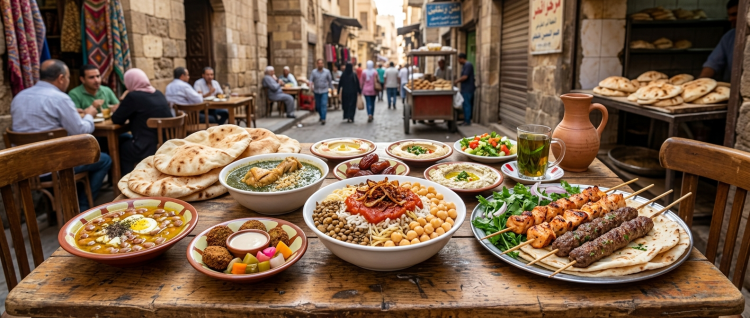
Most people can name Italian food, Japanese food, Mexican food without thinking twice. Egyptian food? It draws a blank for a lot of people outside the region – which is genuinely strange, because Egyptian cuisine is one of the oldest and most distinct food cultures on the planet. This guide covers what Egyptian food actually is, what popular food in Egypt looks like on a daily basis, and which traditional Egyptian dishes are worth knowing whether you’re traveling, cooking at home, or just curious.
What Makes Egyptian Cuisine Different
Egyptian food doesn’t fit neatly into any one category. It sits at the intersection of North African, Middle Eastern, and Mediterranean cooking – but it’s not quite any of those. The cuisine relies heavily on vegetables and legumes, though it also features meats, most commonly rabbit, poultry, lamb, and beef. That legume-heavy base is important because it explains why so much traditional Egyptian food is either naturally vegetarian or easily made so.
A significant portion of Egyptian cuisine is vegetarian, largely due to the country’s agricultural landscape and the historical food traditions of farmers working the fertile banks of the Nile. That’s not marketing – it’s just how the food evolved. Beans, lentils, and grains were cheap, available, and nutritious for people who couldn’t always afford meat.
Egyptian cuisine is characterised by a range of spices that made their way to North Africa via the spice routes – cumin, chili, cardamom, coriander, and parsley being the most common. The flavor profile is warm and savory, rarely fiery hot, and almost always built around garlic and onion as a base.
One more thing worth knowing: bread is everywhere. Egyptians use bread to scoop up food, sauces, and dips and to wrap kebabs and falafel. If you sit down to any traditional Egyptian meal and there’s no bread on the table, something has gone wrong.
The Dishes Egyptians Actually Eat Every Day
Ful Medames – The National Dish
If you want to understand Egyptian cuisine, start here. The national dish is ful medames – a stew of cooked fava beans served with chopped onion, rice, and tomato sauce, usually eaten for breakfast. It sounds simple because it is. Mashed fava beans, olive oil, garlic, lemon. Served warm with flatbread. Egyptians have been eating this for breakfast since the time of the pharaohs, and they’re still eating it today. It’s the kind of dish that proves a short ingredient list can produce something genuinely satisfying.
If you want to understand how Egyptians approach food in general – honest ingredients, filling portions, no unnecessary complexity – ful medames is the clearest example.
Koshari – The Street Food Everyone Should Know
Koshari is considered Egypt’s most popular food and consists of rice, pasta, lentils, chickpeas, and crispy onions topped with vinegar and tomato sauce. It sounds like a pantry-clean-out situation. It tastes like the opposite. The combination of textures – soft lentils, chewy pasta, crunchy fried onions – with that sharp tomato-vinegar sauce is the kind of thing that makes you understand why it has dedicated restaurants. In Cairo, you can walk into a koshari-only spot and watch them assemble it in about forty seconds. That’s how central it is to daily life here.
It’s also worth noting: koshari is almost always cheap. This is everyday food for everyday people. If you’re visiting Egypt and only eat one dish, make it this one.
Ta’meya – Egyptian Falafel, Done Differently
Most people know falafel. Egyptian ta’meya is the version that pre-dates what most of the world calls falafel. The major difference is that ta’meya is not made with ground chickpeas but dried fava beans instead – a very popular ingredient in Egyptian cuisine. It’s also flatter than the round Middle Eastern version, crispier on the outside, and greener inside because of the fresh herbs mixed in. Eaten in a sandwich with salad and pickled vegetables, it’s a solid breakfast or a fast lunch that costs almost nothing.
Molokhiya – The Soup That Divided Kings
Molokhiya is a soup made from a leafy vegetable called Jew’s Mallow, cooked in a fatty broth, and served with rice and some sort of protein – usually grilled rabbit or chicken. It’s one of those dishes that splits people. The texture is distinctly viscous – thick in a way that takes getting used to. Egyptians consider it a national comfort food. The history behind it is genuinely interesting: the Fatimid Sultan Hakim found the dish so unappetizing that he had it banned in the 11th century. It survived the ban. It’s still on tables across Egypt today. That’s a dish with staying power.
Mahshi – Stuffed Everything
Mahshi is the Arabic word for “stuffed” – Egyptians take hollowed out zucchini, eggplant, bell peppers, or use cabbage and grape leaves, and stuff them to the brink with a spiced rice mixture, then bake until tender. This is home-cooking at its most Egyptian. It takes time to make – you’re hollowing out individual vegetables by hand – which is why it’s associated with family meals and gatherings rather than quick weeknight dinners. The effort shows in the result.
Kebab and Kofta – The Grilled Meat Standard
Kebab and kofta are essential Egyptian dishes for meat lovers, made from marinated lamb or beef shaped into skewers or patties, seasoned with herbs and spices, and grilled over hot charcoal. This is the kind of food you eat standing up at a street stall or sitting down at a proper restaurant – it works in both settings. Served with flatbread, a simple tomato-cucumber salad, and tahini on the side. Nothing revolutionary. Just good grilled meat done well.
What Egyptians Eat at Each Meal
This is the part most food guides skip over – what does a typical day of eating actually look like in Egypt?
The most important meals of the day are breakfast and lunch. In most Egyptian cities, lunch falls between four and six in the afternoon, and dinner between eight and ten. Dinner is the lightest meal – a little bread, cheese, yogurt, and fruit.
Breakfast is substantial by most Western standards. Ful medames, ta’meya, eggs, cheese, olives, and flatbread are all normal morning table items. Lunch is traditionally the most important meal of the day and the one where most or all family members share the table. Dinner is genuinely light – not a second large meal.
In winter, Egyptians tend toward warming dishes like lentils and red sauce dishes – koshari, fattah, bamia. In summer, the food shifts toward lighter options alongside fresh juices to beat the heat. The cuisine is actually quite seasonal in practice, even if that doesn’t always come through in restaurant menus.
Egyptian Desserts Worth Knowing
Egyptian desserts lean sweet and syrup-heavy. Popular desserts include baqlawa, basbousa, kunafa, and qatayef, with dates, honey, and almonds being common ingredients.
Basbousa is the one most people end up loving first – semolina cake soaked in sugar syrup, topped with almonds. Dense, sweet, and not subtle about it. Kunafa is more complex: thin vermicelli-style pastry layered with cream or cheese, soaked in syrup. It sounds strange. It’s one of the best things you can eat in Egypt.
If you’re interested in how other cuisines handle dessert and pastry traditions, the masago.blog piece on Barefoot Contessa Baked French Toast Casserole is worth a read for a completely different but equally indulgent approach.
How Egyptian Cuisine Compares to What People Expect
Here’s where it gets interesting. Most people walking into a “Middle Eastern” restaurant in the US or UK aren’t eating Egyptian food. They’re eating a blend of Lebanese, Turkish, Syrian, and Israeli dishes that have become the shorthand for the region. The most famous Egyptian dishes have never made it onto the menus of most Middle Eastern restaurants in the US.
That’s not a complaint – it’s just context. Egyptian cuisine has its own identity, and it’s worth understanding on its own terms. The reliance on fava beans over chickpeas, the specific preparation of molokhiya, the dominance of koshari as street food – none of these are really replicated elsewhere in the region.
If you’re someone who tracks nutrition alongside flavor, the healthy fast food options guide on masago.blog is a useful comparison point for how legume-heavy foods like ful medames and koshari stack up nutritionally against common Western fast food. The comparison is more favorable than you’d expect.
For anyone exploring sushi and Japanese ingredients alongside Egyptian food, the masago meaning piece covers a completely different culinary world – but both are good examples of how specific, regional food traditions get misunderstood outside their home cultures.
The Honest Summary
Egyptian food is filling, affordable, spice-forward, and far more vegetarian-friendly than most people assume. The national dishes – ful medames, koshari, ta’meya – are all built on legumes and grains. The meat dishes, when they appear, are grilled simply and served without fuss. The desserts are unambiguously sweet and worth trying once even if you don’t have a serious sweet tooth.
What Egyptian cuisine is not: delicate, minimalist, or trying to impress anyone. It’s food that has fed people through thousands of years of history, across every economic class, and it shows. According to Wikipedia’s overview of Egyptian cuisine, many of the staple dishes eaten today – molokheya, ful medames, bamya – have remained essentially unchanged since medieval times. That kind of consistency doesn’t happen by accident.
FAQs – Egyptian Food by Region and Audience
Where can I find authentic Egyptian food in the United States?
Egyptian restaurants are rare in the US compared to other Middle Eastern cuisines. According to available data, there are over 165 restaurants in the US that serve Egyptian dishes. Your best chances are in cities with larger Arab-American communities – New York, Los Angeles, Chicago, and Detroit. Searching specifically for “Egyptian restaurant” rather than “Middle Eastern” will filter out restaurants that blend Lebanese and Turkish menus without including Egyptian staples.
What is popular food in Egypt in Cairo specifically?
Cairo is the best city for experiencing the full range of Egyptian street food. Koshari is everywhere – dedicated koshari spots like Koshary Abou Tarek serve it fast and cheap. Ta’meya sandwiches are a standard breakfast. Alexandria-style liver sandwiches are also widely available in Cairo, though they originated on the coast. For sit-down meals, restaurants like Abou el-Sid in Zamalek serve well-executed traditional Egyptian food in a more formal setting.
What is traditional Egyptian food in Alexandria?
Alexandria has a distinct culinary identity shaped by its Mediterranean coastline. The city is best known for seafood – particularly Sayadeya, a white fish cooked with yellow rice and tomato sauce. Alexandria is also famous for its liver sandwich (kebda) prepared with sauteed bell peppers, onions, tomatoes, and spices – considered the best version in the country. The coastal influence gives Alexandrian food a lighter, slightly different character than Cairo’s heartier street food.
What is Egyptian food like in Upper Egypt (Luxor and Aswan)?
Upper Egypt tends toward simpler, more traditional preparations. Ful medames and flatbread remain the daily staple. Grilled pigeon (hamam) – stuffed with seasoned rice or bulgur wheat – is a regional delicacy more common in the south. Lentil soup (shorbat adas) is popular in colder months. The food here is less commercially developed than Cairo but often more directly connected to historical Egyptian cooking traditions.
Can I find Egyptian food in the UK?
Egyptian cuisine has limited standalone restaurant presence in the UK compared to Lebanese or Turkish food. London has a small number of dedicated Egyptian restaurants, mostly in areas with North African communities. However, ful medames, koshari, and Egyptian-style falafel occasionally appear on broader Middle Eastern menus. Your best option is to look for specifically Egyptian or North African restaurants rather than general Middle Eastern dining.
What traditional Egyptian food is suitable for halal dietary requirements?
Virtually all traditional Egyptian food is halal by default. Egypt is a majority Muslim country, and pork is not part of the cuisine. Ful medames, koshari, ta’meya, molokhiya, kofta, kebab, and mahshi are all halal-compliant. The exceptions to watch for are some international hotels and tourist-facing restaurants that may serve alcohol or imported non-halal meats alongside Egyptian dishes.