The Best Fluffy Pancakes recipe you will fall in love with. Full of tips and tricks to help you make the best pancakes.

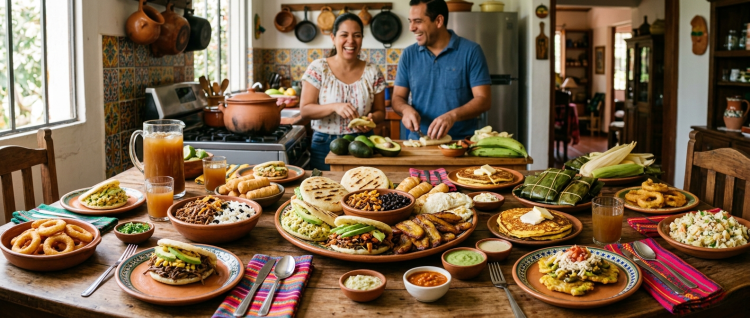
You’ve probably eaten an arepa without knowing it came from Venezuela. Or ordered something labeled “Latin American” at a restaurant that was quietly serving dishes with deep Venezuelan roots. Venezuelan food has been quietly feeding the world for years – through its diaspora, through Latin fusion menus, through street food spots that don’t always advertise their origins. This guide covers what Venezuelan cuisine actually is, what people eat every day in Venezuela, and which traditional Venezuelan dishes are worth understanding, whether you’re cooking at home, eating out, or planning a trip.
What Venezuelan Food Actually Is
Venezuelan cuisine is inspired by a range of African, European, and Native American influences. Traditional dishes vary from one region to the next, but the fundamental ingredients include rice, corn, plantains, beans, yams, and meat. That combination – corn, beans, plantains – is the heartbeat of the cuisine. Everything else is built around it.
Venezuelan food is vibrant and diverse, with European influences from Spain, Portugal, Italy, and France combined with West African and Native American traditions. You can taste all of that history in a single plate of pabellón criollo if you know what you’re looking at. The beef came through European colonization. The black beans trace back to African culinary traditions. The rice ties it all together with Indigenous roots. One dish, three civilizations.
The other thing worth knowing upfront: corn is not just an ingredient in Venezuelan cooking. The crop is used to make a variety of popular dishes that span from arepas to empanadas to the holiday favorite, hallacas – and the society’s almost religious devotion to the arepa has arguably been the only indigenous tradition to survive intact through Spanish colonization. That’s not an exaggeration. It’s cultural archaeology on a plate.
The Dishes That Define Venezuelan Cuisine
Arepas – The Everyday Foundation
If Venezuelan food has a single defining dish, this is it. Arepas are often considered the ultimate Venezuelan street food – a round and flat unleavened patty made with corn flour, filled with a variety of ingredients depending on the region and style of cook. Stuffings typically include black beans with cheese, scrambled eggs, seasoned ground beef, or avocado. But that list barely scratches the surface. The reina pepiada – shredded chicken with avocado salad – is the version most Venezuelans will point to as their personal favorite. It’s creamy, savory, and genuinely hard to stop eating.
The arepa is also one of the most practical foods in existence. Breakfast, lunch, dinner, late-night snack – it works at every meal. You can bake it, grill it, or fry it. The filling changes, the format doesn’t. That kind of flexibility is why it has survived centuries.
Pabellón Criollo – The National Dish
Pabellón criollo is the national dish of Venezuela – made of white rice, shredded beef, black beans, and fried ripe plantain. It represents the union of the diverse ethnic groups that make up Venezuela. The beef is cooked low and slow until it pulls apart into strands, seasoned with sofrito – a base of onions, peppers, garlic, and tomatoes that forms the flavor backbone of dozens of Venezuelan dishes.
The combination of savory beef, earthy black beans, fluffy rice, and sweet fried plantain is one of those food pairings that sounds simple and tastes complete. Nothing on the plate is fighting the other components. It all belongs together. Each component represents different cultural influences: the beef for the Europeans, the black beans for the Africans, and the rice and plantains connecting back to indigenous and agricultural roots.
Hallacas – The Christmas Dish That Takes All Day
Hallacas only appear in local homes during December, and you’ll find one on every plate come Christmas day. It all begins at the start of the month when families come together to make dozens, if not hundreds of hallacas – so there’s no shortage come dinnertime, and so they can give them as gifts to neighbors and friends.
The hallaca filling is made with chicken, pork, or beef and has European-imported ingredients like raisins, capers, and olives. The cornflour dough gets its distinct golden color from annatto, derived from the achiote tree’s seeds. Each hallaca is wrapped in a banana leaf and boiled until fully cooked. The banana leaf isn’t just packaging – it gives the dough a faint herbal aroma you can’t replicate any other way.
Hallacas take actual labor – anticipate up to 9 hours on tasks like creating the masa, the guiso, and assembling each one. That’s the point. The effort is part of the tradition. You don’t make hallacas alone.
Tequeños – The Venezuelan Appetizer Everyone Needs to Know
Tequeños are the canapés and appetizers par excellence in Venezuela – people eat hundreds of thousands every day. They are becoming more and more famous in other countries. The concept is simple: white cheese wrapped in dough and fried until golden. The outside is crispy, the inside is molten cheese. No party in Venezuela starts without them. No gathering ends with leftovers.
This is genuinely one of the best Venezuelan appetizers and one of the easiest Venezuelan food recipes to replicate at home. The dough is straightforward, the cheese is the whole point, and they take about 20 minutes to fry. If you’re introducing someone to Venezuelan cuisine for the first time, start here.
Cachapas – Sweet Corn Pancakes Done Right
Cachapas with queso de mano are proof that Venezuelans love mixing sweet and salty in a single dish – made with real tender corn, they become the dream breakfast or the perfect dinner when you don’t know what to cook. Think of a thick, slightly sweet corn pancake folded around a fresh white cheese that’s soft enough to melt slightly from the heat. The contrast of sweet corn and salty cheese is one of those combinations that sounds too simple to be interesting until you try it.
Cachapas are popular food in Venezuela at street stalls, but they’re also deeply home-kitchen food. The kind of thing a Venezuelan parent makes on a Sunday morning without a recipe.
Empanadas – The Corn Dough Version
Venezuelan empanadas are worth distinguishing from the wheat-flour versions common elsewhere in Latin America. The traditional Venezuelan empanada is made with ground corn dough with a yellow color when toasted due to the addition of annatto. Fillings are diverse – a cheese-and-black-bean combo called a domino, or a full pabellón inside with all the elements of the national dish. That last version – an entire pabellón stuffed into an empanada – is the kind of culinary logic only makes sense once you’ve tasted it.
Sancocho – The Everything Soup
Sancocho is a soup made using many ingredients including meat, vegetables, herbs, seasonings, and root vegetables. Some common meats include beef, pork, chicken, and off-cuts. Seafood is also used, and multiple types of meat can appear in one pot. This is the Venezuelan food equivalent of cleaning out your refrigerator and ending up with something genuinely great. It’s Sunday food. Recovery food. The kind of thing that fixes whatever was wrong with your week.
Venezuela Food by Region – What Changes Where
Venezuelan cuisine isn’t uniform across the country. The plains region of Los Llanos is cattle country – beef dominates, and dishes like carne en vara (beef grilled on open skewers over fire) are central to the food culture there. Coastal regions lean heavily on seafood. In Zulia, people invented the Patacón Zuliano – two slices of fried green plantain used as buns, filled with shredded beef or chicken, salad, grated cheese, boiled eggs, and a significant amount of mayonnaise and ketchup. It looks like a hamburger but with plantain instead of bread. It absolutely works.
The Andes region has its own distinct identity. Pisca Andina – a potato and egg soup with milk – is a cold-weather staple that feels nothing like coastal Venezuelan food. Same country, completely different table.
Venezuelan Desserts and Drinks Worth Knowing
Dulce de lechosa is a traditional treat made with green papaya and sugar, warmly spiced with cinnamon and clove, slow-cooked for about two hours until the papaya turns dark gold and tender. It’s a staple during Christmas and New Year. It’s the kind of dessert that requires patience and rewards it.
For drinks, papelón con limón – brown sugar dissolved in water with fresh lime juice – is the everyday thirst-quencher that Venezuelans reach for the way other cultures reach for iced tea. Simple, refreshing, and nothing like what you’d expect.
If you enjoy exploring how other cuisines use corn and legumes as building blocks, the zero calorie foods piece on masago.blog offers a useful contrast – Venezuelan staples like black beans and plantains sit on the opposite end of the density spectrum, designed to fuel rather than minimize. And for anyone who’s found themselves deep in sushi menus after exploring Latin food, what is masago covers the Japanese ingredient with the same name as this blog – a completely different culinary world.
The Honest Summary
Venezuelan food is corn-forward, filling, and built on combinations that were perfected over centuries. It’s not trying to be delicate. It’s not interested in minimalism. An arepa stuffed with shredded beef and black beans is an honest, complete meal. Tequeños at a party are not an appetizer – they are the party. Hallacas at Christmas are not just food; they’re the reason families spend a full day in the kitchen together.
As many Venezuelans have fled the country due to political turmoil, there has been a globalization of popular dishes like arepas and empanadas outside the nation’s borders. You can find Venezuelan food in Miami, Bogotá, Madrid, and Santiago now in ways that weren’t true fifteen years ago. That diaspora has made Venezuelan cuisine more accessible – but also more misunderstood, separated from the full context of a table where pabellón, tequeños, and papelón con limón all exist together. This guide is the context.
For more on how food traditions travel and get reinterpreted, the healthy fast food options guide is worth a read alongside this one – Venezuelan staples like black beans and grilled meats compare favorably to almost anything on a standard fast food menu.
FAQs
What is Venezuelan food?
Venezuelan food is a cuisine built on corn, rice, plantains, beans, and meat, shaped by Native American, African, and European influences. The most iconic dishes include arepas (stuffed corn cakes), pabellón criollo (the national dish of rice, shredded beef, black beans, and fried plantains), tequeños (fried cheese-stuffed dough), and hallacas (a Christmas tamale wrapped in banana leaves). The cuisine is hearty, flavorful, and strongly rooted in corn-based cooking traditions that predate Spanish colonization.
What is the national dish of Venezuela?
The national dish of Venezuela is pabellón criollo – a plate of white rice, slow-cooked shredded beef, black beans, and sweet fried plantains (tajadas). Each component represents a different cultural strand of Venezuelan history: European, African, and Indigenous. It is served in homes and traditional restaurants throughout the country and is considered the clearest single expression of Venezuelan cuisine.
What are arepas?
Arepas are round, flat corn cakes made from pre-cooked cornmeal, grilled or baked and then split open and stuffed with fillings. Common fillings include shredded beef, black beans and cheese, scrambled eggs, chicken and avocado salad (reina pepiada), and ham and cheese. They are eaten at any time of day in Venezuela and are widely considered the most defining food in the country.
What are traditional Venezuelan appetizers?
The most popular traditional Venezuelan appetizer is tequeños – strips of white cheese wrapped in dough and fried until crispy outside and molten inside. They appear at virtually every Venezuelan social gathering. Other common Venezuelan appetizers include empanadas (corn dough pastries with various fillings), tostones (fried green plantains), and small cachapas (sweet corn pancakes with cheese).
What do Venezuelans eat for breakfast?
A typical Venezuelan breakfast includes arepas with various fillings, perico (scrambled eggs with onions, tomatoes, and peppers), cachapas with queso de mano, and cachitos (croissant-style pastries filled with ham). Strong café con leche (coffee with warm milk) is the standard morning drink. Breakfast in Venezuela is substantial – the same corn-based staples that appear at lunch also show up in the morning.
What is hallaca?
Hallaca is Venezuela’s most important traditional food, made during the Christmas season. It consists of corn dough colored with annatto and stuffed with a slow-cooked stew of pork, beef, or chicken mixed with olives, raisins, and capers, then wrapped in banana leaves and boiled. Making hallacas is a family event that can take an entire day. They are eaten throughout December and often given as gifts to neighbors and friends.
Are Venezuelan food recipes difficult to make at home?
Most Venezuelan food recipes are accessible for home cooks. Arepas require just three ingredients – pre-cooked cornmeal (Harina P.A.N. is the standard brand), water, and salt. Tequeños need white cheese and basic dough. Pabellón criollo involves a few components but each is straightforward. Hallacas are the exception – they require several hours of work and are typically made in groups. Venezuelan cooking rewards patience more than technical skill.
Is Venezuelan food spicy?
Venezuelan food is flavorful but not typically hot-spicy. The seasoning base of most dishes – sofrito made with onions, garlic, peppers, and tomatoes – is savory and aromatic rather than fiery. Ají dulce (sweet pepper) is used extensively and adds flavor without heat. Some regional dishes and street foods can include chili for those who want spice, but it is not a defining characteristic of Venezuelan cuisine the way it is in Mexican or Peruvian cooking.