The Best Fluffy Pancakes recipe you will fall in love with. Full of tips and tricks to help you make the best pancakes.

You’ve seen it a hundred times.
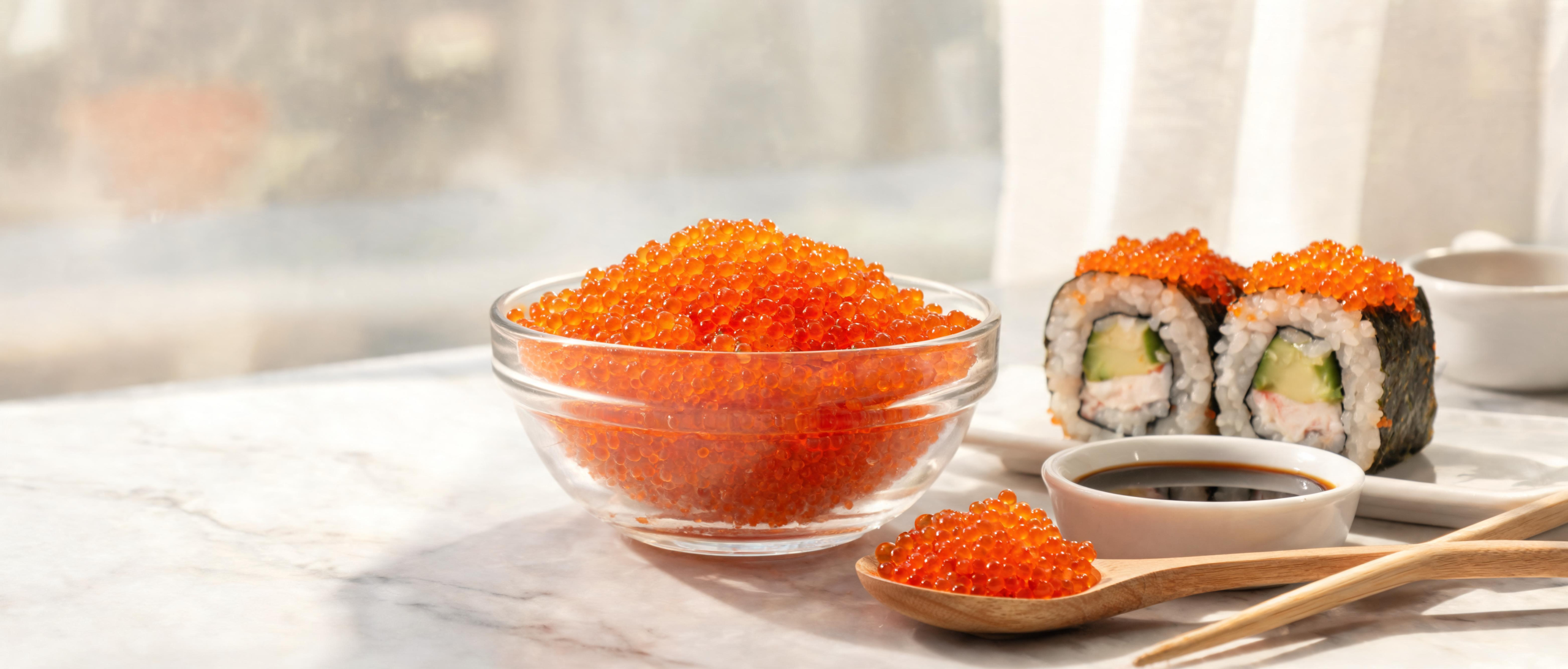
Tiny orange beads coating the outside of a California roll. A bright cluster sitting on top of a spicy tuna piece. A small pile of orange eggs that you probably assumed was decoration.
It’s not decoration. It’s masago. And you’ve been eating it for years.
So What Is Masago?
Masago is fish eggs.
More specifically, it’s the roe of the capelin – a small cold-water fish from the smelt family. Capelin lives in the North Atlantic and Arctic Ocean. It’s a small, unremarkable fish. But its eggs ended up on sushi menus all over the world.
The word masago is Japanese for “sand.” That name makes complete sense once you see it. Each egg is less than a millimeter wide. They cluster together in a fine, dense mass that looks exactly like grains of sand packed together.
That’s all it is. Tiny fish eggs with a big presence on your plate.
Want the full deep dive on where masago comes from? Our complete masago guide covers everything from the fish to the fishing process.
What Does It Taste Like?
Mild. That’s the honest answer.
Masago has a soft, gentle brininess – like a faint ocean note rather than anything sharp or fishy. It doesn’t punch you in the face. It settles in quietly and adds a subtle saltiness to whatever it’s sitting on.
The texture is fine and slightly grainy. It compresses softly when you bite into it. No dramatic pop. Just a gentle, satisfying give.
Think of it as a background ingredient. It makes everything around it taste a little more complete without ever stealing the spotlight.
Why Is It Orange?
Natural masago is actually pale yellowish-orange.
What you see at most restaurants is dyed. Bright orange is the standard. Black, red, and green versions exist too – the color changes depending on what dye or seasoning was used during processing. Green masago usually has a mild wasabi heat to it. The others are purely visual.
The dye doesn’t affect the flavor in any meaningful way. What matters is whether the masago is fresh. A good jar smells clean and ocean-fresh. A bad one smells muddy and sharp.
Where Does It Show Up in Sushi?
Everywhere. Honestly.
Most people are surprised how often they’ve already eaten it once they start paying attention. According to Sushipedia’s detailed masago reference, masago became a staple in Western sushi precisely because it’s versatile, affordable, and visually striking without being difficult to work with.
Here’s where you’ll find it:
California rolls – the outside of the rice is almost always coated in masago. That orange exterior you see on every California roll? That’s it.
Spicy tuna rolls – either coating the outside of the roll, or mixed directly into the spicy tuna filling for extra texture.
Gunkan-maki – the little battleship-shaped sushi pieces where masago sits on top of rice inside a nori cup. This is where masago actually gets to be the star.
Masago nigiri – hand-pressed rice with a generous mound of masago on top. Simple, clean, and one of the better-value items on any sushi menu. Here’s what masago nigiri looks like and how to eat it right.
Spicy masago sauce – masago mixed with Kewpie mayo and sriracha. That creamy orange drizzle on your roll? Almost certainly this. Our masago sauce recipe shows you how to make it at home in two minutes.
Is Masago Good for You?
For something this small, it carries a solid nutritional punch.
According to Healthline’s breakdown of masago nutrition, a tablespoon of masago contains roughly 40 calories, about 4 grams of protein, and meaningful amounts of omega-3 fatty acids, vitamin B12, and selenium.
The one thing to watch is sodium. Masago is salted during processing. One tablespoon has around 240mg of sodium. As a sushi topping, you’re using small amounts – so it stays manageable. But if you’re eating a full spread with multiple rolls and dipping everything in soy sauce, it adds up.
People with seafood allergies should avoid it entirely. Pregnant women can eat it in moderation – the FDA lists masago as a low-mercury option – but checking with a doctor first is always the sensible move.
How Is Masago Different from Tobiko?
This question comes up constantly at the sushi bar.
Both are small fish roe. Both show up as tiny orange beads on sushi. But they’re not the same thing.
Masago comes from capelin. Tobiko comes from flying fish. Tobiko is larger, firmer, and has a satisfying pop when you bite into it. It’s also more expensive – roughly twice the price at wholesale.
Masago is softer, milder, and more affordable. It doesn’t pop. It integrates. That’s why it’s used to coat the outside of rolls rather than featured on top as a showpiece ingredient.
Some restaurants substitute masago where the menu says tobiko. Now that you know the texture difference, you’ll catch it immediately. The full masago vs. tobiko comparison breaks down every difference worth knowing.
Can You Make It at Home?
Yes. And it’s easier than most people think.
Masago is sold in small jars or sealed containers in the freezer section at Japanese grocery stores, Asian supermarkets, and many Whole Foods locations. Keep it frozen until you need it. Once opened, refrigerate it and use it within three to four days.
The easiest way to start using it at home is the sauce. Mix masago with Kewpie mayo and a squeeze of sriracha. Drizzle it over a rice bowl, spread it on a cucumber salad, or use it as a dipping sauce for homemade rolls. You’ll understand the appeal of this ingredient within the first bite.
The Short Version
Masago is the tiny orange fish eggs you’ve been eating on sushi this whole time. It comes from capelin, tastes mildly briny, has a soft fine texture, and makes sushi taste more complete without ever demanding your attention.
It’s small. It’s subtle. It does a lot.
Small things. Big flavor.
FAQs
What exactly is masago?
Masago is the roe – or eggs – of the capelin fish, a small cold-water fish from the smelt family found in the North Atlantic and Arctic Ocean. It’s one of the most widely used ingredients in Western-style sushi.
Is masago raw?
Masago is cured and salted during processing, not cooked with heat. It’s safe to eat straight from the jar, handled with the same food-safety standards as other sushi-grade seafood.
Does masago taste fishy?
Not in an off-putting way. It tastes mildly briny and oceanic – clean rather than sharp. Most people who are hesitant about seafood find masago easy to eat because the flavor is so gentle.
Why is masago orange if it’s naturally yellow?
Most commercial masago is dyed with food coloring to achieve the bright orange color you see at restaurants. The natural color of capelin roe is pale yellowish-orange. The dye is aesthetic and doesn’t affect flavor.
Is masago the same as caviar?
No. Caviar comes specifically from sturgeon and is a very different product in taste, texture, and price. Masago is sometimes called “sushi caviar” informally because it’s used similarly as a garnish, but the two are not comparable.
How long does masago last?
Unopened and frozen, masago keeps for up to six months. Once opened, refrigerate it and use within three to four days. Don’t refreeze after opening.
Is masago vegan?
No. Masago is fish eggs and is not suitable for vegans or vegetarians.