The Best Fluffy Pancakes recipe you will fall in love with. Full of tips and tricks to help you make the best pancakes.


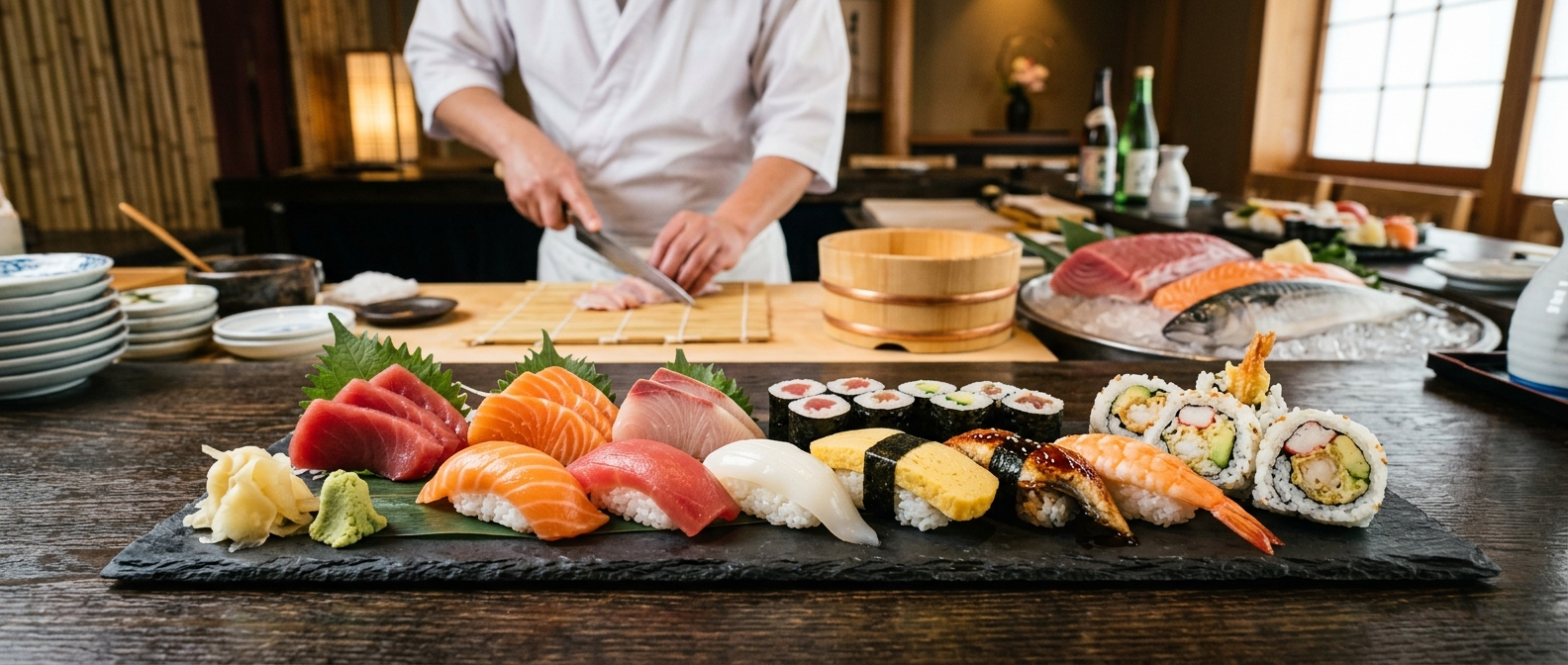
The most common thing people get wrong about sushi is the definition.
Sushi is not raw fish. Sushi is vinegared rice. That’s the whole definition – seasoned rice prepared with rice vinegar, sugar, and salt. Raw fish is one of many things that can go on top of or inside that rice. It’s a popular option. It’s also completely optional. You can eat sushi your entire life without ever touching raw fish, and every piece of it would still qualify as sushi.
This matters because it changes everything about how you approach a sushi menu. Half the anxiety people feel sitting down at a Japanese restaurant for the first time comes from assuming that every item on the table is raw fish in some form. It isn’t. Understanding what’s actually raw, what’s cooked, and what the difference is between sushi and sashimi turns an intimidating menu into a straightforward one.
Sushi Is Defined by the Rice, Not the Fish
The word sushi comes from the Japanese term for sour-tasting, a reference to the vinegar used in the rice preparation. The dish traces back centuries to Southeast Asia, where fish was packed in fermented rice as a preservation method. People ate the fish and discarded the rice. During the Edo period in Japan, the method evolved – rice vinegar replaced fermentation, the rice became part of the dish, and the concept of fresh fish on seasoned rice developed into what we now recognize as nigiri.
The rice is the throughline. A cucumber roll is sushi. An avocado roll is sushi. A tamago roll made with sweet egg omelet is sushi. None of them contain raw fish. All of them are genuinely, correctly called sushi.
What this means practically: if you’re eating at a sushi restaurant and avoiding raw fish for any reason – personal preference, pregnancy, a compromised immune system, just not feeling it tonight – you have a full menu available to you. You’re not ordering around the sushi. You’re still ordering sushi.
What Is Actually Raw at a Sushi Restaurant
The items most commonly served raw are tuna (maguro), salmon (sake), yellowtail (hamachi), and scallops (hotate). These are the fish you’ll encounter on most nigiri menus and inside most traditional maki rolls that contain raw seafood. Sea urchin (uni) is also raw, and squid (ika) is typically served raw as well.
Sashimi – which is often confused with sushi – is always raw. Sashimi is fish or seafood served without rice, sliced thin and presented with soy sauce, wasabi, and pickled ginger. There is no cooked version of sashimi. If it has rice, it’s sushi. If it doesn’t, it’s sashimi. Healthline’s comparison of sushi vs sashimi notes that sashimi is consistently a better source of omega-3 fatty acids and protein precisely because nothing dilutes the fish – no rice, no sauce, no filler.
Fish roe like tobiko and masago are also raw. They’re used as toppings on rolls and nigiri, adding briny, slightly crunchy texture. They’re not fish in the conventional sense – they’re eggs – but they are uncooked. Our full breakdown of what masago actually is covers where it comes from and how it’s used, and the masago vs tobiko piece explains the difference between the two most common roe options you’ll see on menus.
What Is Cooked at a Sushi Restaurant
More than most people expect.
Unagi (freshwater eel) is always cooked. Always. It’s grilled and glazed with a sweet soy-based tare sauce before it reaches the rice. The flavour is rich, slightly caramelized, and nothing like what people imagine raw eel would taste like. It’s one of the most popular items on a sushi menu and one of the safest choices for anyone avoiding raw seafood.
Ebi (shrimp) is almost always cooked in sushi. The exception is ama ebi, or sweet shrimp, which is served raw because cooking destroys the characteristic sweetness. Standard ebi nigiri uses poached shrimp, butterflied and presented over rice. It’s mild, slightly sweet, and a genuinely approachable starting point for first-time sushi eaters.
Tamago is a sweet Japanese egg omelet – made from eggs, dashi, sugar, and soy sauce – cooked in a rectangular pan and cut into slices. Served over rice and wrapped with a thin band of nori, tamago nigiri is fully cooked, slightly sweet, and a common favorite among people who eat no seafood at all.
California rolls – the most widely ordered sushi item outside Japan – use imitation crab, which is a processed fish paste product that is fully cooked. Cucumber and avocado complete the roll. There is no raw seafood in a standard California roll. The roll was reportedly developed in the 1970s specifically to introduce Western diners to sushi without the raw fish barrier.
Shrimp tempura rolls use battered and deep-fried shrimp. Crab meat in most American-style sushi restaurants is imitation crab, which is cooked. Inari sushi – a small pocket of seasoned fried tofu filled with rice – contains no fish at all, raw or cooked.
The Safety Question Around Raw Fish
For healthy adults eating at reputable restaurants, raw fish sushi carries a low risk that is further reduced by proper handling. The key variable is how the fish was treated before it reached the plate.
The FDA’s guidelines on selecting and serving fresh and frozen seafood safely note that freezing fish before raw consumption kills parasites – but also confirm that freezing does not eliminate all harmful bacteria. Reputable sushi restaurants freeze fish to FDA specifications before service. The risk isn’t zero, but it’s substantially lower than eating raw fish from an unknown or low-quality source.
Healthline’s coverage of eating raw fish points out that raw fish doesn’t accumulate the harmful compounds that can form during high-heat cooking – no heterocyclic amines, and omega-3 levels are preserved better than in cooked preparations. There are genuine nutritional trade-offs in both directions.
The groups who should avoid raw fish regardless of source are pregnant women, young children, elderly individuals, and anyone with a compromised immune system. For these groups, the cooked options covered above – unagi, ebi, tamago, California rolls, vegetable rolls – provide a complete sushi experience without any of the raw fish considerations.
The mercury question is separate from the raw vs cooked question. Mercury content in fish is not affected by cooking. Tuna – particularly bigeye tuna – carries the highest mercury levels of commonly served sushi fish. The Harvard T.H. Chan School of Public Health’s research on fish consumption recommends eating fish two to three times per week for cardiovascular benefit, while being mindful of mercury in high-tuna diets, particularly for pregnant women and children.
What “Sushi-Grade” Actually Means
You’ll see “sushi-grade” or “sashimi-grade” on fish packaging at supermarkets. The FDA has no official definition or certification process for these labels. They are marketing terms, not regulatory designations. What they signal in practice is that the seller considers the fish suitable for raw consumption – typically meaning it has been properly frozen and handled – but there’s no third-party standard behind the term.
This is worth knowing because it affects how you evaluate where you’re buying raw fish, either for eating out or preparing at home. The label alone isn’t a guarantee. The reputation of the source, the handling practices, and the visible freshness of the fish matter considerably more.
Ordering Without Raw Fish: A Practical Guide
If you’re new to sushi or avoiding raw seafood for any reason, a practical order looks like this: start with edamame and miso soup while you look at the menu. For rolls, California rolls and shrimp tempura rolls are the standard no-raw-fish options at virtually any sushi restaurant. Unagi nigiri is the best cooked-fish nigiri and worth trying on its own – the tare glaze makes it distinctive. Tamago nigiri is the gentlest introduction to the format. Vegetable rolls with cucumber, avocado, or pickled daikon give you the rice and nori experience without any seafood.
None of this is compromise food. Unagi is legitimately one of the most requested items at good sushi restaurants among experienced customers who eat everything. Starting there isn’t settling.
For more on the specific components you’ll encounter in sushi – the roe, the fish types, the preparation differences – our Eat & Drink coverage has the detail. The full guide to masago in sushi covers the small orange eggs you’ll see on many rolls and what they add to the dish. And if you’re curious how calorie counts break down across different sushi types now that you know what’s in them, our sushi calories breakdown covers every format from sashimi to specialty rolls.
For broader food and health context, the Health & Wellness category and Eat & Drink have more.
Small things. Big flavor.
FAQs
Is sushi raw fish?
No. Sushi is vinegared rice. Raw fish is one possible topping or filling, but sushi can be made with cooked seafood, vegetables, egg, or no fish at all. The defining element is the seasoned rice, not the fish.
What is the difference between sushi and sashimi?
Sushi always contains vinegared rice. Sashimi is raw fish or seafood served without any rice. Both are common at Japanese restaurants and often served together, but they are distinct dishes. Sashimi is always raw. Sushi may be raw or cooked depending on the ingredients.
What sushi is fully cooked?
Unagi (grilled eel), ebi (shrimp), tamago (sweet egg omelet), California rolls with imitation crab, and shrimp tempura rolls are among the most common fully cooked sushi options. Inari sushi (seasoned fried tofu with rice) contains no seafood at all.
Is a California roll raw?
No. A standard California roll contains imitation crab (cooked processed fish), avocado, and cucumber. There is no raw fish in a California roll.
What does sushi-grade fish mean?
It’s a marketing term, not an FDA-regulated certification. It signals that the seller considers the fish appropriate for raw consumption, typically because it has been properly frozen and handled. The FDA has no official standard for the label.
Is sushi safe to eat raw?
For healthy adults eating at reputable restaurants where fish has been properly handled and frozen, the risk is low. Pregnant women, young children, the elderly, and immunocompromised individuals should avoid raw fish and stick to cooked sushi options. Mercury content in fish is not affected by cooking.
What raw fish is used in sushi?
The most common are tuna (maguro), salmon (sake), yellowtail (hamachi), scallops (hotate), squid (ika), and sea urchin (uni). Fish roe like tobiko and masago are also raw. These are the items to look for on a menu if you’re seeking or avoiding raw seafood.
Can you eat sushi without eating raw fish?
Completely. Unagi, tamago, ebi, California rolls, vegetable rolls, shrimp tempura rolls, and inari are all raw-fish-free and available at virtually any sushi restaurant. The cooked options are not a compromise – several of them are among the most popular menu items across all sushi diners.