The Best Fluffy Pancakes recipe you will fall in love with. Full of tips and tricks to help you make the best pancakes.

You’re staring at the sushi menu. Two rolls, both described as “fish roe.” One costs three dollars more. You order the cheaper one and wonder, briefly, if you just missed something.
Here’s the truth: masago vs tobiko is one of the most genuinely confusing comparisons in Japanese cuisine – not because either one is complicated, but because restaurants rarely explain the difference, and the two look almost identical on a plate. So let’s settle it.
The Basics: Where Each One Comes From
Masago is the roe of the capelin, a small cold-water fish from the smelt family that lives in the North Atlantic and Arctic Ocean. The eggs are harvested before spawning. They’re tiny – almost sand-like, which is actually what “masago” roughly translates to in Japanese.
Tobiko is the roe of the flying fish (Exocoetus species), most commonly sourced from waters around Japan. Flying fish are larger than capelin, and their eggs reflect that – tobiko is noticeably bigger and more distinct on the palate.
Both are cured and salted before they reach your plate. Both are typically dyed to enhance or change their color. But that’s roughly where the similarities stop.
Size and Appearance
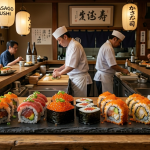
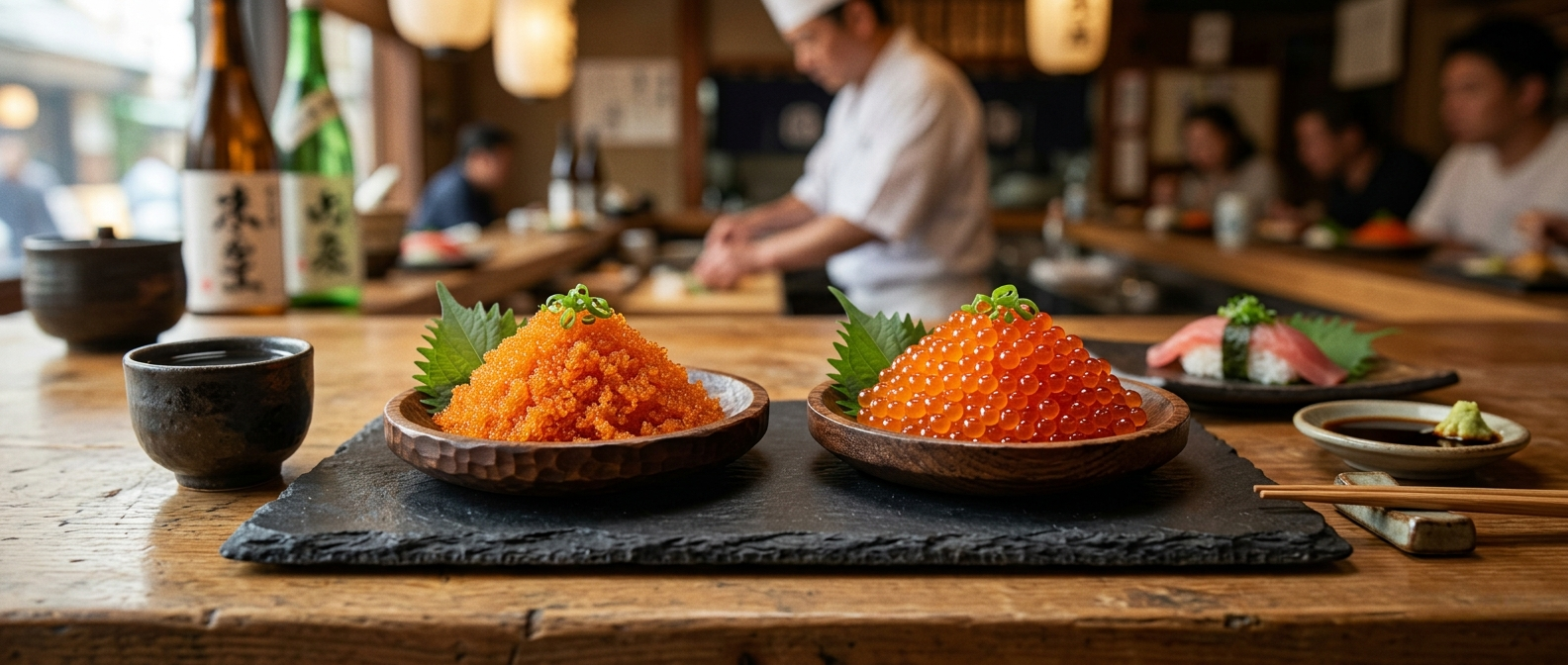
Masago eggs are very small – less than a millimeter each, with a fine, almost grainy appearance. When they coat the outside of a sushi roll, they form a smooth, relatively uniform layer that blends into the rice.
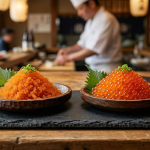
Tobiko eggs are larger, rounder, and more visually distinct. On a plate, you can actually see individual eggs. They look brighter and more polished, and they give rolls a more elevated, restaurant-quality appearance – which is part of why tobiko commands a higher price point.
Color-wise, both are dyed in similar shades: orange (most common), black (squid ink), red, and green. The natural color of masago leans pale yellow-orange; tobiko is a deeper orange-red. Neither color in its finished form tells you much about quality – it’s mostly aesthetics and branding.
The Taste Test
This is where the gap really shows.
Masago is mild. It brings a soft brininess- a clean, gentle ocean note that doesn’t compete with whatever it’s paired with. There’s no pop. No burst. It integrates quietly. Think of it as a background player that adds texture and a hint of saltiness without demanding attention.
Tobiko is more assertive. It has a bolder, slightly sweet flavor with a distinct brine that you actually notice mid-bite. The taste is richer and lingers slightly longer. If masago is background, tobiko is a supporting role – not the star, but you’d know if it wasn’t there.
Neither is “better.” They play different positions.
The Texture Difference (This Is the Big One)
If you’ve only read about these two, the texture difference might be the most surprising thing once you actually taste them side by side.
Masago has virtually no pop. The eggs are so small and soft that they mostly compress against your tongue, releasing flavor without any real textural event. It’s pleasant – just subtle.
Tobiko pops. Not dramatically, but noticeably. That small burst when you bite into a tobiko egg is one of the things people remember about high-end sushi. It’s satisfying in a way that’s hard to describe until you’ve experienced it – a tiny, clean crunch that elevates the whole bite.
For a lot of diners, the tobiko texture alone is worth the price difference.
Cost and Why Restaurants Swap Them
Tobiko is significantly more expensive than masago – typically two to four times the cost at the wholesale level. That gap gets reflected (or sometimes obscured) on restaurant menus.
Here’s something the sushi industry doesn’t advertise: a number of restaurants quietly substitute masago in dishes that would traditionally use tobiko. The visual difference is subtle enough that most diners don’t catch it. The flavor difference is real but mild enough that it’s rarely challenged.
This isn’t necessarily a scandal – masago is a legitimate ingredient and plenty of rolls are designed specifically to use it. But if a menu charges tobiko prices and serves masago, that’s worth knowing.
If you want to be sure: ask. A reputable sushi chef will tell you. And now that you know the texture difference, you’ll be able to tell at the first bite anyway.
Nutritional Profile: How They Compare
Both are nutritionally solid for a small-serving ingredient.
Masago per tablespoon (approx): ~40 calories, 4g protein, omega-3 fatty acids, vitamin B12, selenium. Sodium is elevated due to curing.
Tobiko per tablespoon (approx): similar calorie range (~40–45 cal), comparable protein, omega-3s, B12. Also high in sodium.
The nutritional difference between the two is marginal – neither is a superfood, but both bring real nutritional value in small doses. The sodium is the thing to watch with both, especially if you’re eating multiple rolls in one sitting.
When to Use Each One at Home
Both are available at Japanese grocery stores, Asian supermarkets, and online. Tobiko typically costs more per jar, but the price difference is manageable when you’re buying retail for home cooking.
Use masago when: you want a textural garnish that blends into a dish without competing – spicy mayo sauces, rice bowls, cucumber salads, or coating homemade rolls. It’s the workhorse option. Great value, does its job quietly.
Use tobiko when: the roe is a feature of the dish, not just a garnish. If you’re plating something that’s supposed to look impressive, or if you want that satisfying pop in every bite, tobiko earns its price. Deviled eggs, high-end poke bowls, and nigiri are good places to let tobiko be the point.
Storage for both: Keep frozen until ready to use. Once opened, refrigerate and finish within 3–4 days.
The Honest Summary
| Masago | Tobiko | |
| Source | Capelin (smelt family) | Flying fish |
| Size | Very small, fine | Larger, distinct |
| Texture | Soft, no pop | Noticeable pop |
| Flavor | Mild, gentle brine | Bolder, slightly sweet |
| Cost | More affordable | More expensive |
| Best use | Sauces, garnishes, rolls | Feature ingredient, plating |
If you’re making spicy masago mayo for a Tuesday night rice bowl, masago is exactly what you need. If you’re putting together a weekend sushi spread and want the texture to land – reach for tobiko.
Both have a place. Now you know which one to grab.
Small things. Big flavor.
FAQs
Why does tobiko cost more than masago?
Flying fish eggs are harder to harvest and larger in size than capelin eggs. Tobiko typically costs two to four times more than masago at wholesale level.
Can restaurants serve masago instead of tobiko without telling you?
Yes and it happens more often than most diners realize. The visual difference is subtle. The easiest way to tell is the texture – tobiko pops, masago doesn’t.
Which one is healthier – masago or tobiko?
Nutritionally they are almost identical. Both provide protein, omega-3 fatty acids, and vitamin B12 in similar amounts. Both are high in sodium due to curing.
Can I substitute masago for tobiko in recipes?
Yes. Masago works well as a substitute in most recipes. Just expect less texture pop and a milder flavor in the final dish.
Where can I buy both masago and tobiko?
Both are available at Japanese grocery stores, Asian supermarkets, Whole Foods, and online retailers. Look in the freezer section.