The Best Fluffy Pancakes recipe you will fall in love with. Full of tips and tricks to help you make the best pancakes.

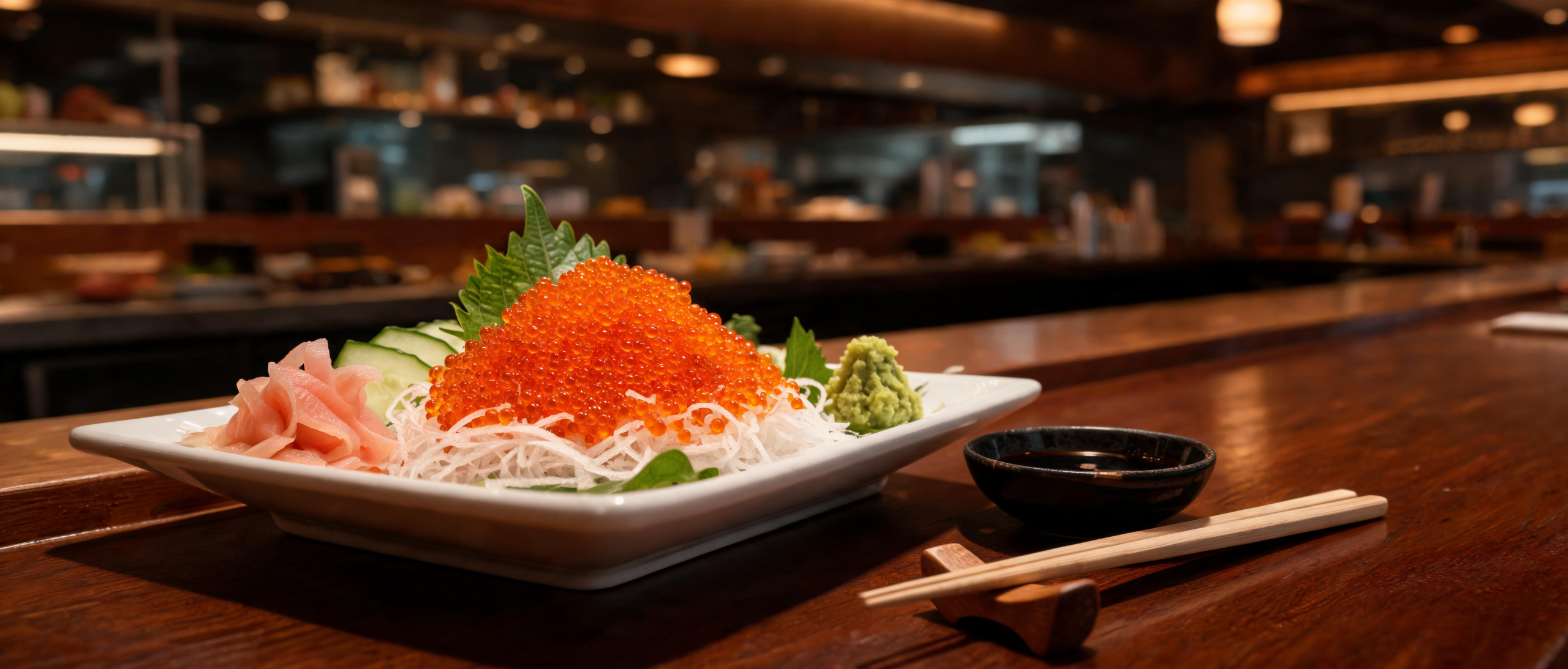
Most people order sashimi and picture clean slices of raw fish on a wooden board. Salmon. Tuna. Maybe yellowtail if they’re feeling confident.
Masago sashimi is none of those things.
It doesn’t arrive as a thin slice of fish. It doesn’t sit quietly on a board waiting to be dipped in soy sauce. Masago sashimi is fish roe – tiny, briny, orange-colored eggs from the capelin fish – served on its own, in a format that lets the ingredient actually breathe instead of playing background to everything else around it.
Most people have eaten masago dozens of times without once thinking about it. Masago sashimi is what happens when you put it front and center. And it’s worth knowing what you’re looking at.
What Masago Sashimi Actually Is
Before anything else: masago is the roe of the capelin, a small cold-water fish from the North Atlantic and Arctic Ocean. Tiny eggs, naturally pale yellowish-orange, almost always dyed bright orange before they reach your plate. The name translates roughly to “sand” in Japanese – and the moment you see a cluster of them, you understand why.
As an ingredient, masago is everywhere – coating California rolls, speckling spicy tuna, tucked into sauces. But served as sashimi, it’s presented on its own, with nothing diluting its flavor or texture. No rice underneath. No roll around it. Just the roe.
If you want the full story on where masago comes from and why it ends up on every sushi menu, our complete guide to what masago is covers all of it.
How Masago Sashimi Is Served
The most common presentation is gunkan-maki style – and if you haven’t heard that term before, it translates to “warship sushi.” A small clump of sushi rice is formed by hand, then a strip of nori seaweed is wrapped around the outside, creating a little cup or vessel. That vessel gets filled with masago.
The result is a self-contained bite: the subtle tang of sushi rice at the base, the slight bitterness and crunch of nori on the sides, and a generous mound of briny, mildly salty masago sitting on top. The sushi and sashimi guide from The Japanese Bar describes gunkan as a format specifically designed to hold soft or loose ingredients over rice – and masago is exactly the kind of ingredient it was made for.
At more casual sushi restaurants, masago sashimi sometimes skips the gunkan format entirely and arrives as a small mound in a dish, served with soy sauce alongside. The eating experience is similar – just less structured.
One addition that changes everything: a raw quail egg cracked directly over the masago. It’s a classic Japanese pairing. The egg yolk adds a rich, creamy layer that softens the brininess of the roe and brings the whole thing into balance. If you see it offered on the menu, order it that way. It’s one of those combinations that makes immediate sense the first time you taste it.
What Masago Sashimi Tastes Like
On its own, masago is mild. Clean brininess. A soft ocean note. No sharpness, no fishiness in the way that puts people off raw seafood.
The texture is where it gets interesting. The eggs are small – less than a millimeter across – and they compress gently against the palate. There’s no dramatic pop the way there is with tobiko or salmon roe. It’s more of a subtle, fine-grained give. The flavor releases quietly. It lingers just long enough to register.
In the gunkan format, that texture plays against the chew of the nori and the soft resistance of the sushi rice. Three distinct textures in a single bite. That’s not accidental. It’s exactly why this presentation has lasted as long as it has in Japanese cuisine.
Mild doesn’t mean boring. It means the flavor is doing quieter work – and once you’re paying attention to it, there’s more going on than the first bite suggests.
Masago Sashimi vs. The Other Roe at the Sushi Bar
If you’re sitting at a sushi bar and trying to make sense of the roe options, here’s how they stack up.
Masago – smallest, softest, mildest. The most affordable option at the table. Flavor is gentle and briny without being assertive. No pop. A fine, grainy texture that integrates rather than announces itself.
Tobiko – larger than masago, noticeably firmer, with a satisfying pop when you bite into it. Bolder flavor, slightly sweet, more complex. Also more expensive. If masago is background, tobiko is a supporting role. The full masago vs. tobiko breakdown is worth reading if you want to understand why restaurants sometimes swap one for the other without telling you.
Ikura – salmon roe, the large amber-orange pearls you’ve definitely noticed even if you didn’t know the name. Much bigger than either masago or tobiko. Soft, gooey interior. Fuller, richer flavor with a more pronounced sweetness. More expensive again. The most visually striking of the three.
Caviar – sturgeon roe, a different category entirely in terms of price, flavor, and occasion. Buttery, complex, and nothing like masago in character. The comparison gets made constantly by people who haven’t tried both. They’re not interchangeable.
Masago sashimi sits at the entry point of this spectrum – the most accessible, the least intimidating, and a genuinely good starting point if you’re new to eating roe on its own.
Is It Safe to Eat?
Yes. A question that comes up often, and the answer is straightforward.
Masago is not raw in the same way that a slice of tuna sashimi is raw. It’s cured – salted and processed before it reaches the restaurant, which preserves it and makes it safe to eat directly from the jar or the plate. It’s handled with the same care as any other sushi-grade ingredient, and Healthline’s overview of masago’s nutritional profile and safety confirms it’s considered safe for most adults when properly handled.
The exceptions are worth knowing: people with seafood or fish allergies should avoid it entirely. Pregnant women are generally advised to skip raw or cured fish roe as a precaution. And the sodium is real – masago is salted during processing, so if you’re tracking sodium closely, factor that in.
For everyone else, it’s a clean, safe, nutrient-dense ingredient. Protein, omega-3 fatty acids, vitamin B12, selenium – all present in meaningful amounts even in small servings.
Why Most People Walk Right Past It on the Menu
There’s a specific reason masago sashimi gets overlooked, and it comes down to how most Western diners understand sashimi.
Sashimi means sliced raw fish to most people. That mental model is strong enough that when they see masago sashimi listed on a menu, they don’t fully register what it is. It doesn’t fit the template. So they order the salmon. They skip the masago.
The restaurants that do it well know how to present it in a way that makes sense visually – the gunkan format helps because it looks finished and intentional, not just a pile of something unfamiliar sitting in a dish. But even with good presentation, masago sashimi remains one of the most underordered items at any sushi bar that carries it.
That’s actually an argument for ordering it. It’s typically one of the least expensive items on the menu, it’s consistently good when the masago is fresh, and it gives you a genuinely different experience from the rest of the table. Masago in sushi covers the wider picture of how this ingredient shows up across the menu – but the sashimi presentation is the one that most people never get around to trying.
Ordering It Right
A few things worth knowing before you sit down at the sushi bar.
Ask for the quail egg if it’s available. It’s not always listed on the menu – sometimes you have to ask directly. Worth it every time.
Order it early in the meal, not at the end. Masago sashimi is light and clean. It works best when your palate is fresh, not after you’ve already worked through six rolls and two rounds of edamame.
Don’t drown it in soy sauce. A small dip is fine. But masago already has salt in it from the curing process, and too much soy sauce overwhelms the subtle flavor that makes it interesting in the first place.
And if the restaurant offers masago alongside tobiko as an option – try both in the same sitting. The comparison tells you more about each ingredient than any description can. The difference in texture is the thing. Once you’ve tasted it, you’ll know exactly what to reach for next time.
The Short Version
Masago sashimi is capelin roe served on its own – usually in a gunkan-maki format, sometimes with a quail egg on top, always at a price point that makes it one of the better-value items on any sushi menu. It’s mild, briny, texturally interesting, and consistently overlooked by people who don’t know what they’re walking past.
Order it. Ask for the quail egg. Pay attention to the texture.
Small things. Big flavor.
FAQs
What is masago sashimi?
Masago sashimi is capelin fish roe served on its own, typically presented in a gunkan-maki format – a small hand-formed rice base wrapped in nori seaweed, topped with a generous mound of masago. It’s one of the few ways to taste masago as the feature ingredient rather than a garnish.
Is masago sashimi raw?
Not exactly. Masago is cured and salted during processing, which makes it safe to eat without further cooking. It’s handled with the same food-safety standards as other sushi-grade ingredients and is considered safe for most healthy adults.
What does masago sashimi taste like?
Mild and briny with a clean ocean note. The texture is fine and slightly grainy – no dramatic pop, just a soft, gentle give when you bite into the eggs. In the gunkan format, the nori and rice add chew and contrast that make the overall bite more complex.
How is masago sashimi different from tobiko sashimi?
Masago is smaller, softer, and milder than tobiko. Tobiko – flying fish roe – has a noticeably firmer texture, a satisfying pop, and a bolder, slightly sweet flavor. Masago is the more affordable and approachable option. Tobiko has more presence on the palate.
What is the quail egg addition to masago sashimi?
A raw quail egg cracked over the masago is a classic Japanese pairing. The egg yolk adds richness and creaminess that balances the brininess of the roe. It’s not always listed on the menu but is worth asking for.
Can I make masago sashimi at home?
Yes. Buy masago from a Japanese grocery store or Asian supermarket – it’s usually in the freezer section. Form small rice balls by hand, wrap each one in a strip of nori, and top with a spoonful of masago. Crack a quail egg on top if you want the full experience. It’s simpler than it looks.
Who should avoid masago sashimi?
People with seafood or fish allergies should avoid it entirely. Pregnant women are generally advised to skip cured fish roe as a precaution. Those on low-sodium diets should be aware that masago is salted during processing and can be high in sodium.